


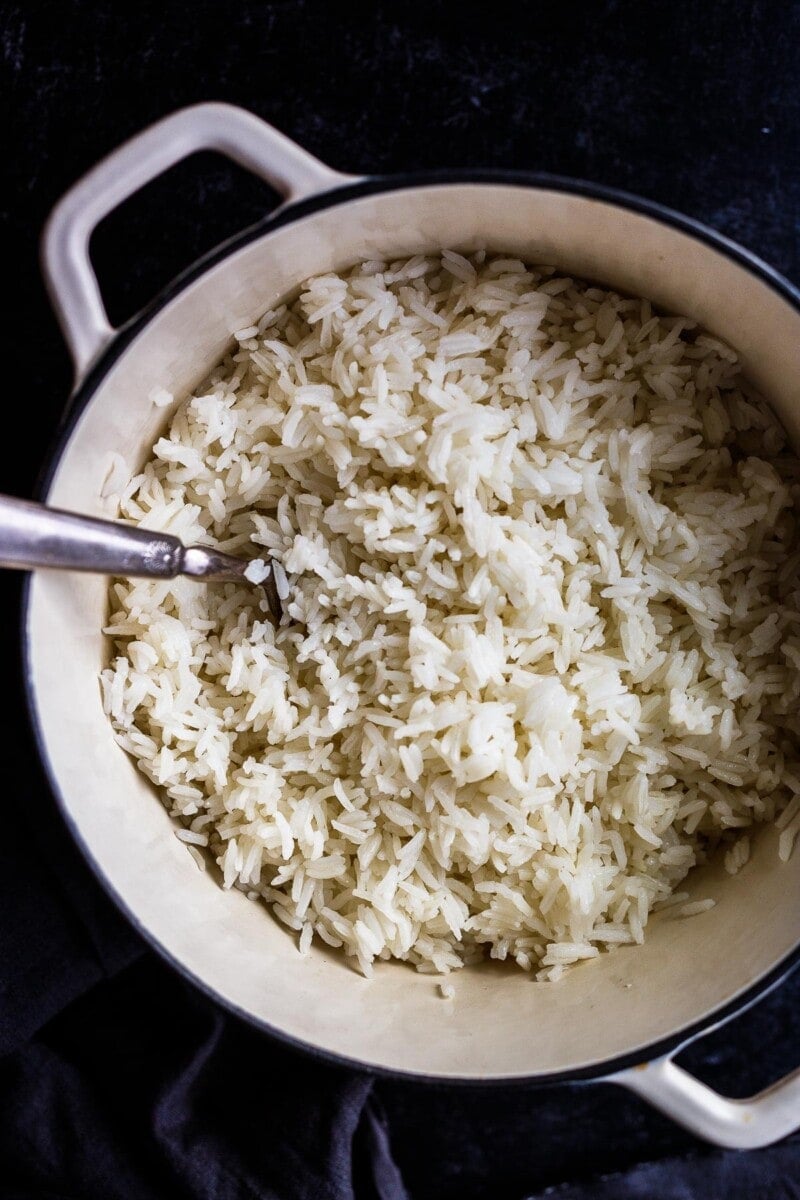
Learn my easy method for perfectly cooked Jasmine Rice on the stovetop, ready to eat in 20 minutes. It’s all about the water-to-rice ratio! Vegan and GF.
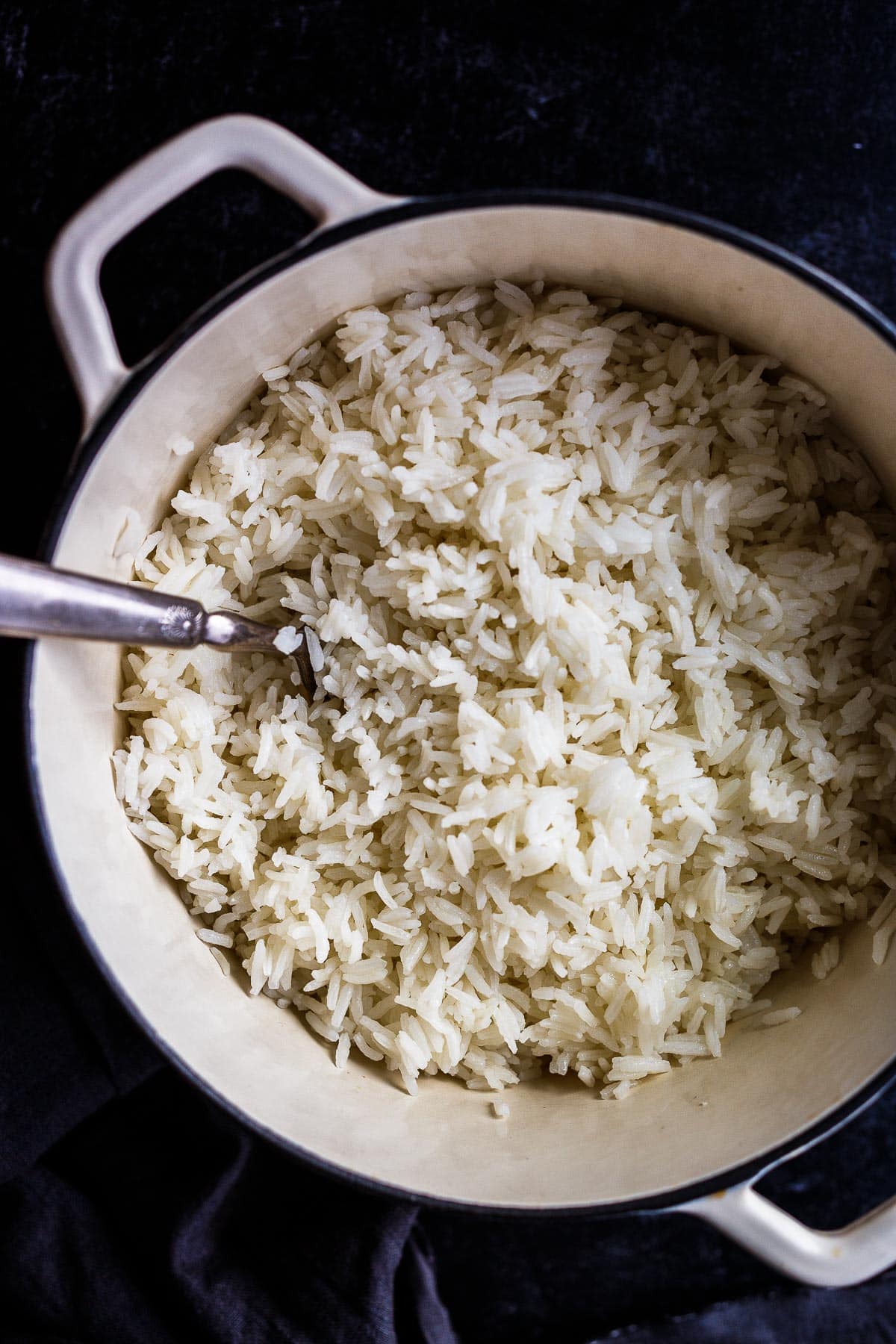
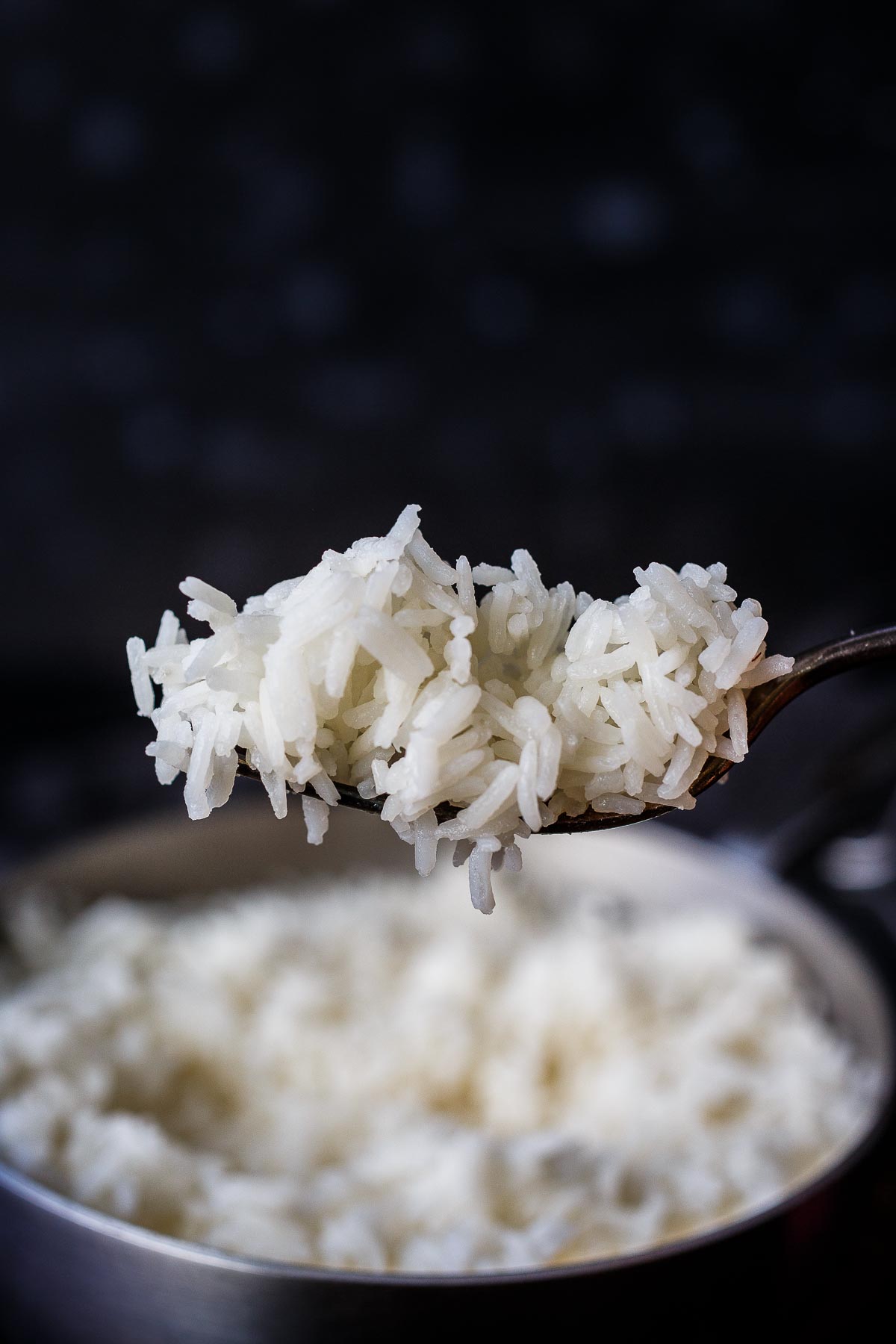
Here’s my tried-and-true stovetop cooking method for Jasmine Rice, which yields perfectly cooked rice every time. Jasmine rice is a white, long-grain rice with a soft texture that cooks much faster than other rice varieties- perfect for busy weeknights.
What I love about Jasmine rice, besides its quick cooking time, is how wonderfully it pairs with many dishes. Leftovers make great fried rice the next day. You can also freeze Jasmine rice for a speedy dinner prep option. I often make a double batch and freeze half for quick, fried rice later on.
Chilling rice also makes it more of a resistant starch. Better for the gut!
Chef Tips for the Best Jasmine Rice
- It’s all about the amount of water! The water ratio truly matters here. For every cup of rice, add 1 1/4 cups of water or broth.
- Boil the water first, then add the rice.
- Add a little oil to prevent sticking to the bottom of the pot.
- Let the rice ” rest” with the lid on, after you turn off the heat, for 5-15 minutes.
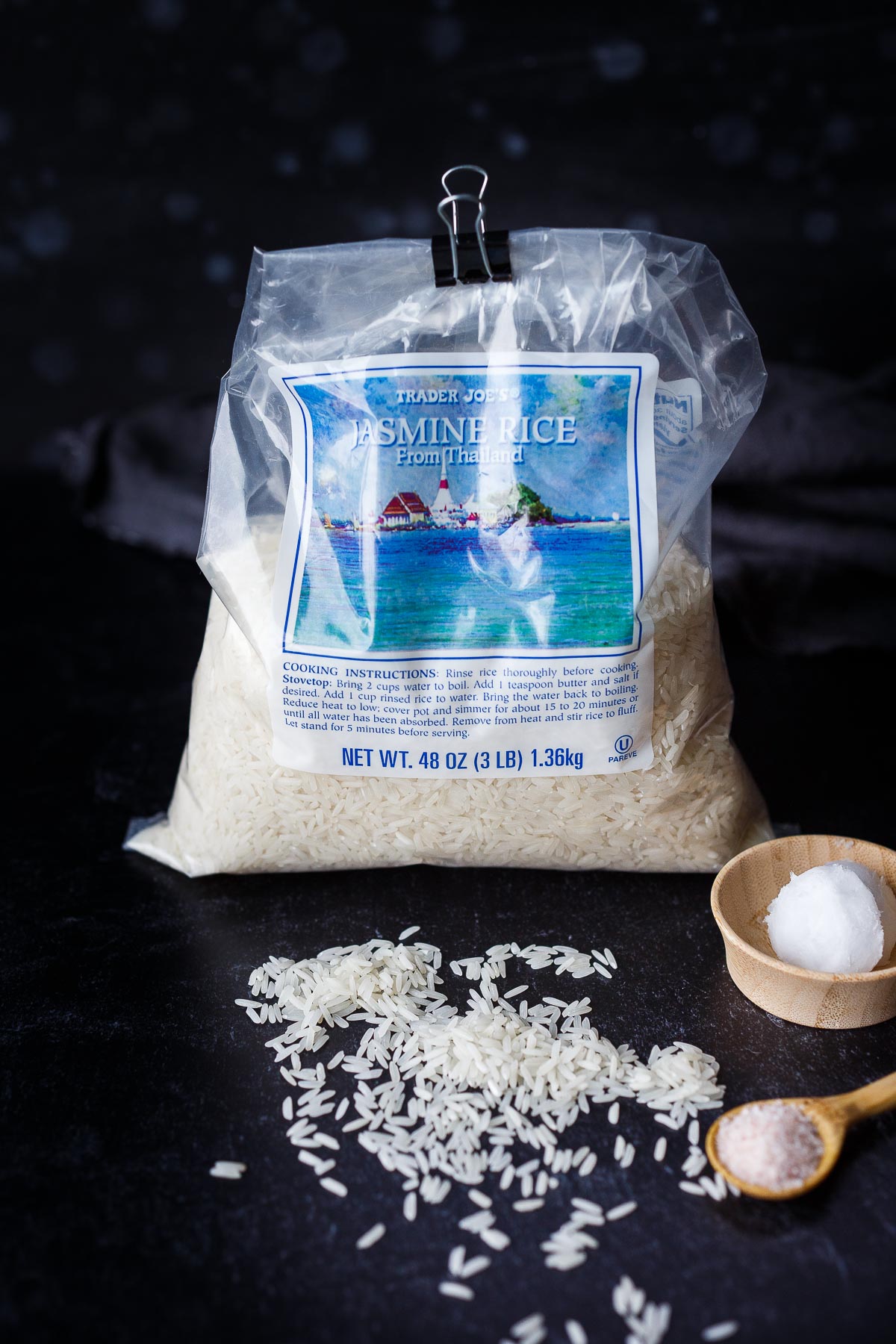
What you’ll need to make Jasmine Rice
- Jasmine Rice– seek out organic if possible, and we especially love brands from Thailand.
- Water– use water or broth! We use a 1 ¼ cups of water to 1 cup of rinsed rice.
- Salt– we like mineral salt for its nutritional benefits and flavor. It is less salty than table salt. Adjust to taste if using substitutes.
- Optional Oil- coconut oil, olive oil, avocado oil, butter, ghee. A little oil helps separate the rice kernels, prevents them from sticking to the pan, and adds a subtle flavor that enhances the rice. Adding fat to the rice can help balance out blood sugar.
See the recipe card below for a full list of ingredients and measurements.
How To Cook Jasmine Rice
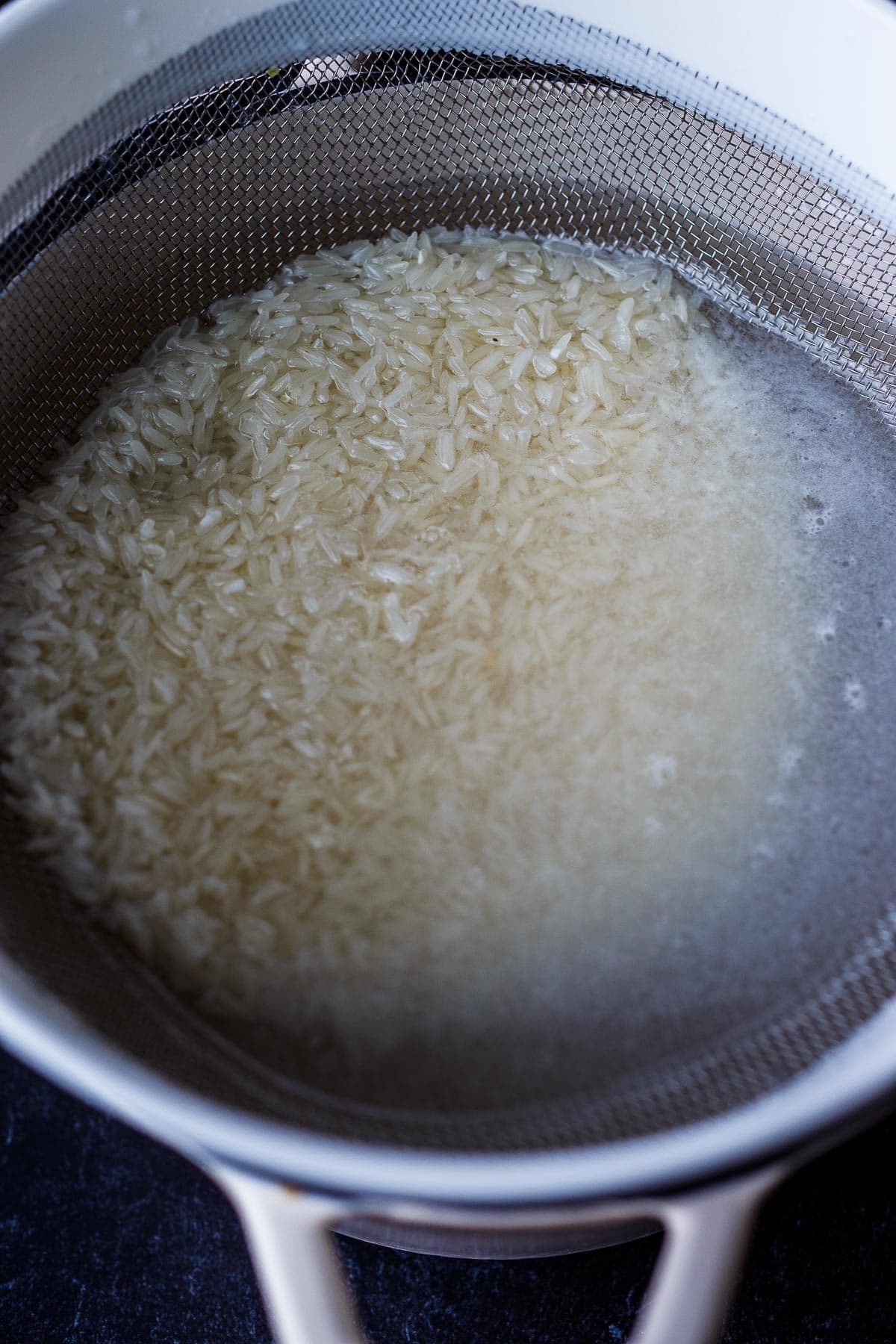
Step One: Rinse. Rinse the jasmine rice a few times; it is ok if it is not completely clear. Drain thoroughly using a fine-mesh strainer. Rinsing the rice removes excess starch, creating fluffier, less sticky rice.
Step Two: Boil. Place water, salt, and oil in a medium saucepan with the lid on and bring to a boil over high heat. Wait to add the rice until boiling.
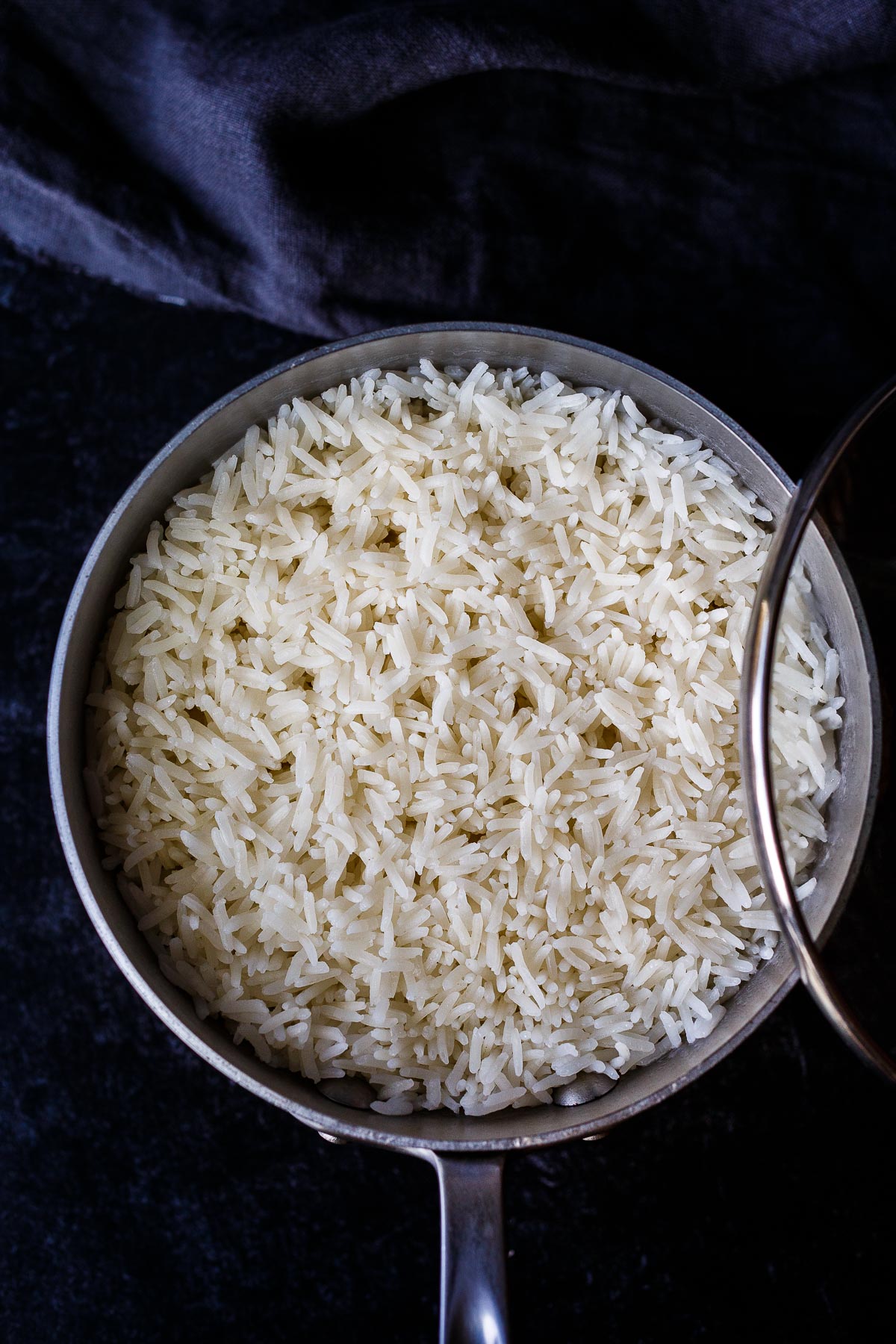
Step Three: Combine and Simmer. Add rice, give a quick stir, place the lid back on, and lower the heat to a low simmer (medium-low heat) for 12 minutes. Set the timer! Turn the heat off.
Step Four: Rest. Tip: Do not remove the lid, the steam is crucial and the secret to perfectly textured rice. Let the rice sit covered for 5-10 minutes. Fluff the rice grains with a fork and serve.
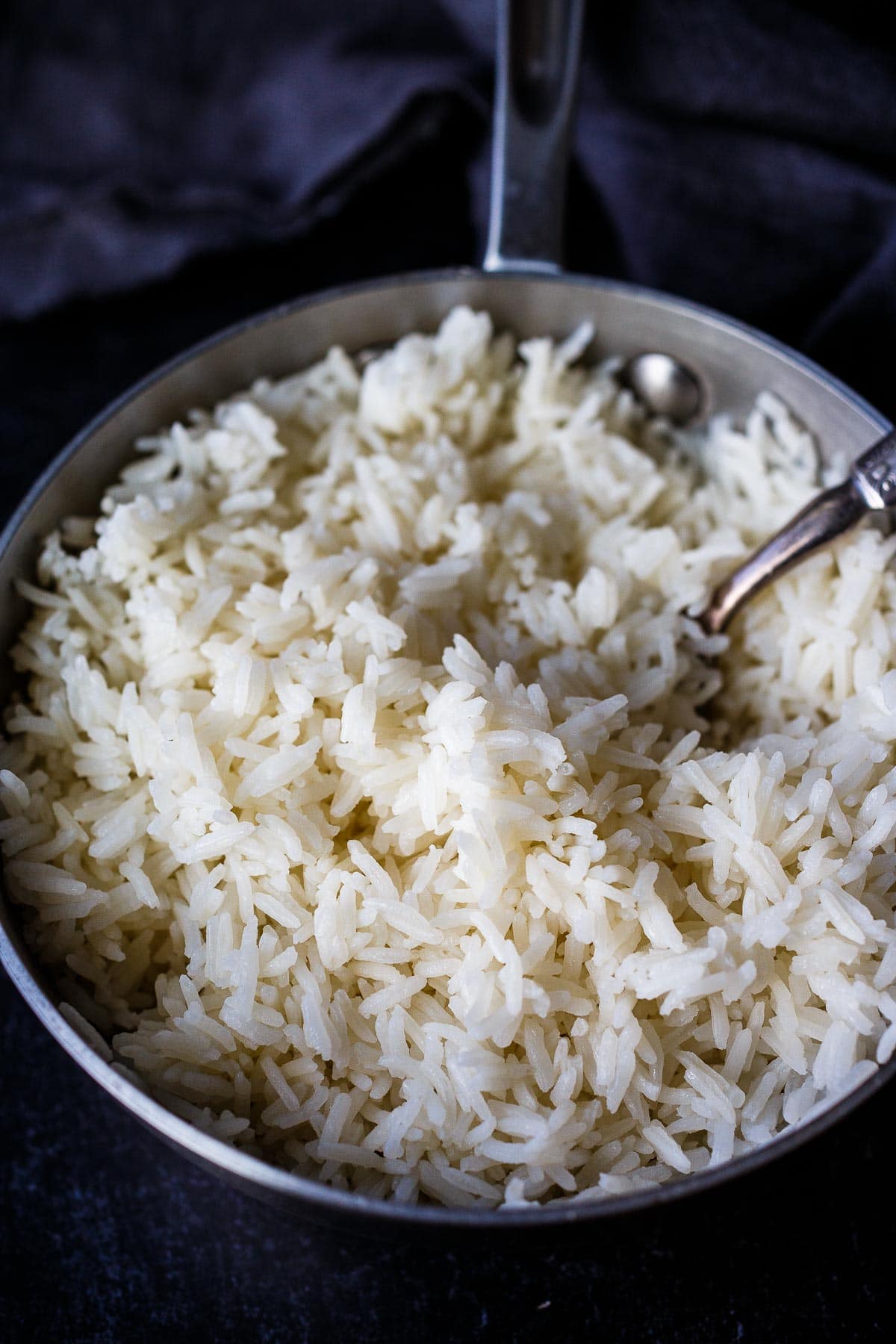
Storing Jasmine Rice
Leftovers will keep up to 4 days in an airtight container in the refrigerator. Or freeze for up to 3 months.
Ways to Serve Jasmine Rice
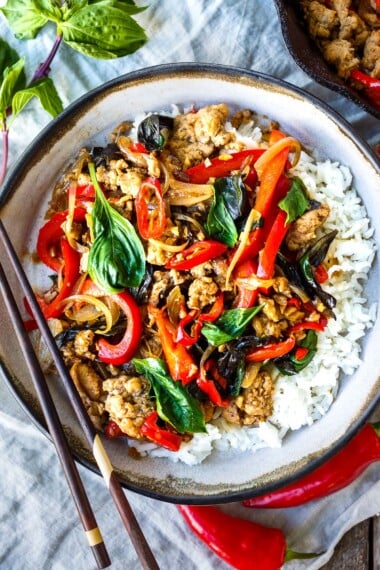
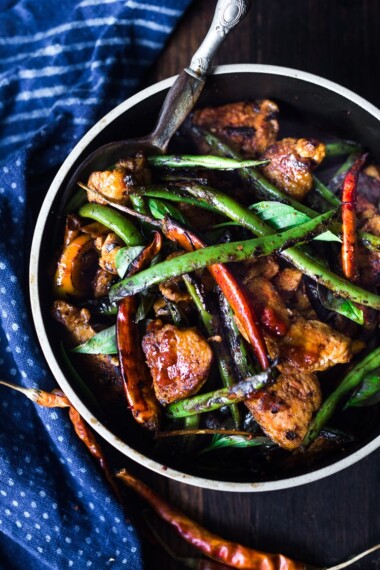
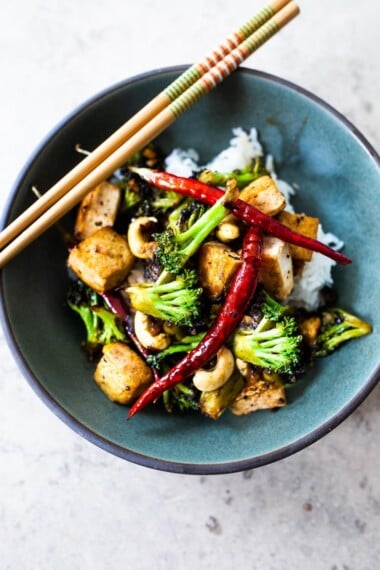
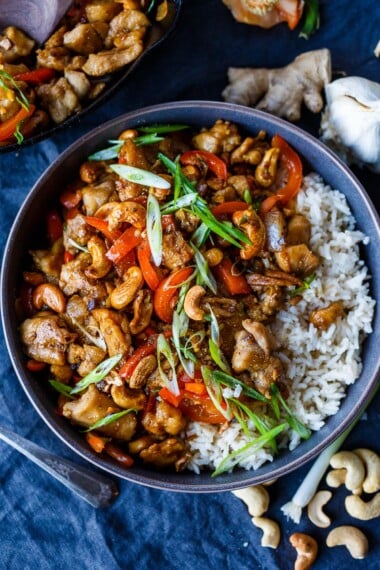
Pair jasmine rice with flavorful stir fries, curries and other Asian dishes.
Recipe FAQS
Some believe white rice is healthier for these reasons: The hull in brown rice contains phytic acid, an anti-nutrient that stops mineral absorption (soaking brown rice can dissipate phytic acid). The outer layer of brown rice absorbs more arsenic. Arsenic levels vary from country to country but are always considerably less in white rice. White rice cooked with coconut oil and then chilled can create a gut-friendly low glycemic-resistant starch.
Either way works. But it is not necessary. For rice that takes longer to cook, it can shorten the cooking time.
Yes. All rice varieties are gluten-free.
Rinsing the rice clears out the excess starch and creates a fluffier less sticky rice.
What to do with leftover Jasmine Rice?
Cooked rice will keep up to 4 days in an airtight container, and is perfect for making fried rice dishes. Freeze for later or use in these delicious fried rice recipes:
Love this recipe? Please let us know in the comments and leave a 5-star ⭐️⭐️⭐️⭐️⭐️ rating below the recipe card.
More favorite rice recipes
Description
Fluffy, fragrant Jasmine Rice cooked to perfection! A no-fuss, easy stove-top recipe that is ready in 20 minutes from start to finish.
Ingredients
- 1 cup Jasmine rice
- 1 1/4 cup water (or broth)
- 1/4 teaspoon salt
- 1 teaspoon oil (coconut oil, olive oil, avocado oil, butter, ghee, etc.)
Instructions
- Place water, salt, and oil in a saucepan with the lid on (for faster boiling and less evaporation) and bring to a boil.
- Rinse the rice a few times; it is ok if it is not completely clear. Drain thoroughly with a colander.
- Once water boils, stir in the rice. Cover and simmer over low heat for 12 minutes, or until the water is absorbed.
- Turn the heat off. Do not remove the lid. Let it sit for 5-10 minutes covered. Fluff and serve.
Notes
Rice will keep up to 4 days in the fridge or can be frozen for up to 3 months.
Nutrition
- Serving Size: 3/4 cup
- Calories: 71
- Sugar: 0 g
- Sodium: 148.3 mg
- Fat: 1.2 g
- Saturated Fat: 1 g
- Carbohydrates: 13.3 g
- Fiber: 0 g
- Protein: 1.1 g
- Cholesterol: 0 mg
This turned out perfectly.
Great to hear Haley!
Hi Tonya! This turned out perfectly. Quick question — why does cooling the rice help with the glycemic index? I’d never heard that before.
Oh great! In order for the rice to maintain the resistant starch, it has to be kept under 175 degrees. There are a lot of studies showing that cooled rice significantly lowers glycemic response. Something changes in the starch as it cools. 🙂
For these instructions, do we put the lid on right after adding the rice, or after it comes back to simmer?
Oh great question! Lid on after adding rice. :)Recipe is updated.
Just made it according to the instructions, using olive oil, and it came out completely perfect. Thank you! Could you explain why the 175F temperature when reheating?
Great to hear! In order for the rice to maintain the resistant starch, it has to be kept under 175 degrees. There are a lot of studies showing that cooled rice significantly lowers glycemic response. Something changes in the starch as it cools.