

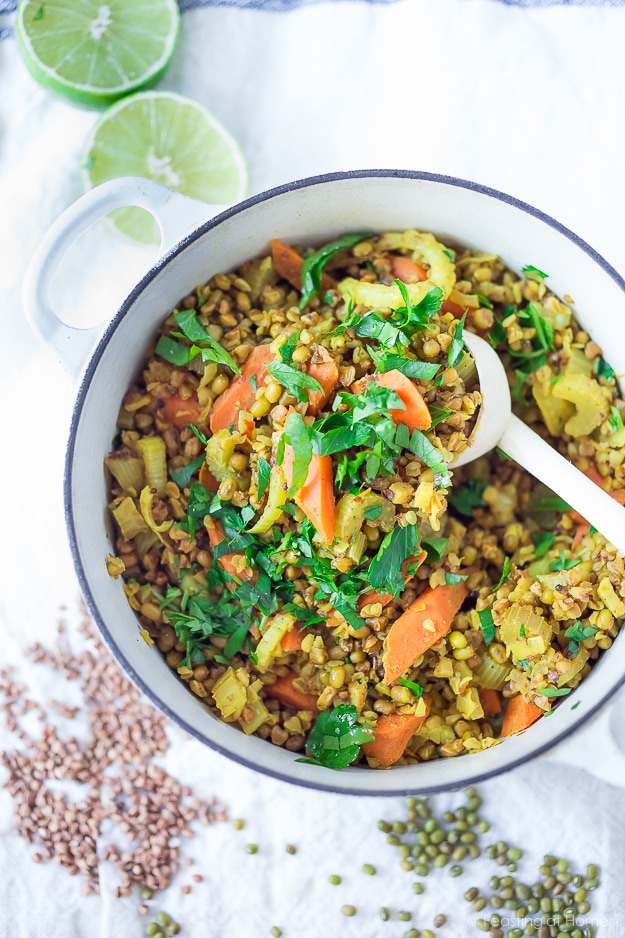
This healing Khichdi recipe is designed to give your digestion a break. Deeply nourishing Ayurvedic comfort food that gently supports the body’s natural healing. Vegan and gluten-free.
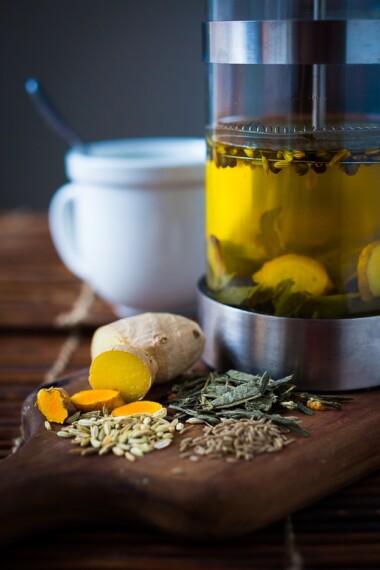
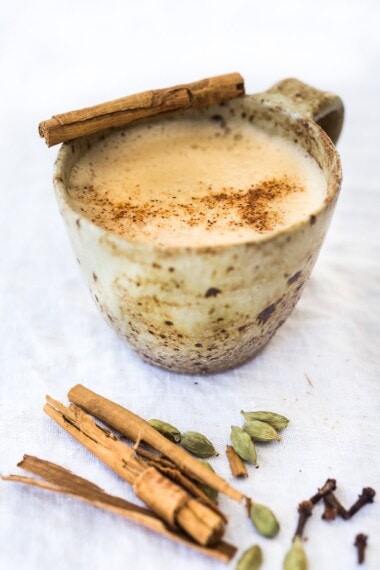
Empty yourself and let the universe fill you. Yogi Tea
This is one of my favorite ways to begin the new year-slowly, intentionally, and with nourishment that truly supports my body. For centuries across India, khichdi has been revered in Ayurvedic tradition as a deeply comforting, easily digestible meal known for its gentle restorative qualities. Rather than a harsh "detox," khichdi is designed to support digestion, calm the nervous system, and gently bring the body back into balance.
Khichdi isn't just a "detox food"-it's a deliberate pause for your digestive system.
Most recipes focus on cleansing, but what's often omitted is that khichdi's real power lies in what it removes, not what it adds. By simplifying flavors, textures, and ingredients, khichdi reduces decision-making for the gut, allowing digestion to reset naturally-much like a rest day after intense exercise. This is why it's traditionally eaten repeatedly for several days: consistency creates the healing.
Traditionally, this involves eating this simple, nourishing dish at every meal for three to seven days. Made from humble, whole ingredients, khichdi has long been trusted in Ayurveda for its ability to reset digestion, promote healing, and support overall wellness-making it as relevant today as it has been for generations.
What is Khichdi?
In its traditional form, Khichdi consists of mung beans (moong dal) or lentils, cooked with rice (or buckwheat), vegetables, and mild Indian spices, and can vary greatly by region. It is considered one of the most healing meals in Ayurveda because it is tri-doshic, meaning it balances all three doshas.
Wondering about kitchari vs khichdi? -Khichdi is the traditional Indian dish, while kitchari is the Westernized spelling.
Why you’ll love this Khichdi Recipe
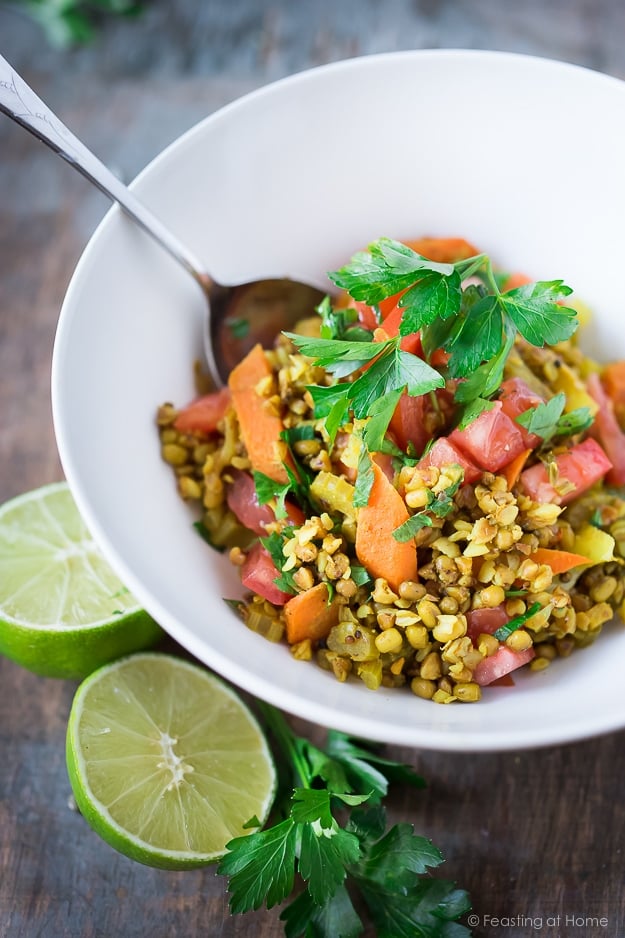
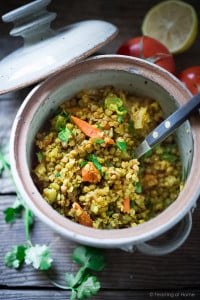
It’s adaptable. Use mung beans or lentils, use any grain or veggie you like. Make it more like a bowl (as shown here) or add more broth to make a porridge.
Gently spiced, but not bland. It’s delicious, healthy, and satisfying without feeling too heavy or bland.
Easy to meal prep. It’s easy to make a big batch and reheat it throughout the week for simple, easy meals.
Ingredients
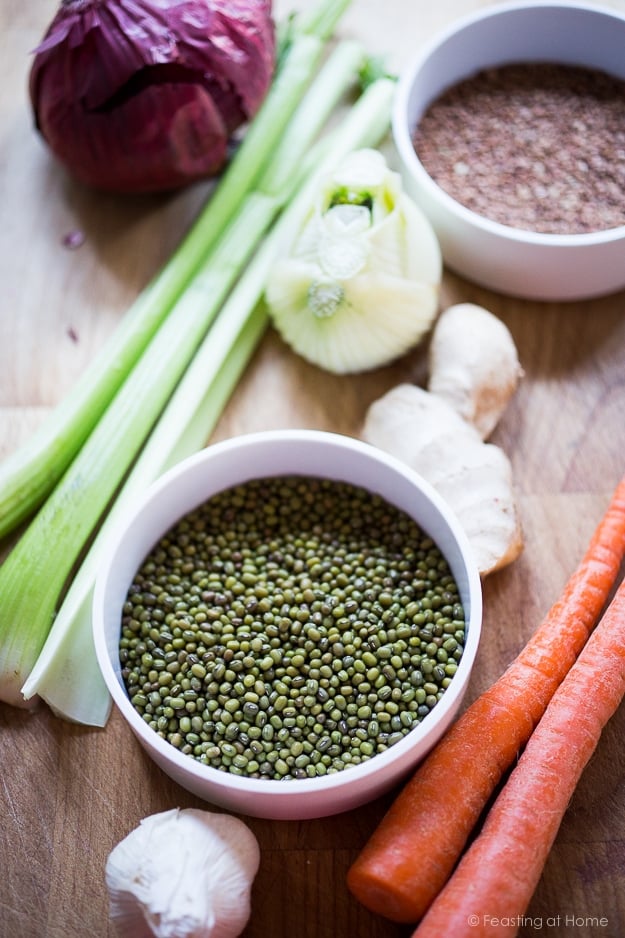
- Mung beans or lentils – mung beans (or lentils) should be soaked for easy digestibility.
- Toasted buckwheat- also known as Kashi, (or sub brown rice or other whole grain)
- Cleansing vegetables: carrots, celery, fennel, cauliflower, broccoli, or kale
- Ginger, Garlic and Onion– adds flavor, but also can be left out.
- Indian spices and seeds– used gently and sparingly.
- Olive oil or ghee– ghee is traditional and is easy to digest, but olive oil is a great vegan alternative.
Chef’s Tips
Timing. In Ayurveda, it is believed that we should have our biggest meal of the day, when the sun is at its highest point–at lunchtime.
Benefits of mung beans. Don’t let their diminutive size fool you– they are surprisingly packed full of protein and nutrients and the list of health benefits to the body is endless.
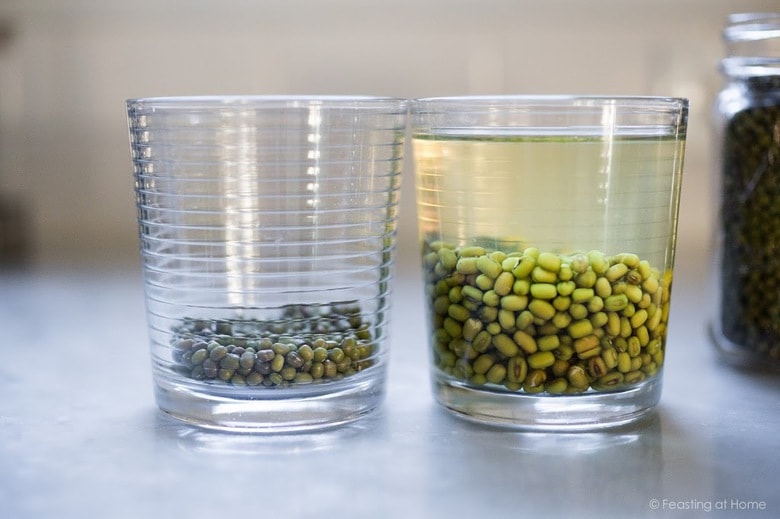
Soak. Soaking mung beans in water overnight will double their size (on the right), cut their cooking time in half, and increase their digestibility. Sprouted mung beans are exceptionally good for you, so if you have time to sprout them first, do!
How to make Khichdi
- Soak the mungbeans ( or lentils)
- Saute the onion in oil over medium-high heat in a Dutch oven for 2-3 minutes. Reduce heat to medium add ginger and garlic, and saute a few minutes, until golden and fragrant. Add the spices, salt and pepper, and stirring, toast for a few more minutes.
- Simmer. Add the soaked mung beans and buckwheat or soaked brown rice. Add water, broth and 2 cups of chopped veggies bring to a good boil. Cover. Turn the heat to low, and let it simmer for 20 minutes. Check for doneness. Continue cooking for 5 to 10 more minutes if necessary.
- Season. Once it is done, taste and adjust salt and seasonings. If you like a more “porridge-like” consistency, add more veggie broth.
VariationS
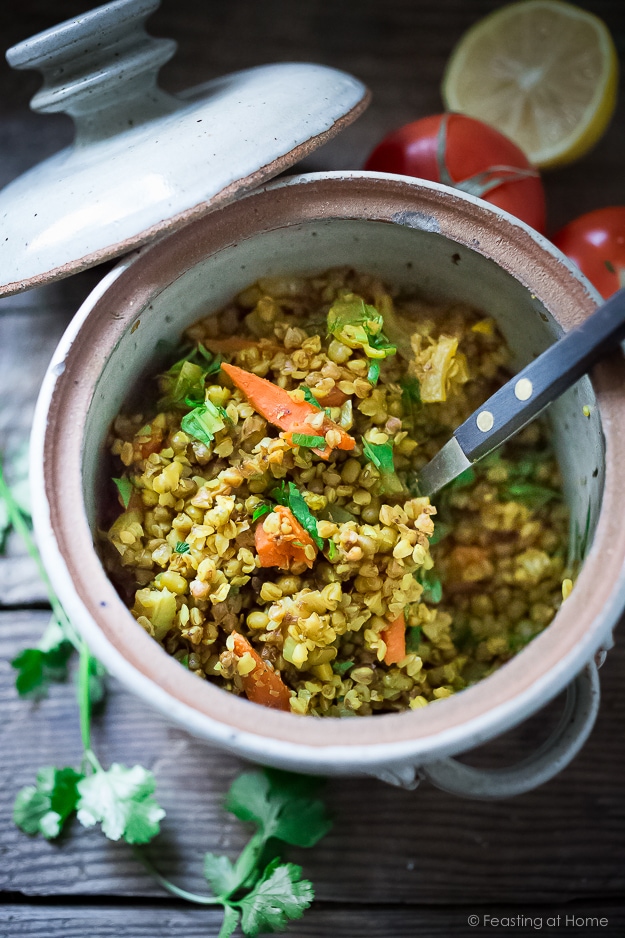
If you prefer a porridge consistency, feel free to add more broth and adjust the salt.
Leave out the garlic and onions. Considered stimulating in Ayurveda, some opt to omit these, making the dish gentler and more calming to the nervous system during a cleanse. This is believed to help with meditation as well.
Serving Suggestions and Storage
Serve in bowls, and top with fresh diced tomato, fresh cilantro or parsley, a pinch of salt and pepper, a squeeze of lemon, and a tiny drizzle of olive oil over the top of the tomatoes. Microgreens are always welcome too!
Leftovers will keep up to 5 days in an airtight container in the fridge, or can be frozen for 3 months. Reheat gently on the stove with a splash of water or broth.
More Favorite Ayurvedic Recipes

Wherever this finds you, may you feel hopeful and excited about this coming New Year — open to the possibilities that haven’t even been imagined yet. Create a little space for the mystery to unfold without too many plans – a clear, open field to let life show up in its own wise and perfect way.
Cheers and love. All the best to you this New Year!
Sylvia
Ayurvedic Khichdi Recipe (Kitchari)
- Prep Time: 10 mins
- Cook Time: 40 mins
- Total Time: 50 mins
- Yield: 4 1x
- Category: gluten-free, Main, vegan
- Method: stovetop
- Cuisine: Indian
- Diet: Vegan
Description
Khichdi is a time-honored Ayurvedic detox recipe eaten during cleanses to gently reset digestion and restore balance to the body.
Ingredients
- 1/2 cup diced onion
- 1 1/2 tablespoon olive oil or coconut oil
- 1 tablespoon grated ginger
- 1 tablespoon chopped garlic
- 1 tsp whole mustard seeds
- 1 tsp turmeric powder
- 1/2 tsp cumin seeds or ground cumin powder
- 1/2 tsp coriander
- 1/2 tsp garam masala, more to taste
- 1/4 –1/2 teaspoon chili flakes (optional)
- few twists of black pepper
- 1 tsp kosher salt
- 1/4 cup dry split mung beans, split lentils (or use whole mung beans or whole lentils- soaked overnight)
- 1/2 cup buckwheat (kashi) or (soaked, brown basmati rice)
- 1 1/2 cup water
- 1 cup veggie broth
- 2–3 cups chopped vegetables ( like carrot, parsnips, celery, fennel bulb, cauliflower, broccoli)
- Optional Garnishes: cilantro or Italian parsley, lemon wedge, diced tomato for topping, microgreens, olive oil.
Instructions
- In a medium pot, saute onion in oil over medium high heat for 2-3 minutes. Reduce heat to medium add ginger and garlic, and saute a few minutes, until golden and fragrant.
- Add all the spices, pepper, salt and toast for a few more minutes, stirring. Add soaked mung beans and buckwheat or soaked brown rice. Add water, broth and 2 cups chopped veggies bring to a good boil. Cover. Turn heat to low, and let simmer for 20 minutes. Check for doneness.
- Continue cooking for 5 to 10 more minutes if necessary. Some rice takes longer, and if you do not pre-soak your whole mung beans, or brown rice, you will need to add more water, which will change the recipe proportions and flavor…so try to soak if possible.
- Once it is done, taste and adjust salt and seasonings to your liking. *If you like a more “porridge-like” consistency, add more veggie broth.
- Spoon into bowls, top with fresh diced tomato , cilantro, and a pinch of salt and pepper, and a squeeze of lemon and a drizzle of olive oil.
Notes
Soaking the beans (or lentils) helps with digestibility and also shortens the cooking time in half. I highly recommend soaking. 🙂 If using brown rice, make sure to pre-soak for a few hours or overnight to help shorten the cooking time.
If you prefer your khichdi more like a porridge (which is traditional in parts of India) feel free to add warm veggie broth to loosen to get it to the consistency you like.
Khichdi will keep up to 4 days in the refrigerator or can be placed in the freezer for up to 3 months.
Nutrition
- Serving Size: 1 ½ cups
- Calories: 305
- Sugar: 4.2 g
- Sodium: 83.4 mg
- Fat: 5.7 g
- Saturated Fat: 3.2 g
- Carbohydrates: 55 g
- Fiber: 11.5 g
- Protein: 11.3 g
- Cholesterol: 0 mg


This was delicious, Sylvia. Thank you so much. I added a bit more ginger and topped with parsley, tomatoes, lemon and EVOO. So good,
You didn’t include the veggies in the recipe! When do they go in?
Hey Jordan, I highlighted them in bold in the recipe card for you. 😉
This is delicious! It’s like health in a bowl, thanks so much 🙂
Excited to try the other recipes on your blog!
Glad you liked this!
Very delicious!!!
Carb manager calculated 40 grs of carbs. I take insulin, so it was important for me to be sure of the macros. You may want to make a note of it for people like me with T1 diabetes.
Also, I will definitely double the amount of spices for my taste.
And question:
Can I substitute the turmeric powder for fresh turmeric and if so, what is the quantity if grated?
Thank your for an amazing recipe.
Yes, ground turmeric is fine. 1/2 teaspoon, more to taste.
This is delicious!! It’s like health in a bowl, thanks so much 🙂
Excited to try the other recipes on your blog!
I loved this bowl! I topped it with fresh chopped tomatoes, cilantro, and lime.
Hi, can you use sprouted mung beans in this recipe or do you think it would make it mushy?
They should be fine!
Great recipe..Is the recipe suitable for freezing?
Great question and I’m not sure. It should be ok to freeze for 3 months, I’m guessing.
Simple and healthy. I made breakfast using the recipe and found it great. Thank you for this simple and healthy detox recipe.
Awesome, glad you liked it!
I love Khichdi! I was looking for a way to cook in my instant pot. Would this recipe be suitable?
Yes, totally. Not sure of timing though.
This was delicious! I used soaked basmati rice and green split peas which gave a hearty texture along with the carrots, diced tomatoes, and broth. The olive oil and parsley on top with fresh tomatoes made this one of my favorites.
Thanks Alex, glad you like this!
Absolutely delicious! Thank you. I used white basmati rice to substitute the buckwheat and it tasted amazing. I loved how filling the food was without feeling overstuffed. I’ve cooked 3 recipes from your vegetarian recipes and I’ve got to say you’re a really good chef! Thank you. (:
Awe thanks!
Hello Sylvia,
I loved the recipe, so so good and comforting. Also can you tell me where you got this amazing blue plate you cooked the recipe in?
Thanks Sylvia!
I’m not seeing the blue plate? Different Post?
I made this recipe carefully, following the instructions. The only things I omitted were the chili pepper and the cilantro/parsley (didn’t have any). It came out very bitter and unpleasant . I love Indian food, but this just did not work out well for me at all.
But I still find many of your recipes both tasty and healthy; just not this one, this time.
Oh no! I’m sorry. This is so strange. Was it bitter from the spices you think, or from the mung beans? I’m trying to rack my brain on what would have caused that.
What does the capital C and T mean in the recipe?
Hi Emma, cups and tablespoons. I updated the recipe to make it more clear. 🙂
The whole family love this dish including our 11 year old, which fills me with delight! Really easy to prepare, incredibly tasty, and full of goodness. Thanks 😊
I have had a bag of sprouted mungbeans in my cupboard for over a year now, not knowing what to do with them. This is an amazing recipe, it tasted so darn good!! I even added the pickeled onions on top with some cabbage!! OMG to die for!
So glad you enjoyed this!!!
I made this last night using brown rice instead of buckwheat because it’s what I had on hand. I used carrots, parsnips and broccoli as my veggies, and I increased the curry powder by just a bit (heaping vs. flat teaspoon). It was exactly as you described: warm, cozy delicious and filling! I will be eating this for the next few days for a gentle cleanse.
Quick heads up: using the recipe multiplier is helpful for the ingredients, but the instructions in step 2 say ‘add 2 cups of veggies’ rather than the 4 cups I prepared when making 2x the recipe.
Thanks so much Maigen!
I use the organic California (brown) rice brand and it normally take 40 minutes, so unfortunately my rice was very underdone. Not sure the best method to get it just right.
Hey Jenny, sorry about that. This is an older recipe that I’m reworking. I will add some notes for now. Appreciate you letting me know!
How can we make this in the instant pot?
Hey Jenny, I will have to test it out in the instant pot. Will get back…thanks!
such ap ki recipe me ghar ka swad hai and hotel jasi dono ka combinaton ka jawab nahi………Very Delicious! Love all those colors :)))
Just wondering do you soak the buckwheat overnight too?
You could! Yes, great idea!
Quick, easy and delicious. I’m glad I discovered the website!
Hi Sylvia,
This looks tasty, and I already have most of the ingredients in my fridge and pantry, but I have no idea where to find mung beans. Perhaps an Asian grocery? Are they dried and bagged like other beans?
Thanks!
(P.S. I just noticed this is an old post but I’m hoping you might be able to help anyway.)
Hi Jen, I find them in the bulk section ( dry) at my grocery store. Asian stores would probably have as well!
You can also buy mung beans on Amazon.com as that’s where I buy them. I live in a very small Texas town & have to drive a ways to find all but the most common foods.
Great Idea, I will add a link!
This looks like a nice breakfast. I need a breakfast that will fill me up, but not weight me down. Currently finding either have fruit at 8.00am and am starving by 11am. Or if I have a heavier breakfast, the digestion process drains my energy and I am sleepy by 2pm. So desperately need something that will fill me up and give me energy.
Just curious….why do you use olive oil and not ghee?
Well… I know ghee would taste better!! 🙂 Just keeping the recipe vegan, but feel free to substitute!
I absolutely love everything about this post and recipe. These flavors and textures are a perfect jumpstart to the New Year, especially after the sugar filled holiday season!
Thanks Christina! Have a happy New Year!