

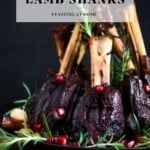
These meltingly tender lamb shanks bake low and slow in the oven in a rich red wine pomegranate juice sauce. A festive, Moroccan-inspired meal that is easy to make.
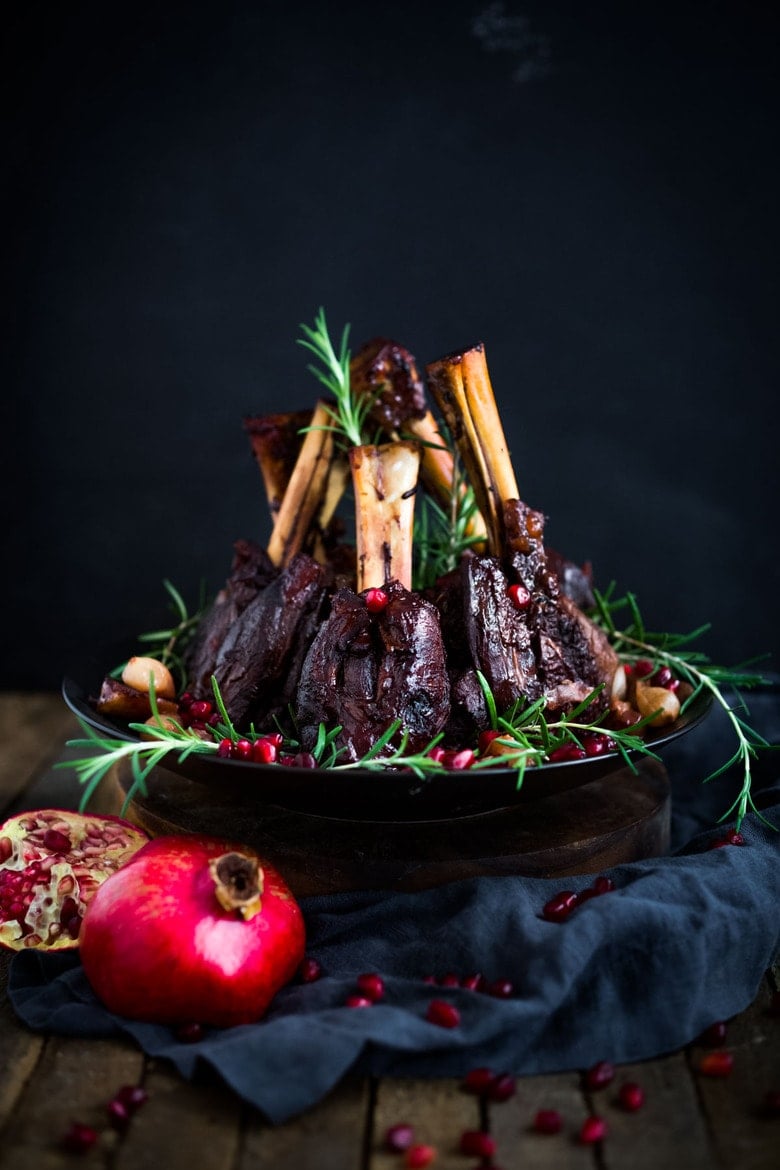
Hey friends, here’s a lovely recipe for slow-cooked lamb shanks that we’ve used in our catering business over the years during the holiday season, perfect for special dinners or the holiday table. The lamb shanks are cooked low and slow in the oven in a braising liquid made with pomegranate juice, red wine, and Moroccan spices. So flavorful and juicy, the succulent meat just falls off the bone and is meltingly tender.
Why you’ll love this Family recipe!
Growing up with an Egyptian father, lamb was the meat of choice for special occasions. My dad would always use the tougher cuts of lamb, like shank, leg, or shoulder, because they were affordable. But they took a little longer to prepare, to get them tender and melting. On those days, our home smelled amazing, and the anticipation of dinner would build all day long. These Moroccan flavors really elevate the lamb shanks, and if you prefer not to use wine, substitute additional broth and pomegranate juice. Frenching the lamb shanks (below) is another way to elevate the presentation, but not mandatory. 🥂
How to Pick Out Your Lamb Shanks
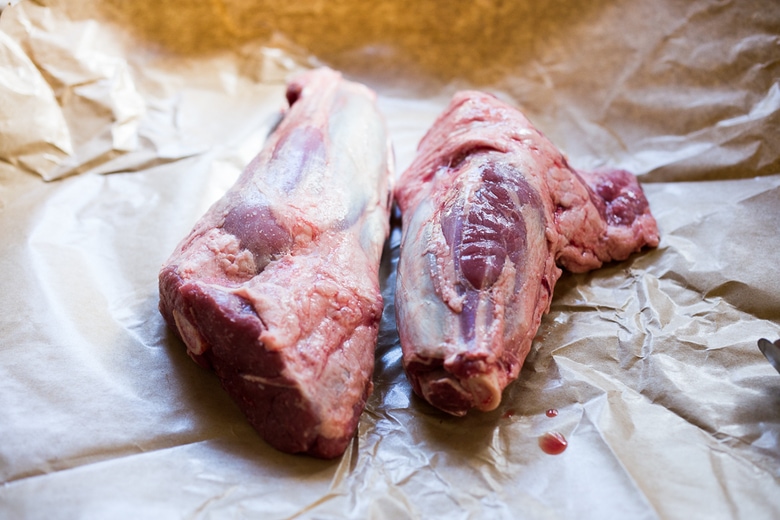
New to lamb shanks? This is what a lamb shank looks like before it is cooked. Each one is roughly 1 pound, and about 6-7 inches long. Keep in mind, the smaller the shanks, the faster they will cook. The most important thing is to purchase lamb shanks that are roughly the same size to ensure equal cooking times.
Other Key Ingredients
- Vegetables: Onion, garlic cloves, carrot, beet, and fennel (or celery). For a fragrant base of flavor. You can substitute celery ribs for the fennel if needed. The beet makes the sauce a beautiful, vibrant red.
- Rosemary sprigs and bay leaves: For a floral, herby flavor that adds to the complexity of the dish. Feel free to sub thyme sprigs for the rosemary.
- Orange zest: Adds a bright, festive burst of citrus flavor.
- Moroccan Spices: Cinnamon and cumin
- Rich red wine: Or ruby port (even better). Adds depth and complexity to the braising liquid. Want an alcohol-free version? Sub more broth and pomegranate juice.
- Pomegranate juice: adds a lovely, bright flavor to the lamb shanks. You could substitute more red wine in a pinch.
- Chicken stock: Or beef stock. Use homemade chicken stock for an even deeper flavor.
- Maple syrup: Or honey, for a hint of sweetness that balances the tartness of the wine and pomegranate juice.
- For garnish: Pomegranate seeds and rosemary sprigs.
How to French Lamb Shanks
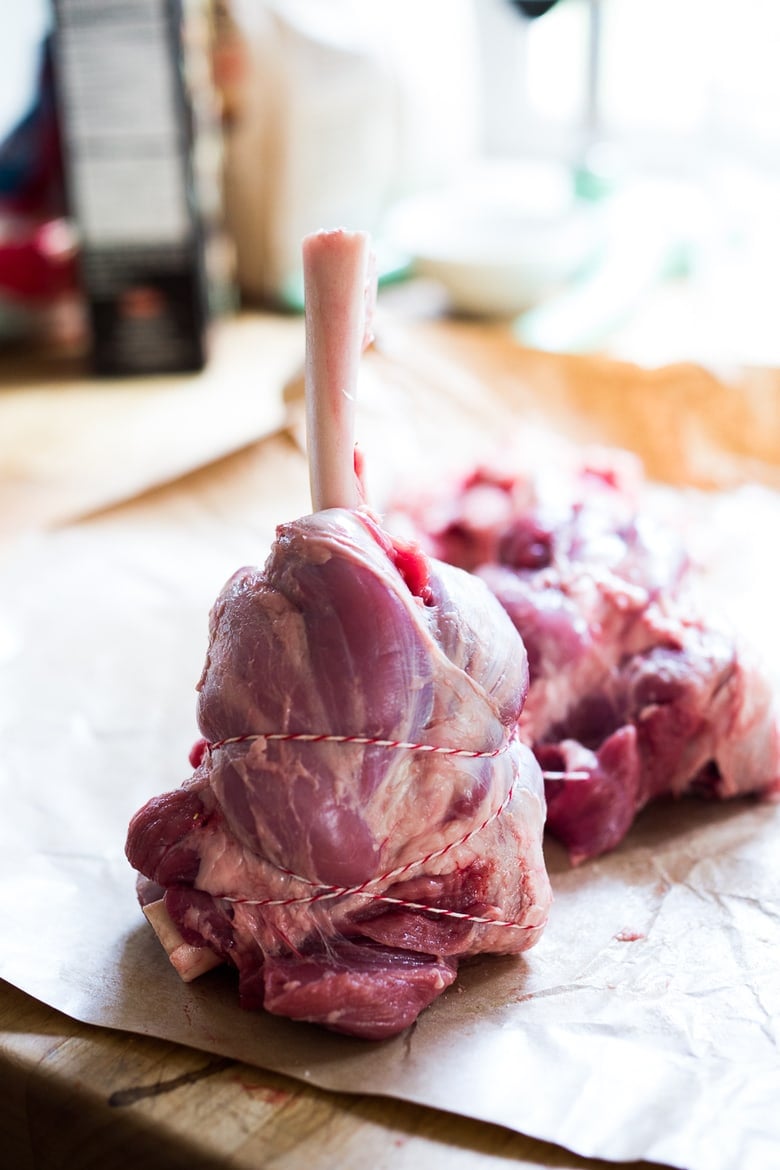
Frenching a lamb shank is a technique where you trim away the meat, fat, and connective tissue from the top portion of the bone to expose a clean section of bone.
Trim & Expose the Bone– Using a sharp boning knife, cut around the shank about 1-2 inches below the end of the bone (where you want the "handle" to begin). Score through the meat and sinew, pulling it down.
Scrape the Bones Clean. Turn the knife blade upside down (using the dull side) or use the back of the blade to scrape downward toward the cut end. Tuck meat, fat, and connective tissue from the exposed section of bone until it's clean and smooth.
Tidy and shape. Wrap any ragged edges and excess fat around the top of the shank for a clean presentation. Feel free to use kitchen twine.
How To Cook Lamb Shanks
1. Prep the lamb shanks. Preheat the oven to 350F. Feel free to French the lamb shanks (or not). Let the lamb shanks come to room temperature by unwrapping them and letting them sit on the counter for 20 minutes. Season the lamb with a generous amount of salt and pepper.
2. Sear the lamb shanks. Add oil to a large heavy-bottomed Dutch oven and bring to medium-high heat (or medium heat). Sear the lamb shanks in batches, turning them over to sear all sides, taking your time. When nice and browned, set them aside.
3. Make the braising liquid. To the same pan, add onion, garlic, carrot and fennel. Sauté over medium heat until fragrant and golden, roughly 8-10 minutes. Deglaze with the red wine, and reduce by half. Add the chicken stock, pomegranate juice, beet, orange peel, herbs, spices, wine, and stir. Bring to a simmer.
4. Braise the lamb shanks. Nestle the lamb shanks into the pot, bring to a simmer, then cover with a lid and place in the oven for 2 hours. Remove the lid. At this point, the lamb should be very tender, and the internal temperature should be 195-205°F. (Larger shanks will take longer to cook, and smaller shanks will take less time. If in doubt, check after 1 1/2 hours.) Bake uncovered for 30 minutes. Remove the lamb shanks from the pan and keep them warm on a plate or in a baking dish.
6. Make the sauce. Skim the fat and strain the braising juices. Tip: If making ahead, you could let this cool in the fridge to allow the excess fat to separate (it will rise and harden,and it is easy to remove it.) Or, skim off the warm fat with a ladle. Once strained, add the braising liquid back to the pot, bring to a gentle simmer on the stove, and reduce if needed.
7. Taste. Season with honey ( I like to add 1-2 tablespoons), salt and pepper, and/or a splash of balsamic vinegar if you want more acid. A squeeze of fresh orange juice is nice, too!
8. Garnish and serve. Arrange the lamb shanks on a serving platter and pour some sauce over the top. Garnish with fresh pomegranate seeds, fresh parsely and a few sprigs of rosemary.
Chef’s Tips
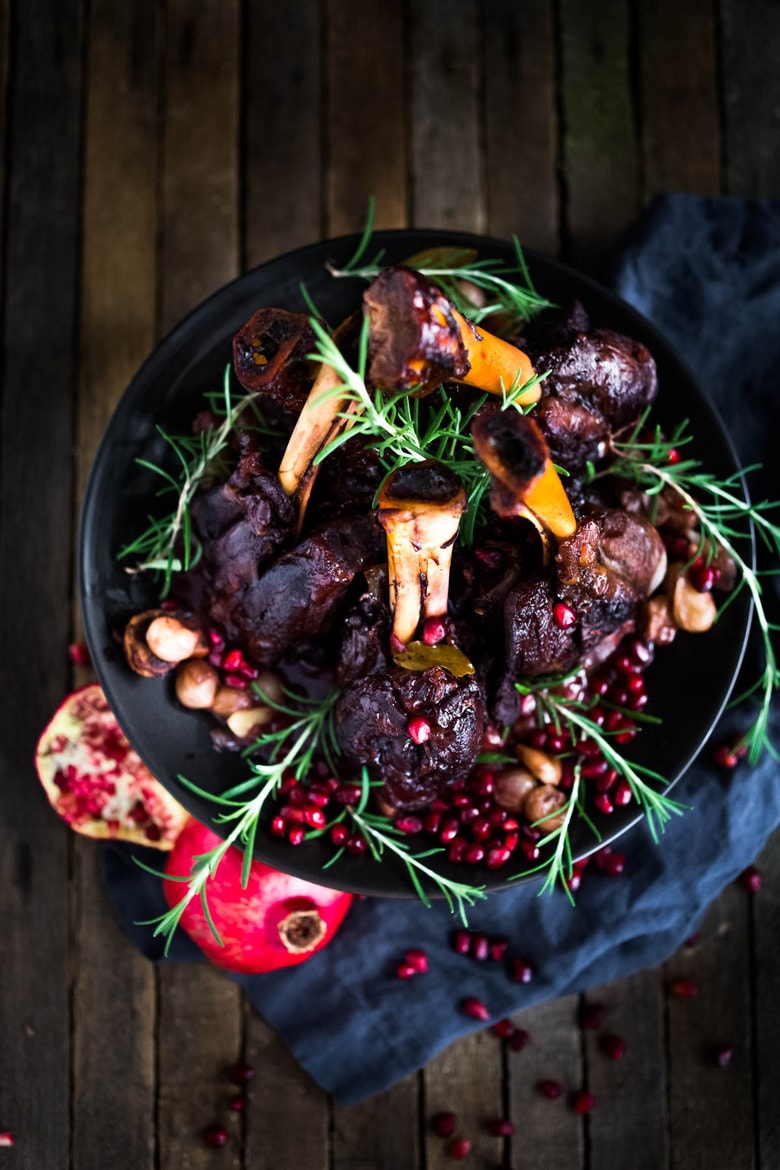
Here are a few tips to cooking lamb shanks that I’ve learned in the catering business:
- Buy lamb shanks of similar size so they cook in the same amount of time.
- French the lamb shanks for an elevated presentation. This is not imperative.
- Take your time searing the lamb. Season, then sear all sides in a generous amount of oil until deeply golden, taking your time. This step is key to locking in flavor and moisture.
- Add the beet to the braising liquid to impart a beautiful, vibrant color. to the finished sauce.
- Braise low and slow. Braising liquid should come up halfway or two-thirds up the meat. Don’t fully submerge. Braising the lamb can take 2 to 3 hours, depending on the size of the lamb shanks. Generally, lower and slower is best. The internal temperature should reach 190-200°F and remain there for a while to break down and become tender.
- Season the sauce at the end. Taste the sauce after reducing, then season with salt, pepper, honey, and balsamic – find the perfect balance.
Serving Suggestions
I love this best served over Creamy Polenta, but feel free to serve over rice, Ginger Whipped Sweet Potatoes, Roasted Garlic Mashed Potatoes, or make a couscous bowl with our Moroccan Roasted Carrots!
MAke Ahead & Storing lamb shanks
Making ahead. The shanks can be braised ahead, strained, and refrigerated in the braising liquid (for up to 4 days), then reheated. As it chills, the fat will rise to the top of the braising liquid and will harden, making it easy to remove. When catering for large groups, we would braise the shanks in large deep hotel pans covered with parchment and 2 layers of foil. Store in the braising liquid, remove fat, then reheat.
PLUS They actually taste better after they have time to sit in the braising liquid for a day or two.
Storage: Store leftovers in the refrigerator for 3-4 days in an airtight container. You can also freeze the lamb shanks in their braising liquid for up to 4 months. Reheat in the oven at 350F or on the stovetop with a splash of broth until warmed through.
FAQs
Slow cooking or braising lamb shanks is the best way to break down their tough fibers. This cooking method results in tender, deeply flavorful meat.
Rushing! The best rule to follow is low and slow. Rushing the cooking process can result in tough and dry meat.
Before searing, season the lamb shanks with a generous amount of salt and pepper. From there, the seasoning depends on what type of dish you’d like to create. Here, we use rosemary, orange zest, cinnamon, whole fennel seeds, cumin, and allspice. Wintery, woodsy herbs and warm, cozy spices pair best with lamb.
It depends on the size of your lamb shanks. Smaller sizes require less time, and larger shanks will take longer. It can take anywhere from 1 1/2 to 3 hours to cook. The internal temp should reach 190-200F when done.
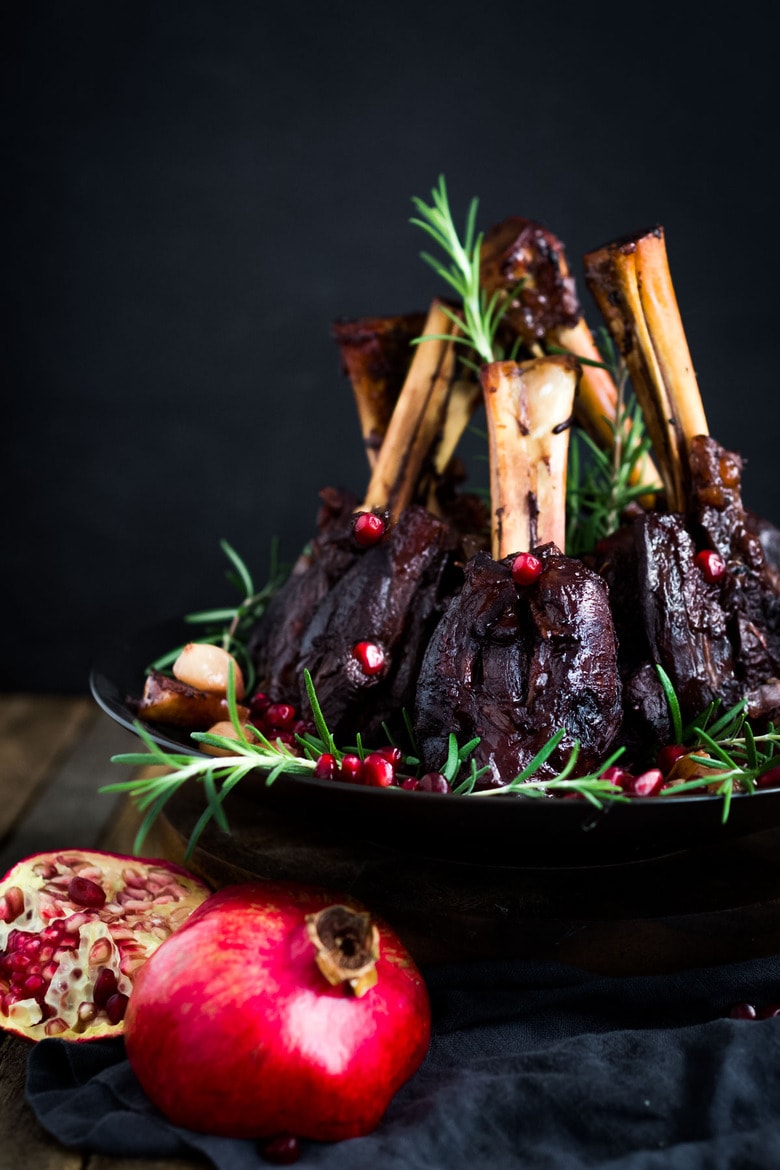
I hope you love these braised lamb shanks as much as we do! They’ve been a huge hit in our catering business over the years, and I couldn’t wait to share them with you!
Cheers and love! xoxo Sylvia
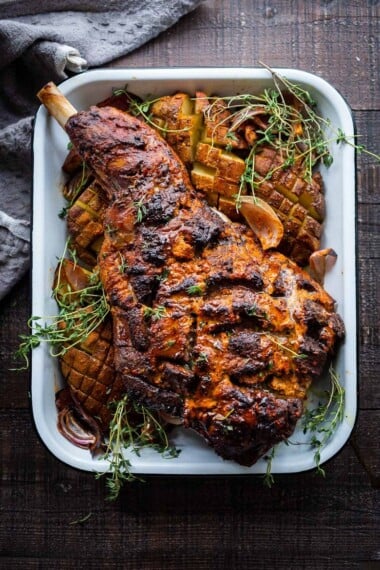
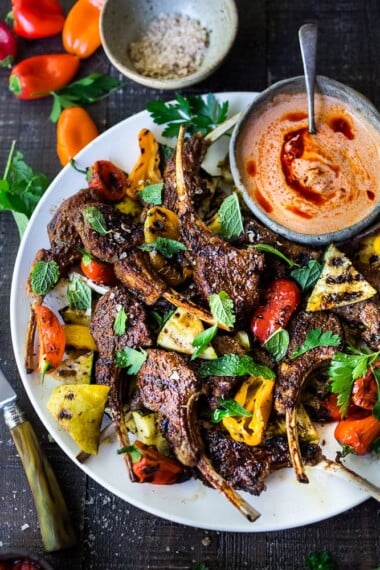
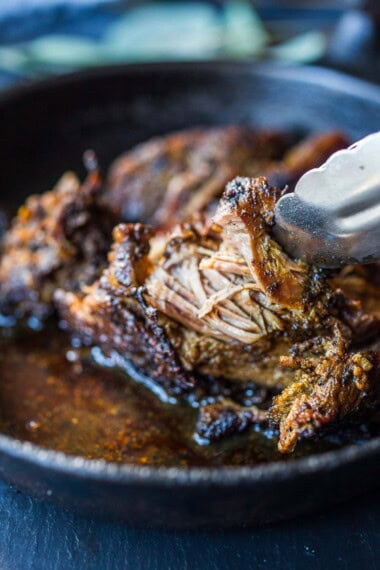
More Lamb Recipes You Might Like
Related: 20 Hearty Comfort Food Recipes for Fall and Winter!
After you try this Braised Lamb Shank recipe, let us know how it turns out in the comments below. Your review will help other readers, too! Sign up here to join our community and receive our latest recipes and weekly newsletter! xoxo Sylvia
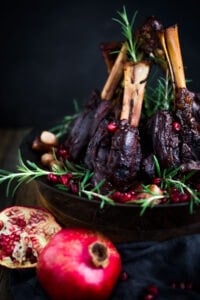
Braised Lamb Shank Recipe
- Prep Time: 60 minutes
- Cook Time: 3 hours
- Total Time: 4 hours
- Yield: 4 1x
- Category: Christmas recipes, dinner ideas, holiday, lamb, Main
- Method: Baked
- Cuisine: American, Moroccan
- Diet: Keto
Description
Oven Braised Lamb Shanks with Pomegranate – a festive, Moroccan-inspired lamb recipe that is elegant and delicious! Succulent lamb shanks are roasted in the oven until tender and falling off the bone then drizzled with a flavorful pomegranate sauce.
Ingredients
- 4 lamb shanks (3/4 lb- 1 lb each)
- 1 teaspoon salt
- 1 teaspoon fresh black pepper
- 3 tablespoons olive oil
- 1 large onion- diced
- 4–6 garlic cloves, smashed
- 1 1/2 cups fennel bulb, diced (or sub celery-diced)
- 1 1/2 cups carrot diced (or sub parsnip)
- 1 small red beet, scrubbed and diced (optional, this is for glorious color, about 1/2 cup)
- 1 1/2 cups rich red wine (cab or merlot) or ruby port (even better!)
- 1 cup pomegranate juice
- 2 cups chicken stock or beef broth
- 7–10 rosemary sprigs (or sub thyme sprigs ), more for garnish
- 2 bay leaves
- 1 cinnamon stick (or 1/2 teaspoon cinnamon)
- 1 teaspoon cumin
- 1 teaspoon fennel seeds (optional)
- 1/2 teaspoon allspice (optional)
- optional – 3-inch x strip of orange zest (use a veggie peeler)
- Add to taste after braising: splash maple syrup or honey, balsamic vinegar, salt, and pepper
- Garnish: pomegranate seeds, rosemary sprigs, fresh Italian parsley or mint leaves.
Serve over creamy polenta or couscous, or mashed potatoes, or mashed sweet potatoes
Instructions
Tip: This recipe for oven-braised lamb shanks is fairly straightforward and can be done in about 3 ½-4 hours, but I suggest, for your first time, plan an extra hour, or make them ahead and reheat.
1. Prep the lamb shanks. Preheat the oven to 350F. Let the lamb shanks come to room temperature by unwrapping them and letting them sit on the counter for 20 minutes. Season the lamb with a generous amount of salt and pepper.
2. Sear the lamb shanks. Add oil to a large heavy-bottomed Dutch oven and bring to medium-high heat (or medium heat). Sear the lamb shanks in batches, turning them over to sear all sides, taking your time. When nice and browned, set them aside.
3. Make the braising liquid. To the same pan, add onion, garlic, carrot and fennel. Sauté over medium heat until fragrant and golden, roughly 8-10 minutes. Deglaze with the red wine, and reduce by half. Add the chicken stock, pomegranate juice, beet, orange peel, herbs, spices, wine, and stir. Bring to a simmer.
4. Braise the lamb shanks. Nestle the lamb shanks into the pot bring to a simmer, then cover with a lid and place in the oven for 2 hours. Remove the lid. At this point, the lamb should be very tender, and the internal temperature should be 195-205°F. (Larger shanks will take longer to cook, and smaller shanks will take less time. If in doubt, check after 1 1/2 hours.) Bake uncovered for 30 minutes. Remove the lamb shanks from the pan and keep them warm on a plate or in a baking dish.
6. Make the sauce. Skim the fat and strain the braising liquid. Once strained, add the braising liquid back to the pot, bring to a gentle simmer on the stove, and reduce if needed. (See notes)
7. Taste. Season with honey ( I like to add 1-2 tablespoons), salt and pepper, and/or a splash of balsamic vinegar if you want more acid. A squeeze of fresh orange juice is nice, too!
8. Garnish and serve. Arrange the lamb shanks on a serving platter and pour some sauce over the top. Garnish with fresh pomegranate seeds, fresh parsely and a few sprigs of rosemary.
Notes
If new to braising meat- the internal temp must reach 190F and stay there a while for the tough fibers to break down and become tender. The longer you braise, the more tender it will get, as long as it’s in the braising liquid. In this case, I like the lamb to be fork-tender, but not so tender that it literally falls off the bone. It still tastes delicious, but then you’ll lose that lovely bone-in presentation.
Making ahead. The shanks can be braised ahead, cooled, and refrigerated in the braising liquid (for up to 4 days), then reheated. The fat will rise to the top and will harden, making it easy to remove. This is especially nice if making for larger groups, or you can make several batches ahead. When catering for large groups, we would braise the shanks in large deep hotel pans covered with parchment and 2 layers of foil. Store in the braising liquid, then reheat.
It is imperative to taste the sauce after you cook it down a bit. Add salt to taste, and I feel the honey is truly needed here- it balances out the tartness of the pomegranate juice.
If you want an even thicker sauce, whisk 2 teaspoons of cornstarch into 1 tablespoon of water to make a slurry. Whisk into the sauce and bring to a simmer. Turn the heat off. Alternatively, you could blend ( in a blender) some of the strained onion, fennel/beet mixture into the sauce to thicken.
Nutrition
- Serving Size: 1 lamb shank ( 8 ounces cooked meat) with sauce
- Calories: 571
- Sugar: 17.6 g
- Sodium: 456.4 mg
- Fat: 26.7 g
- Saturated Fat: 9.8 g
- Carbohydrates: 25.2 g
- Fiber: 2.9 g
- Protein: 54.7 g
- Cholesterol: 178.5 mg

Made these for our Valentine’s dinner, and they were perfectly tender and delicious. The Moroccan spices and pomegranate juice accentuated the flavors. I used red ruby port as you suggested, it was surprisingly easy to make and hubby loved it too. Leftovers are divine (eating now). Thanks for another great recipe.
Great to hear Lizbeth!
Would venison shanks work?
It’s worth a try John!
Hi Sylvia,
I’m very excited to try this recipe for my birthday next month. Just to clarify, if we are making this a day in advance, what is the process for re-heating?
Hi! I would cool the shanks in the braising liquid. The next day, remove the fat that has hardened, then warm either on the stove top over medium heat or in 375F oven until warmed all the way through. Then make the sauce. I know it would be nice to make the sauce ahead, but storing the lamb in the braising liquid will keep them nice and tender.
Thank you for the clarification, and wow! These turned out absolutely delicious. I can’t wait to make these again (possibly for Christmas), and my husband feels the same. We actually had them with your polenta and sautéed kale recipe—it was the perfect fall feast.
Any alternative for All spice. Don’t have it in the local grocery. Planning to cook it today and I have all other items.
Just leave it out or maybe ground cloves.