

Learn how to make fresh homemade pasta from scratch. It’s easier than you think! Made with simple ingredients and packed with my best tips for perfect pasta every time. Video.
Why This Recipe Works
Much like life, the secret to perfecting pasta dough is knowing when to rest. Pasta has taught me that the best results most often come from not forcing or rushing. And how a little patience can transform simple ingredients into something extraordinary. ✨
In Tuscany, during an unforgettable pasta-making class with a few dear friends, the Italian chef shared a bit of wisdom I've never forgotten: "Don't fight the dough."
As a chef myself, it struck me how simple and true this advice was-both in the kitchen and in life. Resting the dough throughout the whole process allows the gluten to relax and the flour to fully absorb the eggs, so rolling and shaping feel effortless.
Here I’ll share a few tricks I learned along my pasta-making journey that I think may be valuable!
Homemade Pasta Ingredients
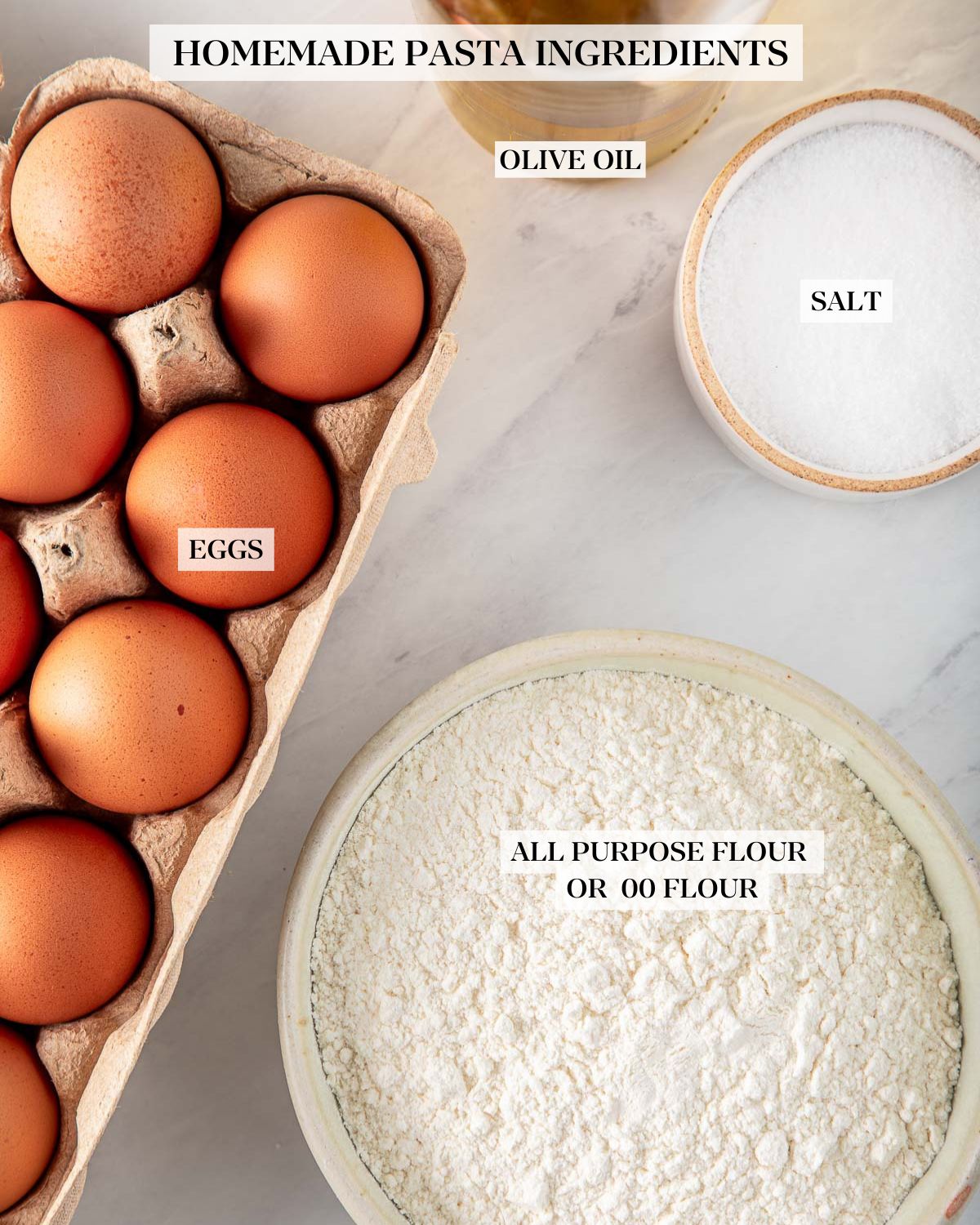
- All-purpose flour or 00 flour: Double-zero flour is extra-fine ground flour, similar in texture to cornstarch. 00 flour yields the most tender pasta and is the type of flour commonly used in Italy, typically along with semolina flour. All-purpose flour is a little coarser, but still results in a very good-textured pasta.
- Eggs: Use large eggs for the best texture and moisture.
- Olive oil: I love adding olive oil to make the pasta a little easier to handle- use high-quality, extra-virgin olive oil. A splash of olive oil adds a touch of suppleness, helping the dough feel silkier under your hands and roll out with less resistance.
- Sea salt: Adds great flavor and strengthens the gluten to keep the pasta intact.
- For dusting (optional): You can use rice flour (the best flour to prevent sticking) or all-purpose flour for dusting.
Equipment for Making Pasta
- Mixing bowl: Alternatively, you can make the pasta dough directly on a floured, clean work surface. Up to you!
- Bench scraper: This is the easiest tool to use for separating the dough.
- Large sheet pans: Ideally, you need two extra-large sheet pans, or you can use three regular baking sheets.
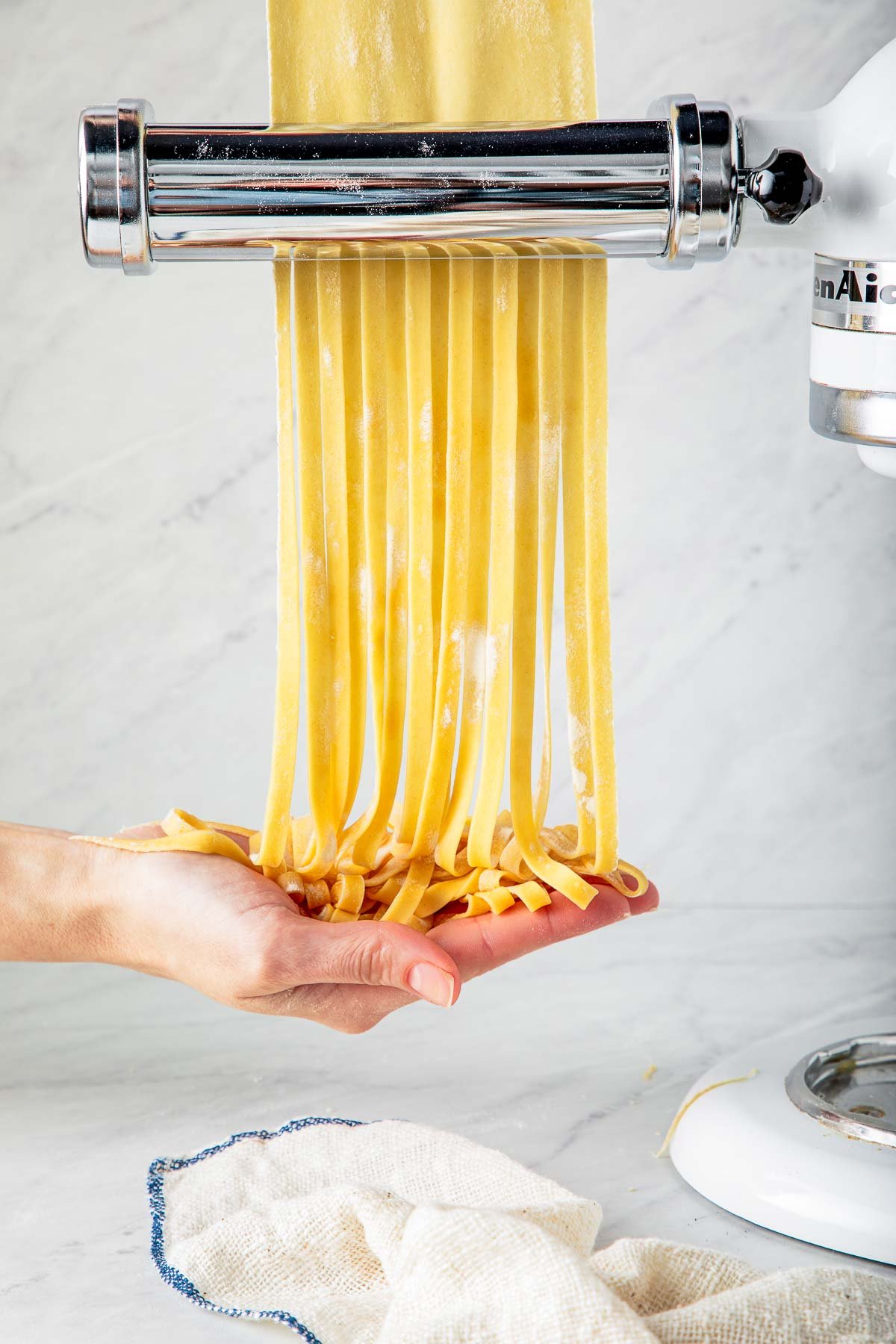
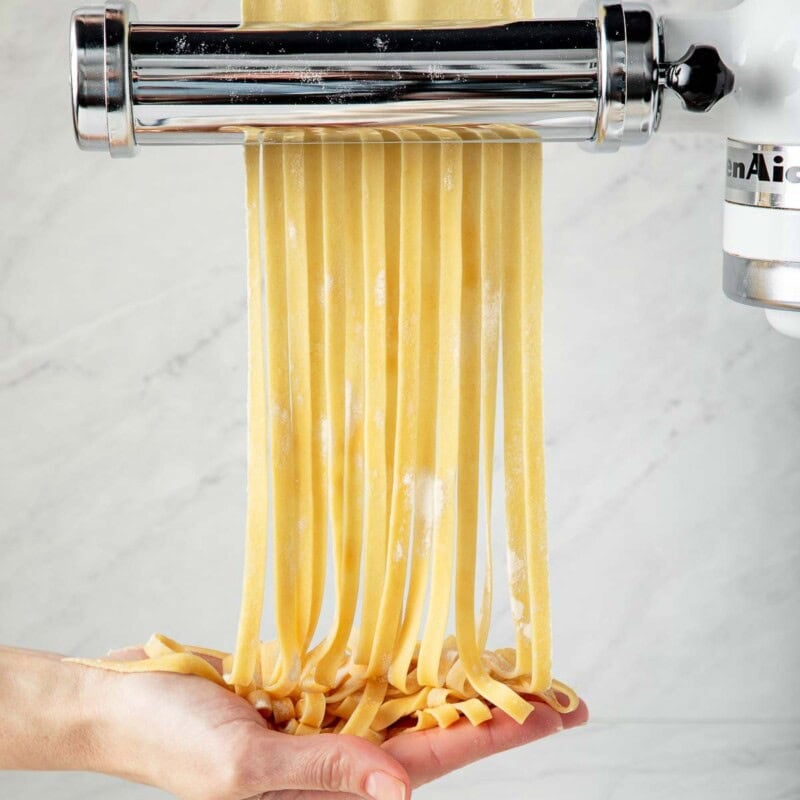
- Pasta maker: I use KitchenAid’s pasta attachment roller and cutter. Using a pasta maker is the easiest method for making homemade pasta, but you can cut the pasta by hand, if desired.
Substitutions & Variations
- All-purpose flour: If you don’t have 00 flour, you can substitute it with all-purpose flour. It will yield both tender and slightly chewy results.
- Semolina flour: 00 flour is typically used with a little bit of semolina flour for a sturdier, chewier pasta that holds its shape. This is especially helpful when using a pasta extruder (penne, spaghetti, macaroni, rigatoni). For sturdier pasta, use 10-25% semolina, and for pasta sheets, like ravioli or tortellini, use 10-15%% semolina flour. *A good way to think of it is that semolina gives structure and “bite”, and 00 flour gives silkiness - the more semolina flour used, the more rustic and toothsome the pasta will be.
- Who says pasta needs eggs to be delicious? With just flour, water, olive oil and a pinch of salt, you can create tender, chewy noodles that feel simple, rustic, and utterly satisfying. Knead, rest, and roll-it's pasta in its purest, most comforting form.
How to Make Homemade Pasta
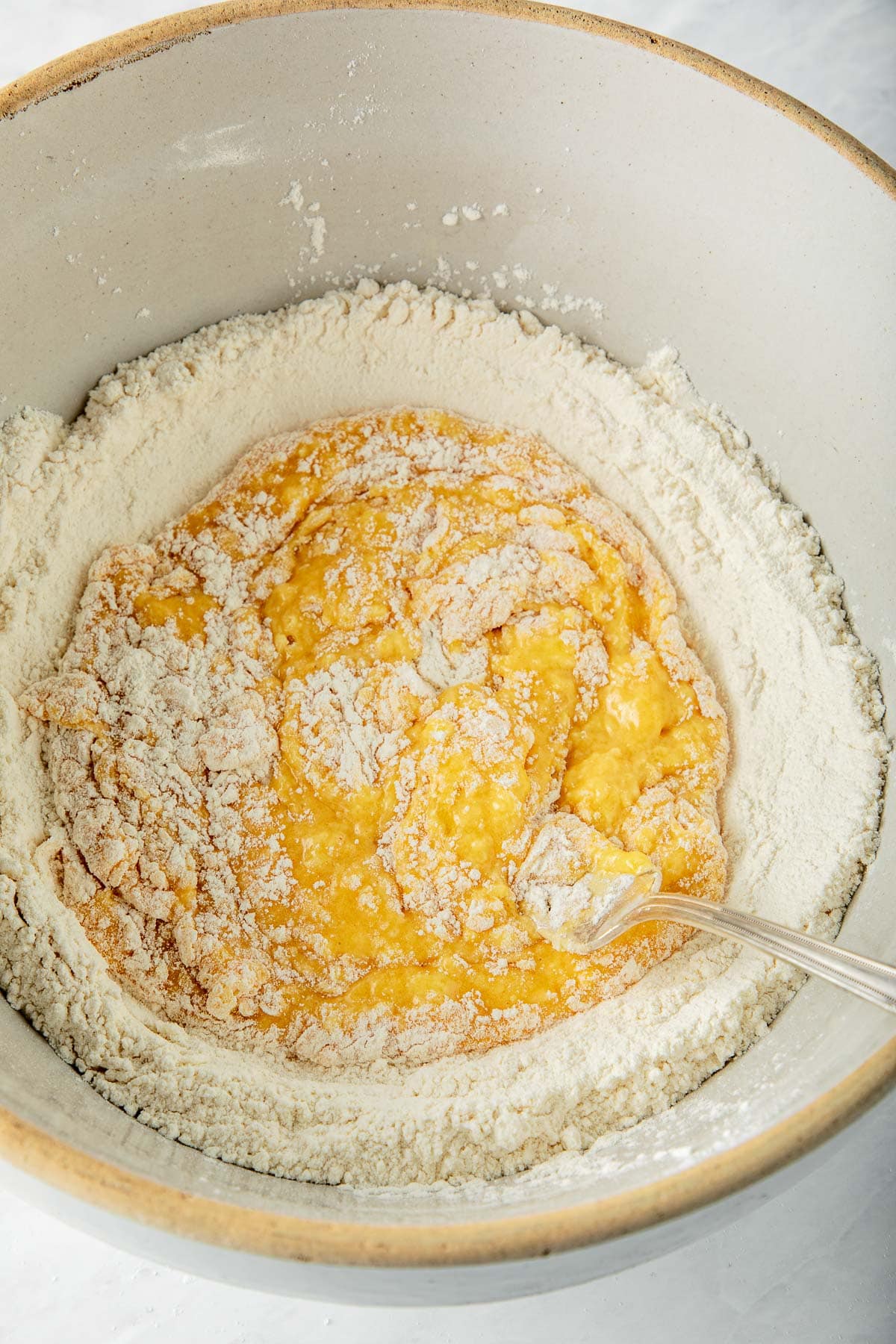
1. Make the pasta dough. Add flour to a large bowl. Create a well and place the eggs, olive oil, and salt in the center, using a fork to whisk the three ingredients together until achieving a smooth-ish consistency. Then use your fork to whisk the flour into the yolks until mostly incorporated. Use your fingers to incorporate the flour, pinching the flour into the dough until you have a craggy, cohesive ball.
Tip: If the flour isn’t incorporating, use a few teaspoons of water at a time as needed. If the dough feels really sticky, add a little flour.
Transfer the dough to a floured surface and rest at room temperature for 10 minutes.
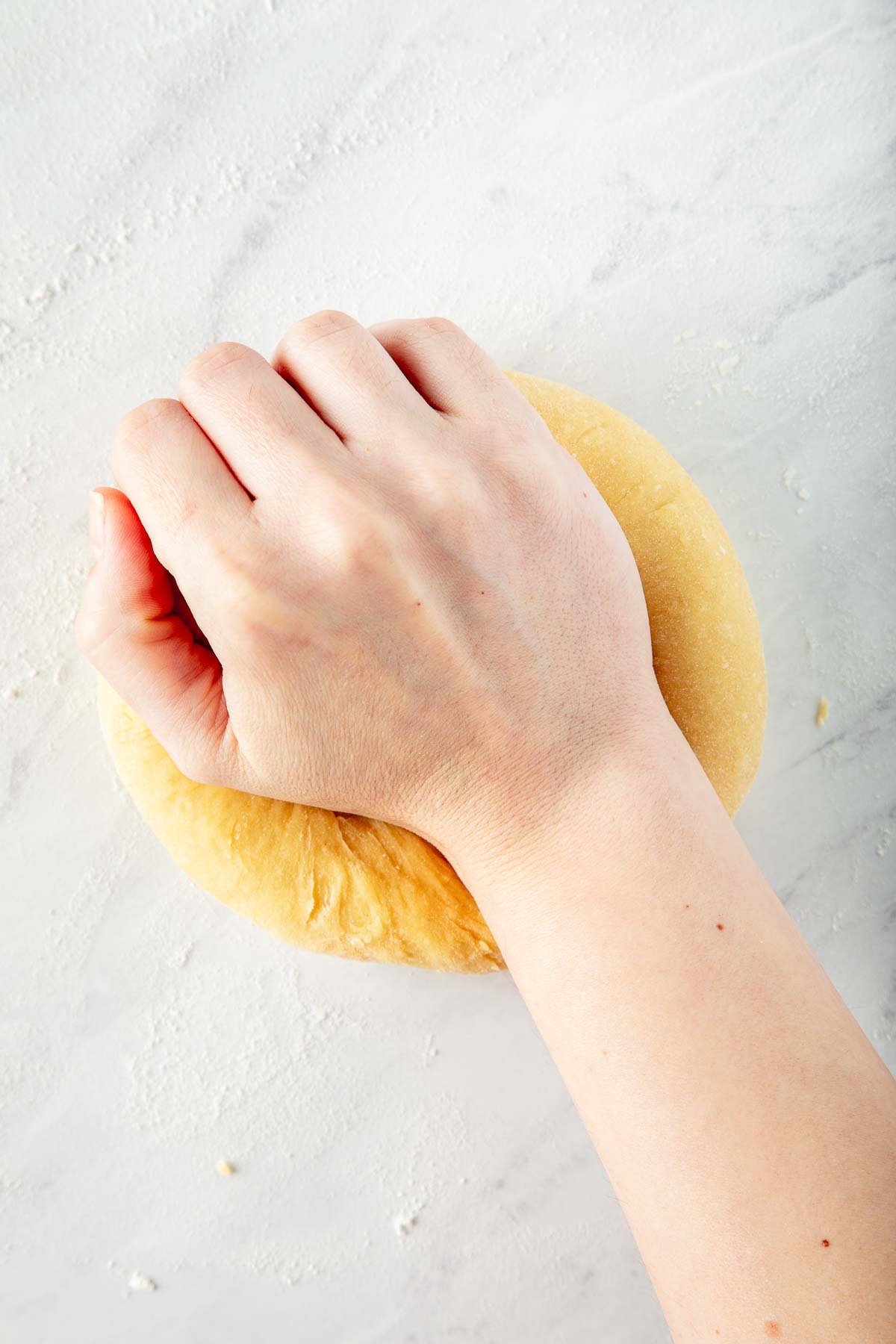
2. Knead the dough. Knead the dough for about 5-7 minutes. Use the heel of your hand to press the dough down, away from you, onto the counter, then fold. Continue pressing and folding, repeating until the mixture is smooth with elasticity. It will feel stiff at first, but it will relax.
3. Rest. Form the dough into a smooth ball, wrap, and rest for 20-30 minutes on the counter. Or you can wrap it tightly in plastic wrap and store it in the fridge overnight.
4. Roll the dough. Gather 2 extra-large sheet pans and dust them lightly with flour (I like to use rice flour). Divide the dough into 4 pieces using a dough scraper. Dust your work surface with flour. Working with one piece of dough at a time (wrap the rest), flatten the dough into a long oval, no wider than your pasta maker.
TIP: Do I really need a pasta maker? No! Roll the dough out on a floured surface, letting the dough rest whenever it resists. Roll out to 1/12 to 1/16th inch thickness, then slice.
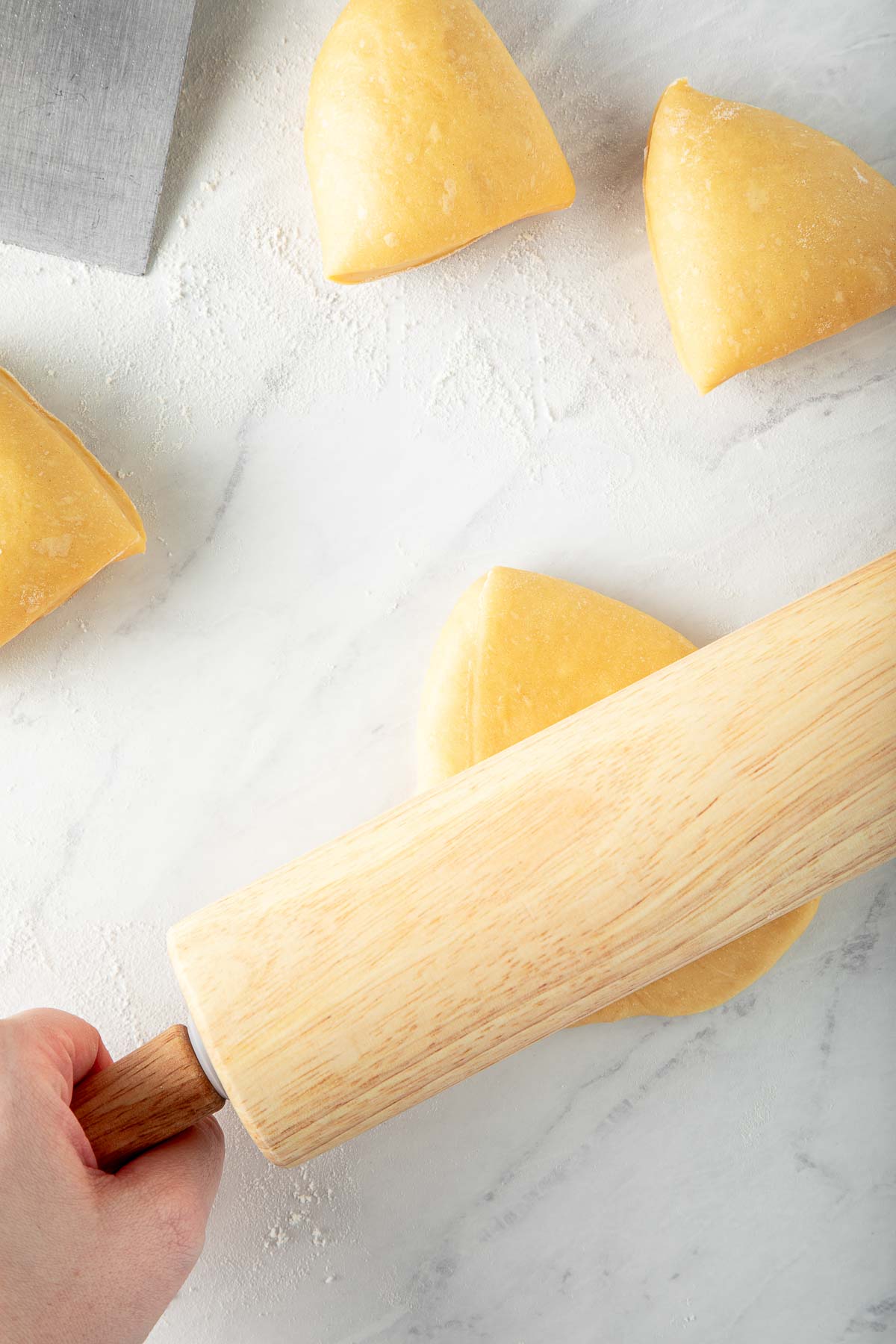
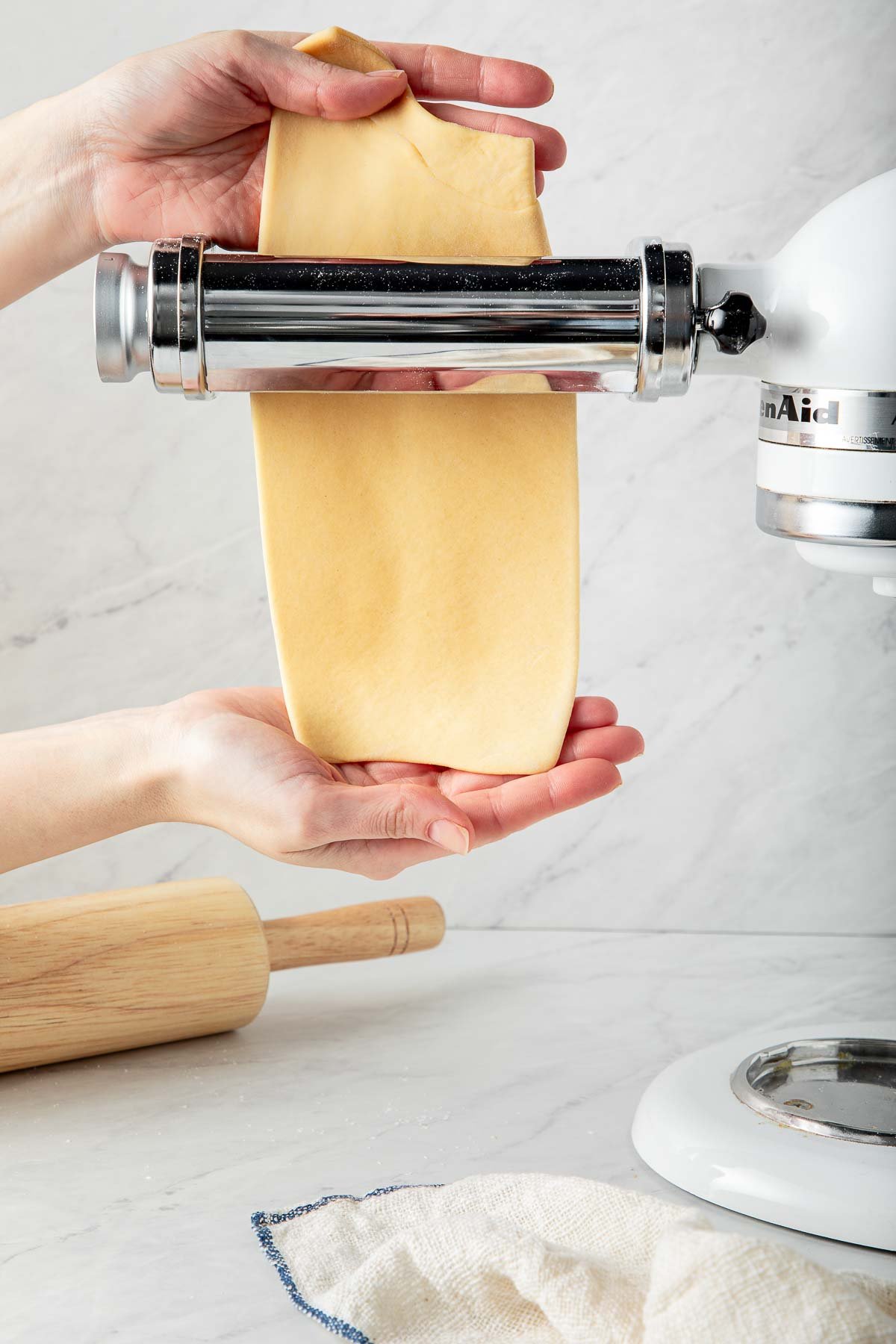
Roll on the thickest setting (2x), then fold the dough in half, and roll again on the thickest setting. Fold the dough into thirds, flour, and roll again (2x), and repeat until the dough is smooth and even, about the width of the pasta maker. Dust with flour as needed. Roll the dough at slightly thinner settings until it’s about 1/4-inch thick. Don’t pull out the dough. Let it rest on the floured surface as it comes out.
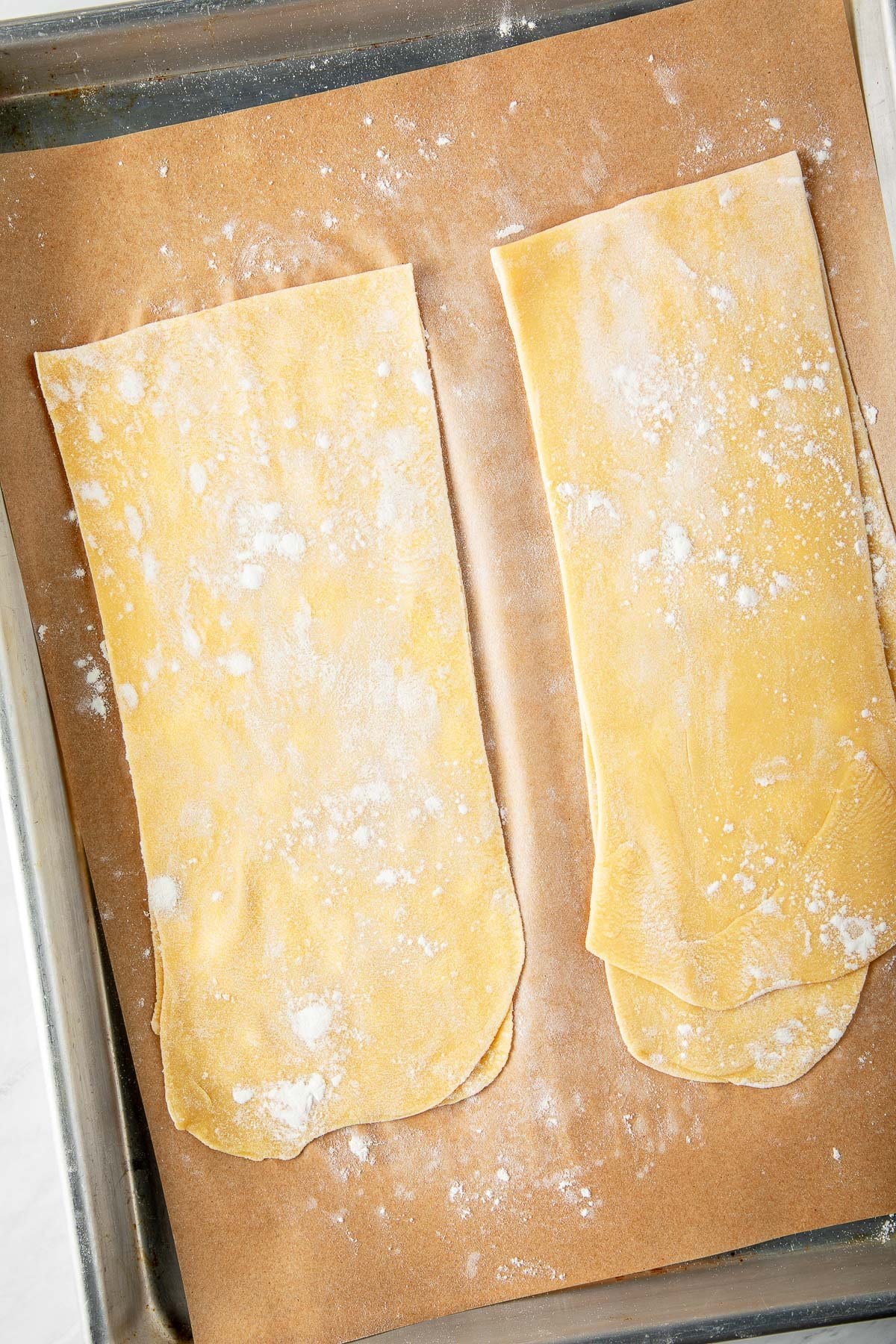
5. Rest again. Lightly dust both sides and place on a sheet pan. Fold it over, cover with a kitchen towel, and let it rest while repeating the process with the other 3 pieces.
6. Do a second roll. Once all 4 pieces are rolled to 1/4-inch thick and have rested for at least 10 minutes, you’re ready to roll them thinner. Start with the most “rested” dough and run it through the pasta maker 2 times at each level, gradually thinning and sprinkling with flour as needed until you get it to the 1/16-inch thick level. Don’t pull out the dough, just carefully nudge it out onto the floured surface. The dough should be silky smooth and almost see-through. Repeat with the remaining 3 pieces, dusting and covering as you go.
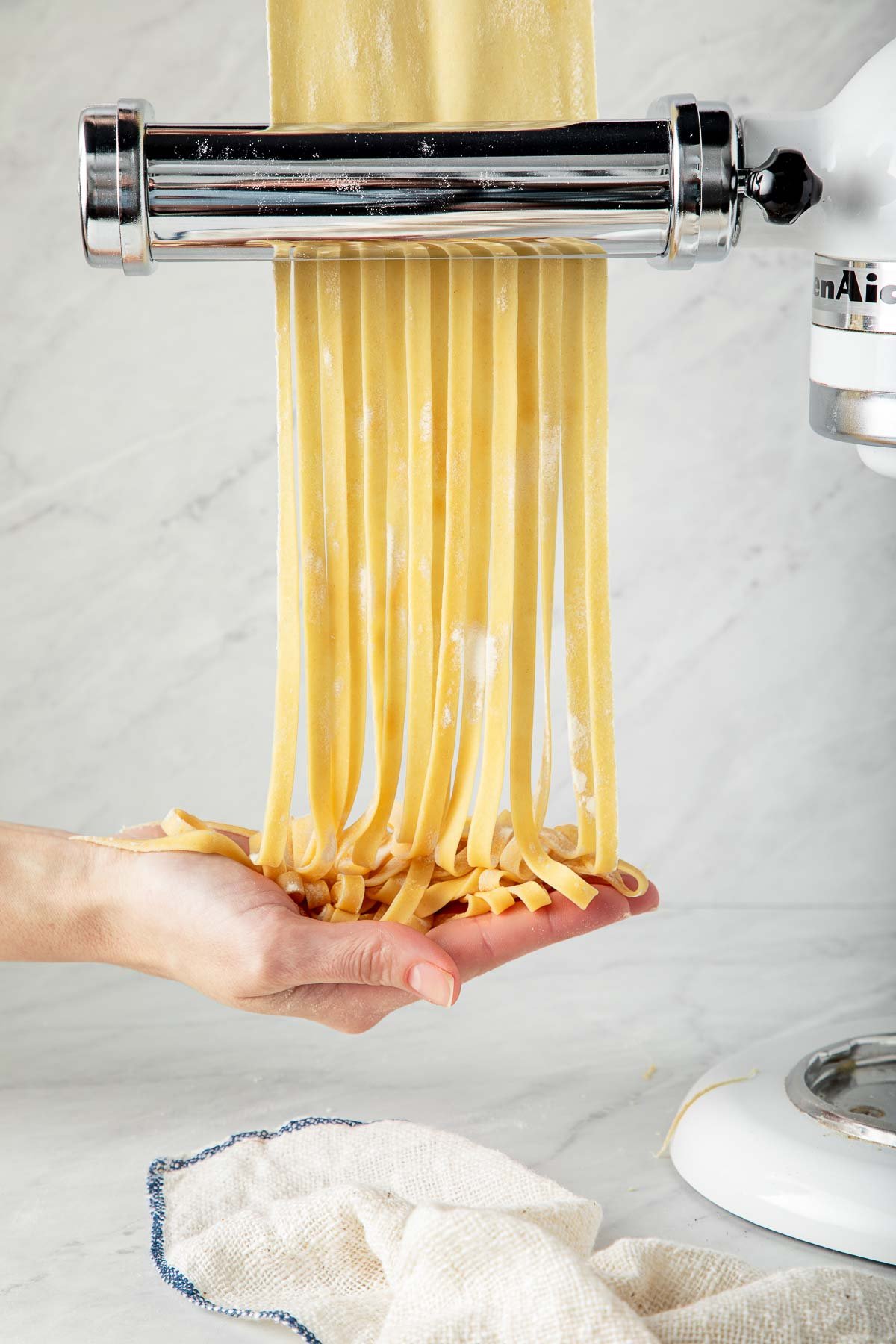
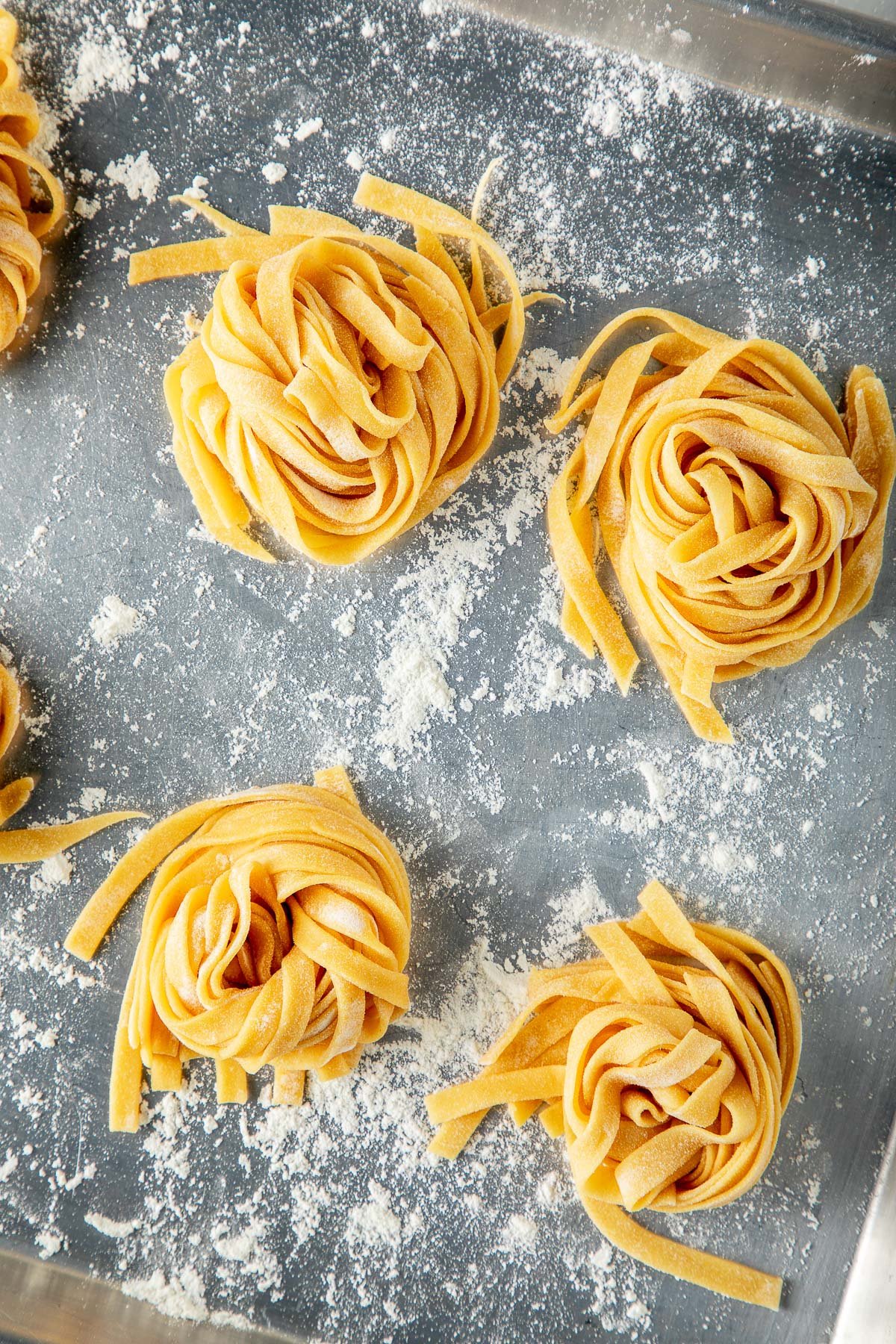
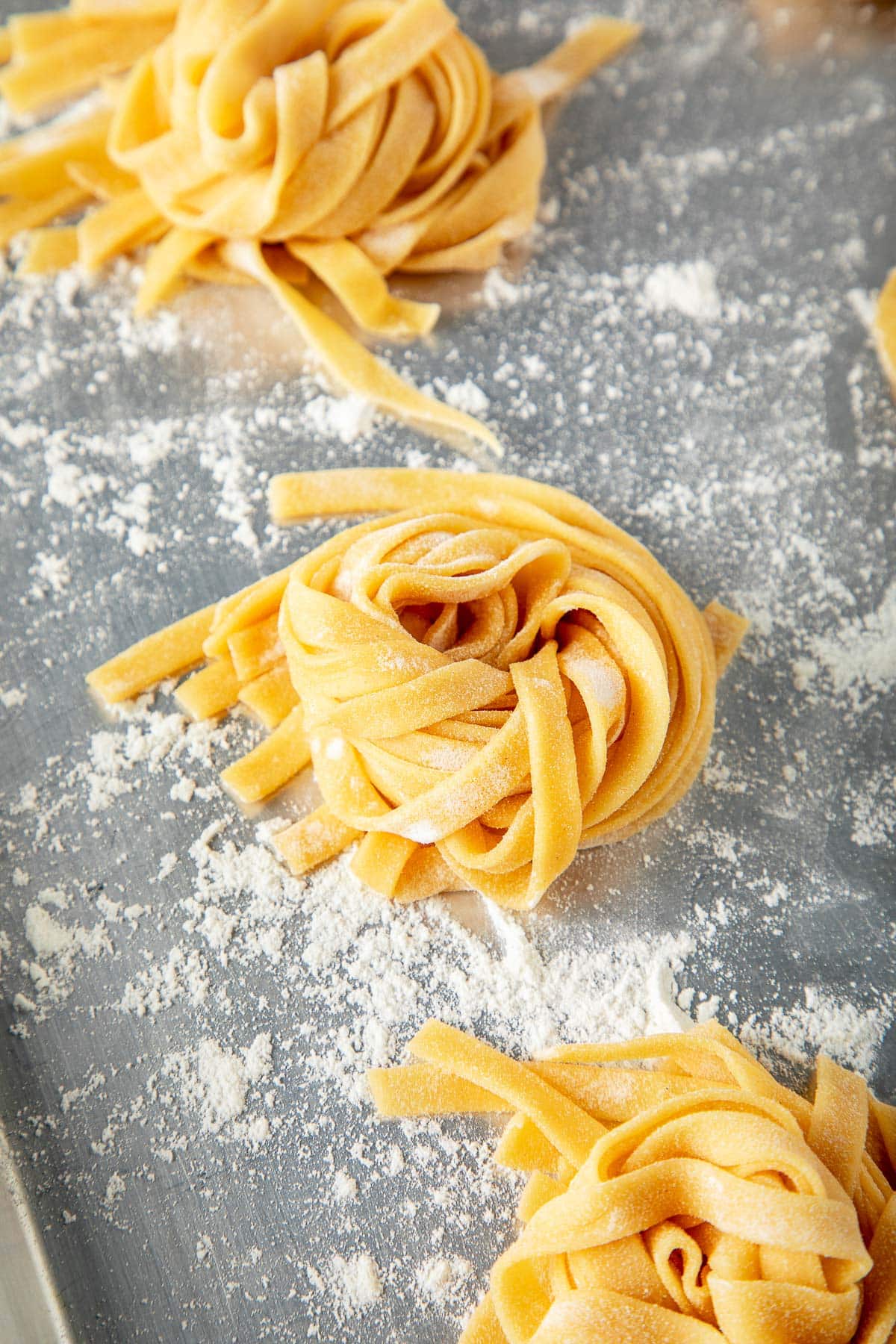
7. Cut the pasta. Apply the pasta cutter attachment. Trim the ends and cut the long sheets in half. Run each sheet through your pasta cutter, making sure to heavily dust it with flour after. Coil around your hand, creating little nests on the floured baking sheet, and cover. (You can also cut these by hand).
8. Dust and store. Dust the pasta lightly with rice flour and store in “nests” in an airtight container until ready to use. They’ll keep for up to 3 days. Single or shallow layers are best.
How to Cook Fresh Pasta
If cooking your homemade noodles right away, bring a large pot of salted water to a boil and cook the pasta for 2-5 minutes. At 2 minutes, taste and test a strand of pasta to see if it’s ready and continue doing so until al dente.
Instead of draining the pasta, use tongs to remove the pasta and toss it directly with your sauce.
Chef’s Tips
Rest the dough. The secret to perfect pasta? Don't fight the dough - rest it. Letting it sit for a little while relaxes the gluten and lets the flour fully absorb the eggs, so rolling and shaping become effortless. In pasta, as in life, a bit of patience goes a long way.
Use gradual thinning: Start rolling the pasta on the widest setting of your pasta machine (or first pass with a rolling pin). Gradually move to thinner settings, 1-2 passes at a time. Trying to roll it very thin immediately will cause cracking.
Dust lightly: Use just enough flour to prevent sticking. Excess flour can dry the dough and make it less tender and silky. Rice flour works like a dream here!
Storing Homemade Pasta
Refrigerate (up to 3 days)
- Lightly dust the fresh pasta with flour to prevent sticking. For long noodles (like tagliatelle), loosely coil them into nests, flouring. Place it in an airtight container or tightly wrap in the refrigerator. Nests or single layers are best.
Freeze (up to 3 months)
- Flash-freeze first: Arrange pasta on a baking sheet in nests or a single layer. Freeze for 1-2 hours until firm. Transfer frozen pasta into zip-top freezer bags or airtight containers.
- Cook from frozen: Boil directly from frozen; no need to thaw. Cooking time may increase by 1-2 minutes.
Drying Fresh Pasta (long-term storage)
- Air-dry: Hang long pasta on a pasta drying rack or lay in single layers on floured trays. Let it dry completely (12-24 hours, depending on thickness and humidity).
- Store dried pasta: Place in an airtight container in a cool, dry place, like your pantry. It can last months, like store-bought pasta.
Homemade Pasta Serving Suggestions
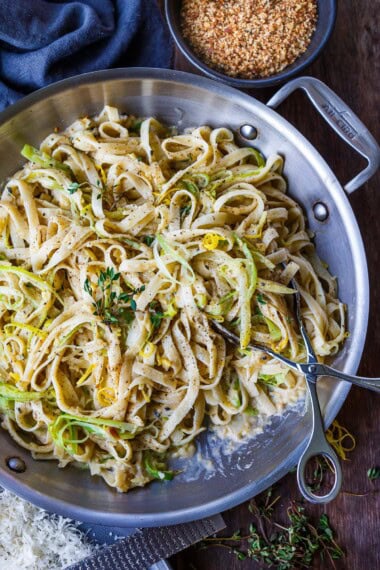
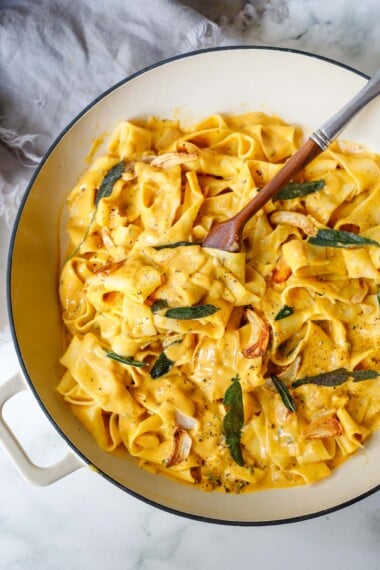
Making pasta dishes with fresh pasta is so easy and delicious! Use fresh homemade pasta to make our Lemon Pasta, our Miso Pasta, this Vegan Alfredo, or any of our tasty Pasta Recipes!
Toss your cooked pasta with any of our delicious sauces, like marinara, oven-roasted tomato sauce, butternut sauce, basil pesto, or carrot miso sauce.
FAQs
No! Roll the dough out on a floured surface, letting the dough rest whenever it resists. Roll out to 1/12 to 1/16th inch thickness. Slice!
Use Italian 00 flour with 10-25% semolina flour. 00 flour yields tender, silky pasta, while a small bit of semolina adds sturdiness.
No, you can make homemade pasta with all-purpose flour.
Semolina flour imparts a rustic texture and flavor to the pasta, while helping the strands hold their shape.
Yes! While I haven’t tested this yet, you could replace the eggs with water.
More Pasta Recipes to Use with Homemade Pasta
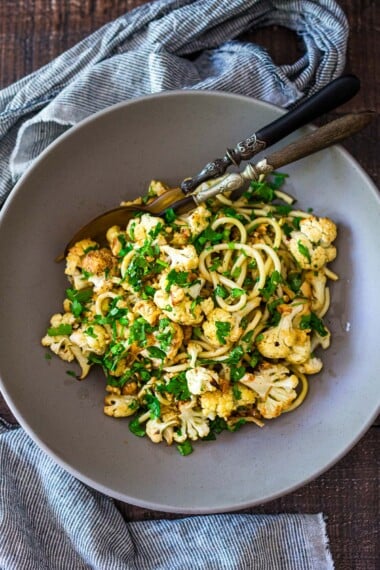
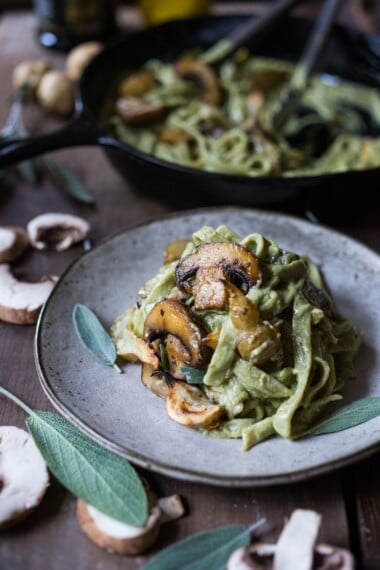
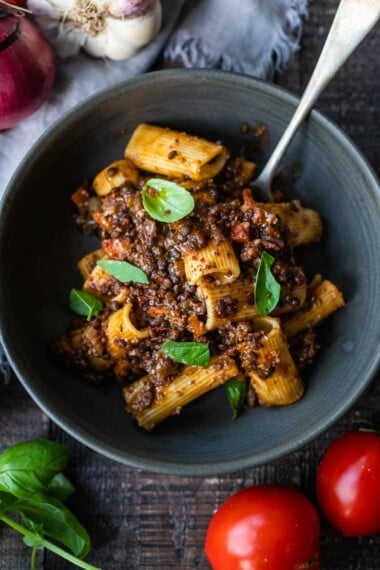
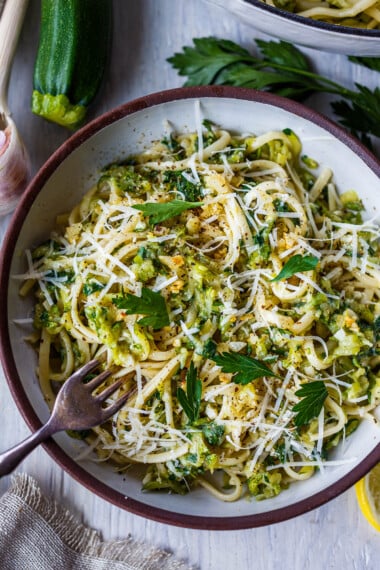
If you enjoy this homemade pasta recipe, you may also want to try our Homemade Gnocchi!
Watch How to Make Pasta
After you try this recipe, let us know how it turns out in the comments below. Your review will help other readers, too! Sign up here to join our community and receive our latest recipes and weekly newsletter! xoxo Sylvia
Easy Homemade Pasta Recipe
- Prep Time: 30 mins
- Cook Time: 3 mins
- Total Time: 33 minutes
- Yield: 3-4 1x
- Category: cooking basics, Pasta
- Method: various
- Cuisine: Italian
- Diet: Vegetarian
Description
Learn how to make homemade pasta from scratch, the easy way. Made with simple ingredients and my best chef tips for perfect pasta every time.
Ingredients
- 2 cups 00 flour or all-purpose flour, spooned and leveled
- 3 large eggs
- 2 teaspoons olive oil
- 1/2 teaspoon sea salt
- Water as needed
- Optional: Rice flour for dusting (the best for not sticking) or use AP flour.
- Optional: Semolina flour (for added texure and sturdiness); see notes.
Instructions
- Mix the pasta dough. Add the flour to a large bowl and create a well in the center for the eggs, olive oil and salt. Add the eggs, olive oil, and salt to the well in the middle and whisk with a fork until smooth-ish. Then, start mixing in the flour with the fork until it is mostly incorporated. Next, use your fingers to incorporate the flour, pinching the flour into the dough until you have a craggy, cohesive ball. *Add water a few teaspoons at a time as needed to incorporate all the flour. If it feels really sticky, add a little more flour. Place on a floured surface and rest for 10 minutes.
- Knead. Knead the dough until smooth and elastic, roughtly 5-7 minutes. Use the heel of your hand to press the dough down, away from you, onto the counter, then fold. Keep pressing and folding the dough, repeating until it is smooth and elastic. It will feel stiff at first, but it will relax.
- Second Rest. Made a smooth ball, wrap, and rest for 20-30 minutes on the counter ( or wrapped tightly overnight in the fridge.)
- First Roll. Ready 2 extra-large sheet pans, lightly dusted with flour (rice flour works great here). Divide the dough into 4 pieces. Dust your work area with flour. Working with one piece at at time (wrap the rest) flatten the dough into a long oval, not wider than your pasta maker. Roll on the thickest setting (2x), then fold the dough in half, and roll again on the thickest setting. Fold the dough in thirds, flour and roll again (2x), and repeat until the dough is smooth and even-textured, and about the width of the pasta maker. Dust with flour as needed, and roll the dough at slightly thinner settings until it’s about ¼ inch thick. Don’t pull on the dough, just let it gently rest on the floured surface as it comes out.
- Rest again. Lightly dust both sides, place on the sheet pan, fold over, cover with a kitchen towel, and let rest while you repeat the process with the three other pieces.
- 2nd Roll. Once all 4 pieces are done and rolled to ¼ inch thick, and rested at least 10 minutes, it’s time to roll them thinner. Starting with the most " rested" dough, run it through the pasta maker 2 times at each level, gradually thinning and sprinkling with flour as needed until you get it to the 1/16th -inch thick level. Don’t pull on the dough, just gently nudge it out on the floured surface as it comes out. Dough should be silky smooth and almost see-through. Repeat with the remaining 3 pieces, dusting, covering as you go.
- Cut the pasta. Trim the ends and cut the long sheets in half. Run each sheet through your pasta cutter, making sure to heavily dust with flour after, and coil around your hand, creating little nests on the dusted sheet pan. Cover. Alternatively, cut by them hand.
- Dust lightly with rice flour and store in “nests” in an airtight container until using, up to 3 days. Single or shallow layers are best here.
Notes
00 flour: Double-zero flour is extra-fine ground flour, similar in texture to cornstarch. It makes the most tender pasta ( typically used in Italy) but is generally used in conjunction with a bit of semolina flour. All-purpose flour is perfectly acceptable and yields both tender and slightly chewy results.
Semolina flour: Substitute 10-25% semolina flour for a sturdier, chewier pasta that holds its shape- especially useful when using your pasta extruder (penne, spaghetti, macaroni, rigatoni). Use 10% semolina flour when making pasta sheets for ravioli or tortellini.
Tip: Semolina gives bite; 00 flour gives silkiness. The more you lean toward semolina, the firmer and more rustic your pasta will be.
Rice flour: Rice flour is a godsend when dusting pasta- you’ll use less, and it prevents sticking!
Nutrition
- Serving Size: 4 ounces
- Calories: 311
- Sugar: 0.3 g
- Sodium: 345.5 mg
- Fat: 7.7 g
- Saturated Fat: 1.8 g
- Carbohydrates: 48 g
- Fiber: 1.7 g
- Protein: 11.2 g
- Cholesterol: 139.5 mg




We made this for Christmas Eve…very interactive for the whole family and sooooo delicious! Great, easy to follow instructions and step by step pictures were helpful for the teenagers (and me!). This one was a home run!
I’m so happy to hear this Catherine! Thank for sharing, sounds like a fun pasta night. 🙂
I got on your website to look at a different recipe and saw this. We were just talking about trying to make homemade pasta for our Christmas meal! This gives me the courage to try it out. Thanks for sharing your wisdom <3
Perfect timing! Love to hear how it goes Jessica.
We did it! The only tricky bit was in step 4 (first roll) figuring out if I should fold the dough in half length-wise or width-wise before putting it back through the machine. Either way, it turned out delicious and every bite was gobbled up!
Yay! So glad you gave it a go, really appreciate hearing this Jessica!