

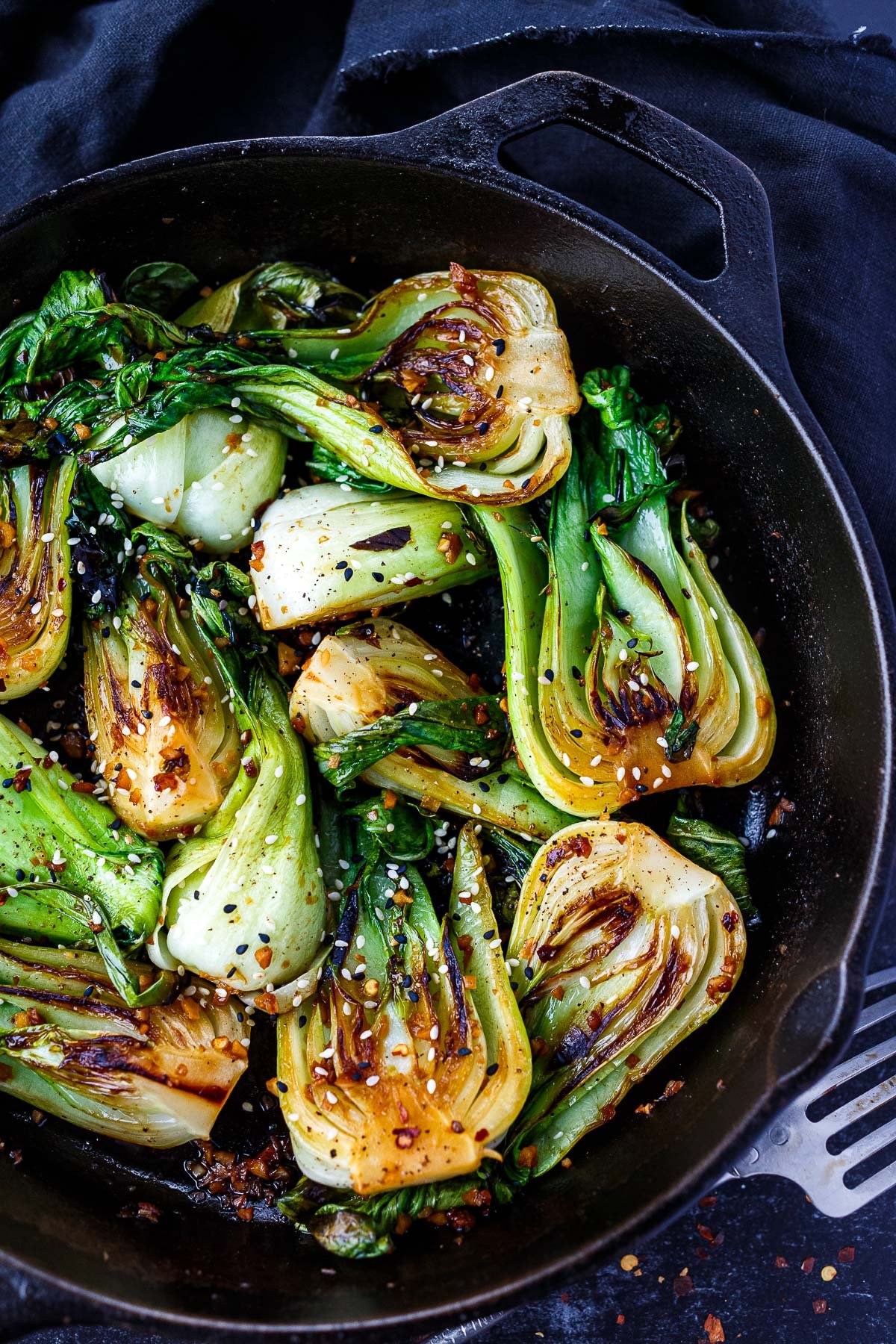
This bok choy recipe comes together fast and easy, delivering fresh, clean Asian flavor - a simple stir-fry and healthy side dish your body will crave. Vegan, gluten-free, adaptable, and easy! Video.
The past is already gone, the future is not yet here. There's only one moment for you to live.~ Buddha
This is one of my favorite bok choy recipes! In Chinese medicine, bok choy is known for its healing properties-anti-inflammatory, cooling, and hydrating-and its ability to clear toxins, regulate digestion, and support the spleen.
I once read that bok choy symbolizes good luck and prosperity because its Chinese pronunciation sounds like “100 good fortunes”. I feel like this when I am eating it- that it gives my body 100 good fortunes.
Why This is the Best Bok Choy Recipe
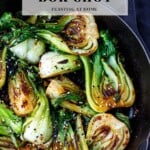
This recipe is fast, easy, and incredibly healthy-an effortless side dish that goes well with everything. Made with baby bok choi and simple ingredients (garlic, soy sauce, and sesame seeds), it’s juicy, succulent, and packed with savory Asian flavor. I often pair it up with our broiled miso salmon (or baked miso tofu) for a quick dinner. The bok choy sears to a gorgeous golden brown, staying tender-crisp while soaking up savory, garlicy sauce.
What is Bok Choy?
Bok choy, also known as pac choi or pak choy, is a Cruciferous veggie from the Brassica family. This Asian leafy green has a mild, sweet flavor with hints of mustard. You can eat the entire vegetable, from the white stem to the darker leaves. Naturally rich in vitamins A, C, K, and quercetin, it's as nourishing as it is delicious.
How to Pick Out the Best Bok Choy
We love using baby bok choy for its easy preparation. Look for vibrant, crisp leaves that stand tall and are firm. Avoid leaves that are yellow or wilting. The white stalks should be smooth, firm, and crisp, not rubbery or soft. Choose baby bok choy for a sweeter flavor and more tender texture. Regular bok choy has heartier stalks and tends to taste more bitter.
Baby Bok Choy Ingredients
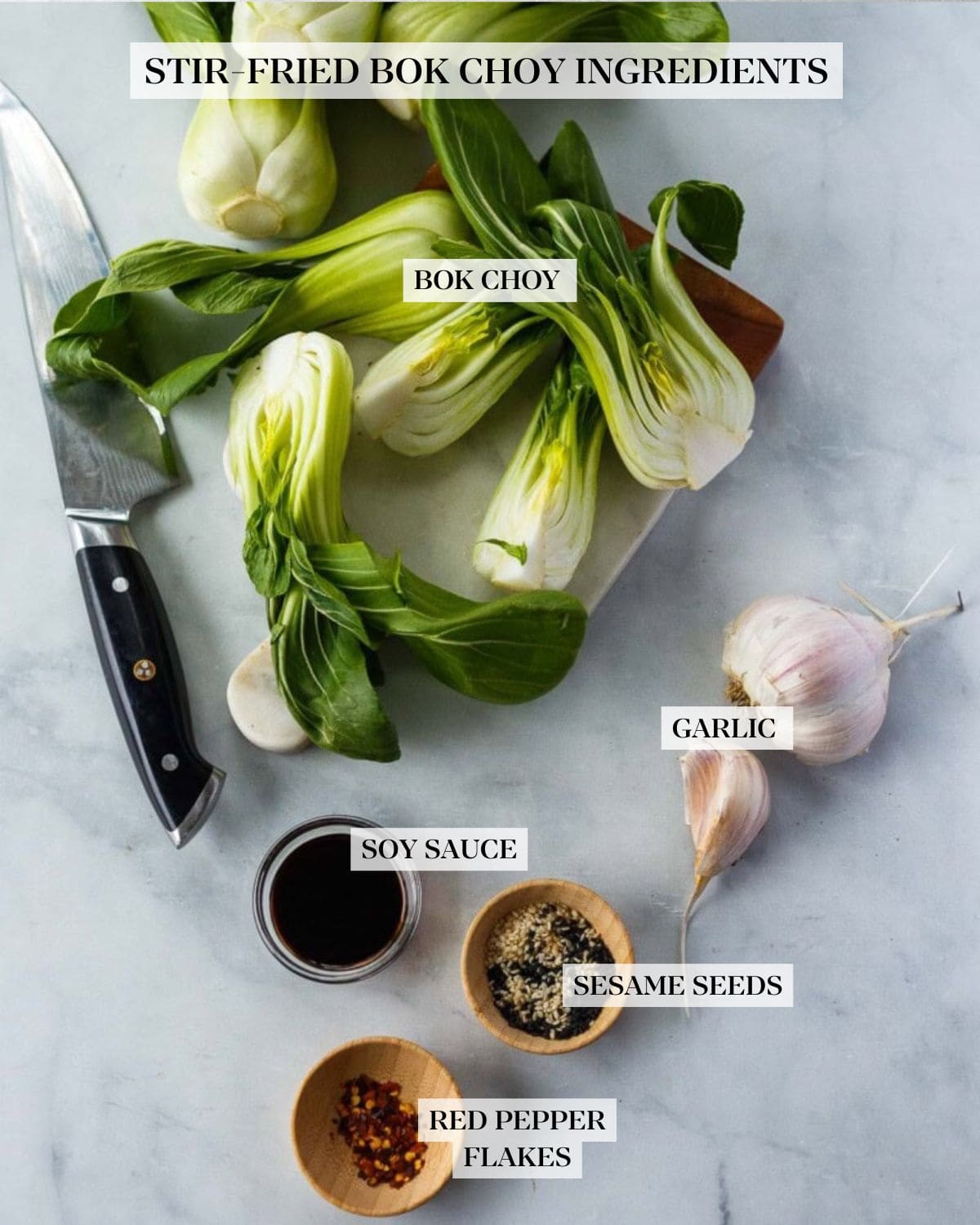
- Bok choy: Baby bok choy works best for this recipe. You can use regular bok choy, but it tends to taste a little more bitter and there is more cutting involved.
- Garlic: Adds a lovely aromatic flavor!
- Soy sauce: I prefer to use low-sodium soy sauce or gluten-free liquid aminos. If you need more salt, you can always adjust it to taste.
- High-heat oil: Avocado oil is my preference, but any high-heat oil will do.
- Sesame seeds: Use a mix of white and black sesame seeds for a beautiful presentation.
- Red pepper flakes: Optional, but add a nice touch of heat (or use chili crisp!)
Variations
- Fresh ginger: Freshly minced ginger adds a lovely aromatic taste and can be added with the garlic.
- Sesame oil: Add a little sesame oil when adding the soy sauce, or drizzle a touch of toasted sesame oil over the bok choy before serving.
- Mirin: For even more complexity, a splash of mirin adds acidity and a subtle sweetness that balances beautifully with the soy sauce.
- Add more veggies! Toss with stir-fried carrots, snow peas, edamame, onion, broccoli, mushrooms, or peppers.
How to Make Stir-Fried Bok Choy
1. Prep the bok choy. Slice each bok choy in half. If they are large, you can cut them into quarters. Be sure to keep the stalks intact. Rinse each piece under cold water, gently separating the leaves to remove any hidden dirt. Lay the bok choy on a clean dish towel and gently pat dry. The drier it is, the better the sear!
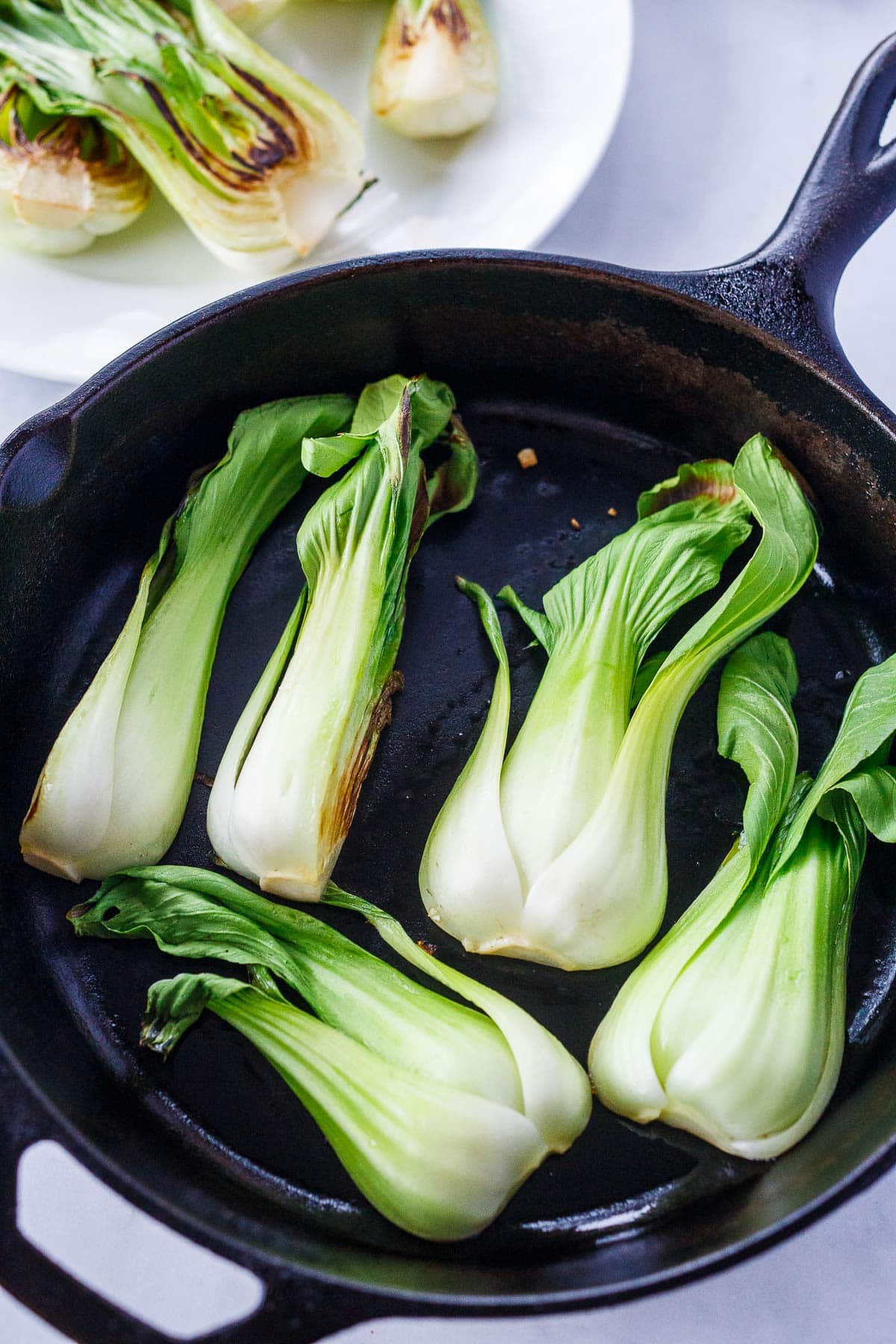
2. Sear the bok choy. Bring a dry, wok, or cast-iron skille to medium-high heat. Place the bok choy cut-side down on the dry skillet. Sear for 4 minutes, or until golden. Set aside on a plate. You may need to work in batches.
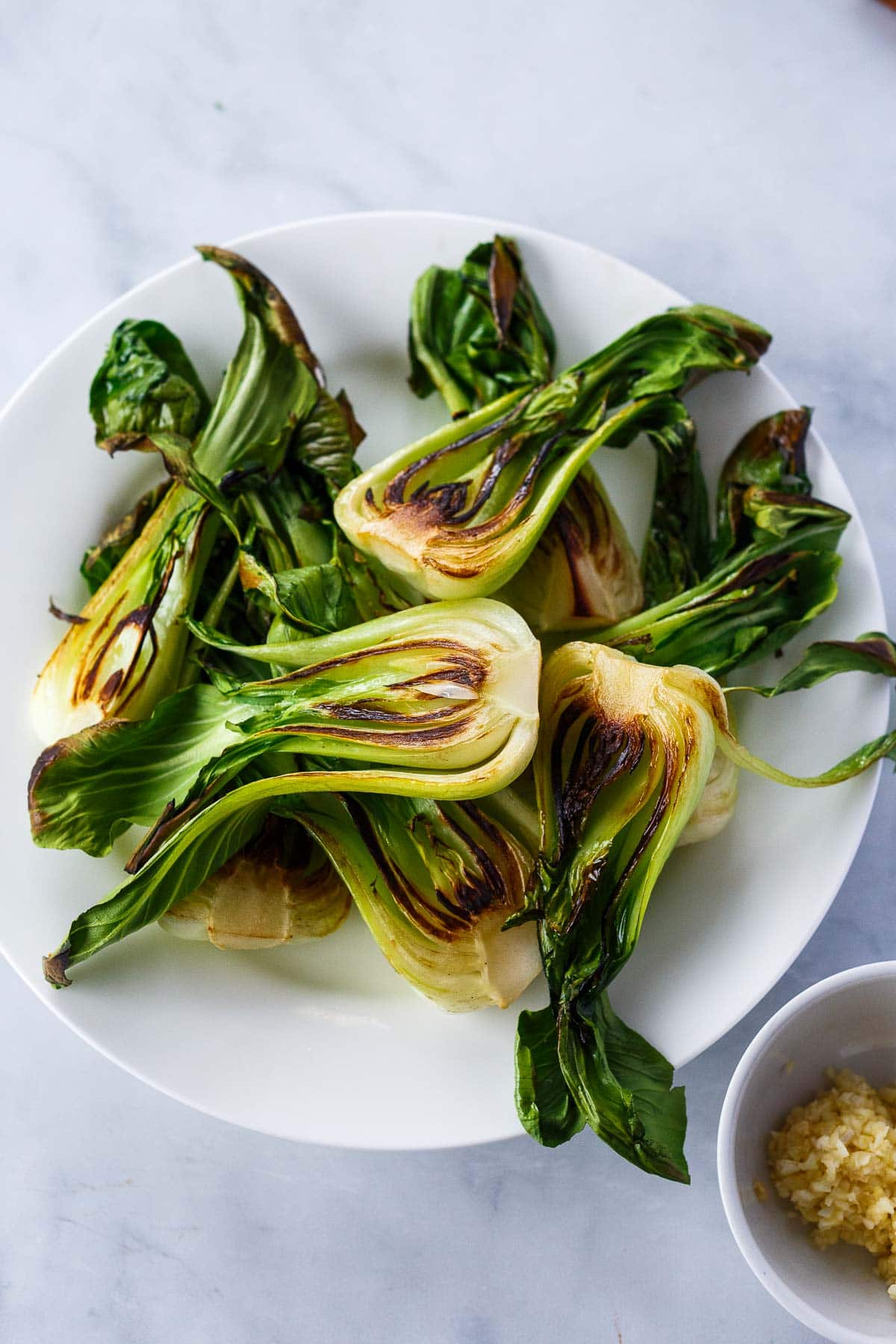
3. Stir-fry. Add oil to the pan with the garlic, and stir fry for 30 seconds, then add water and soy sauce and stir. Add the seared bok choy to the pan, cut-side up. Stir fry for a few minutes until the leaves are slightly wilted. Be careful not to overcook the bok choy as you still want it tender crisp.
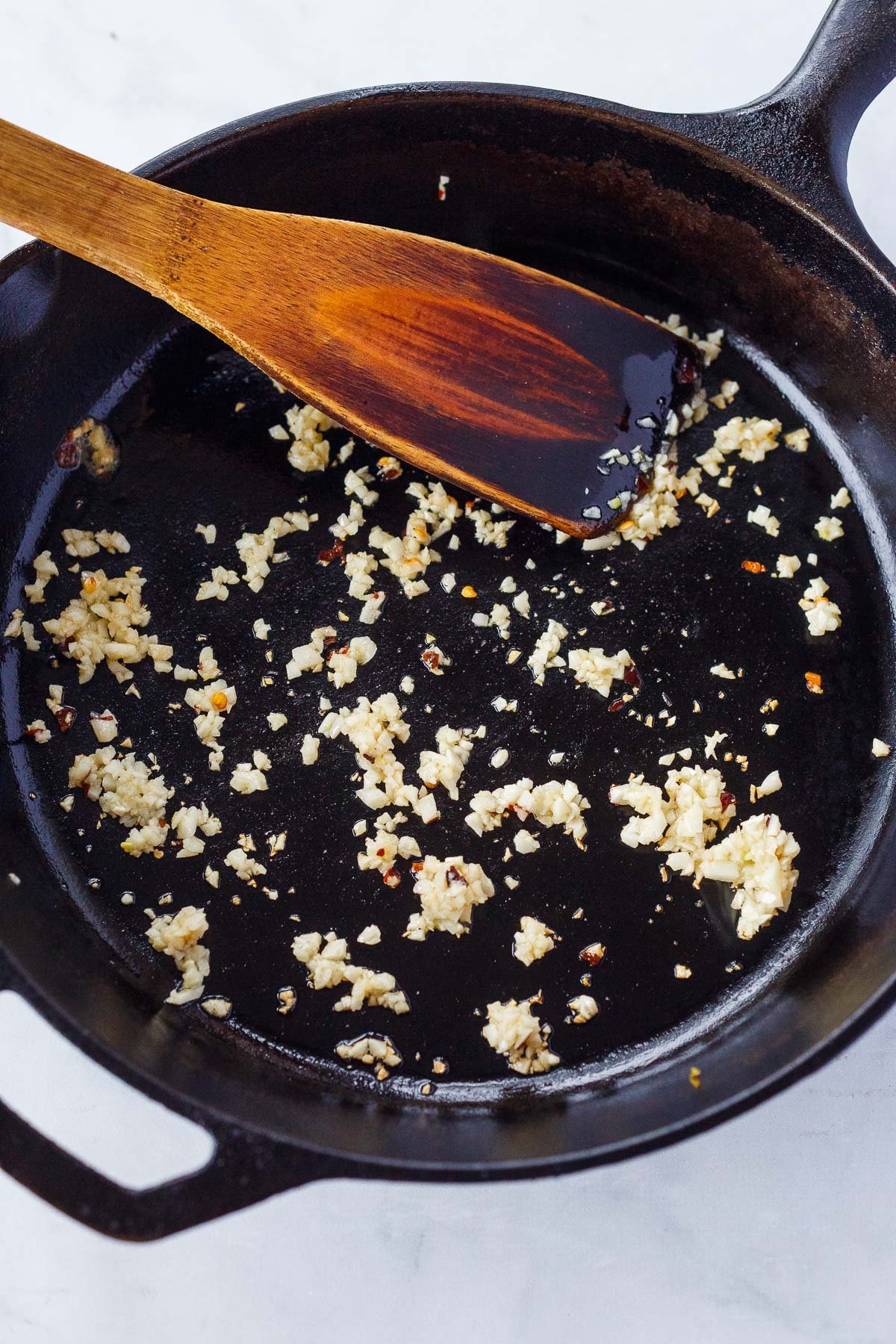
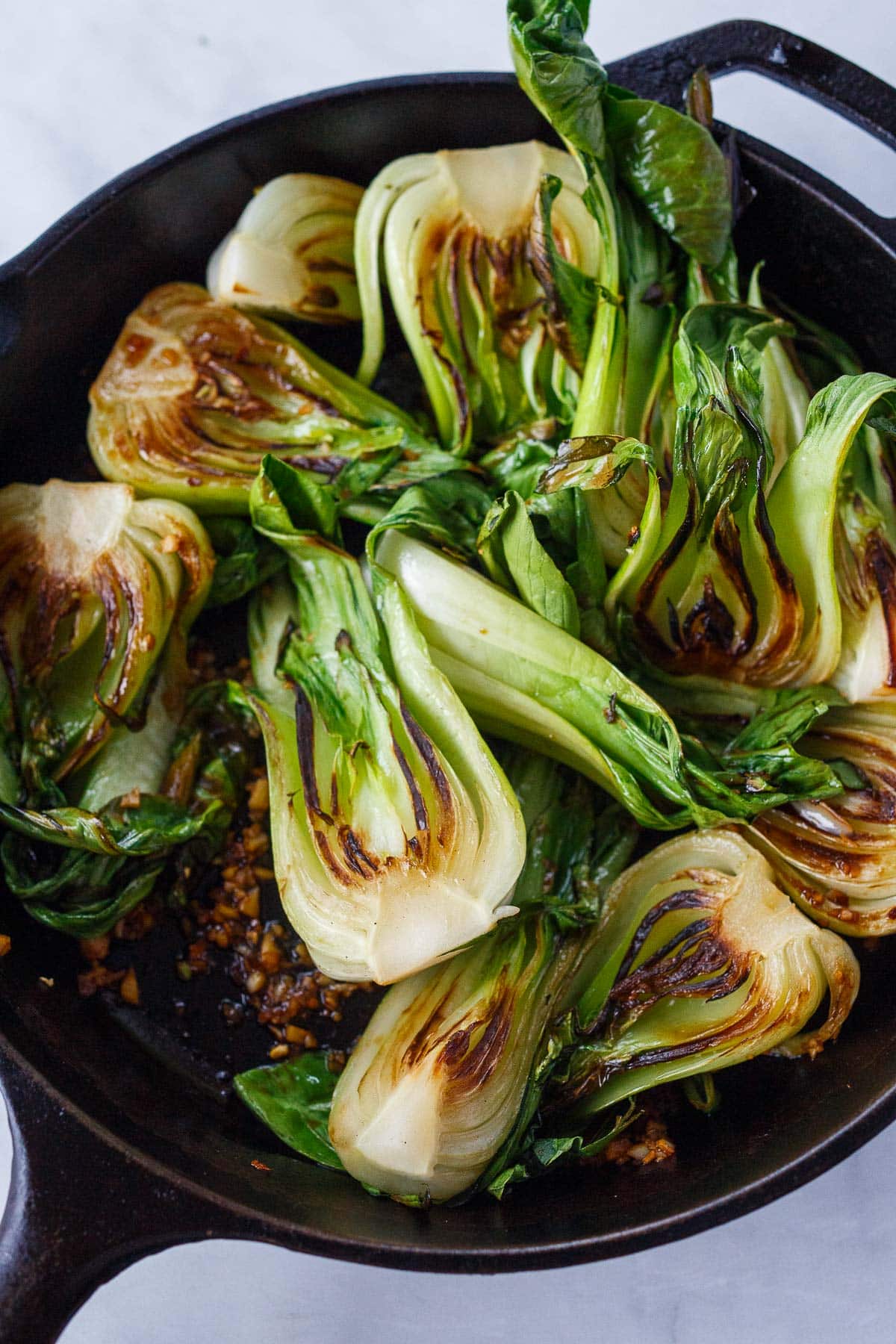
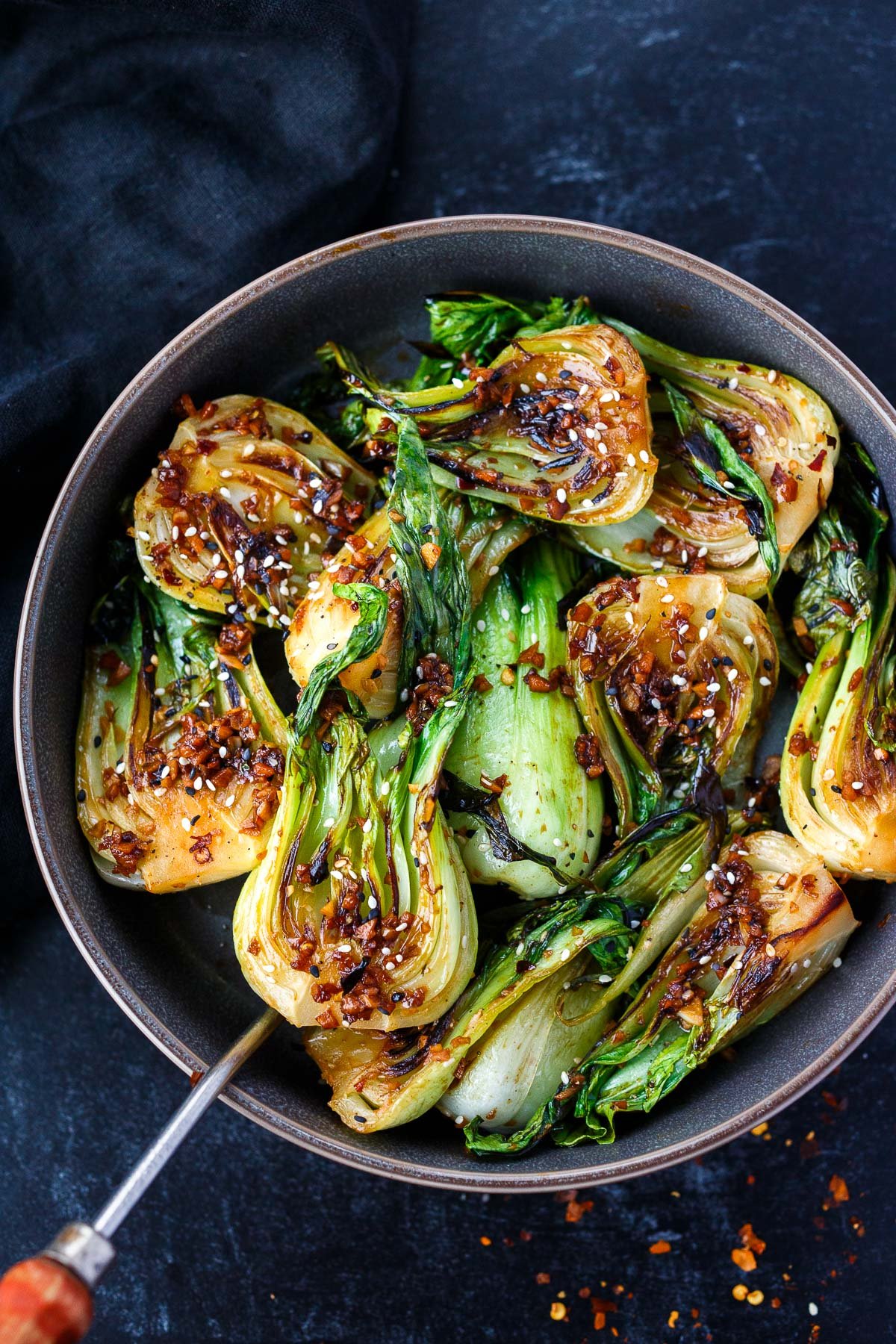
4. Season and serve. Add a little salt and pepper as desired. Transfer the bok choy to a serving plate and sprinkle sesame seeds and chili flakes over the top with a little drizzle of sesame oil if you like. Chili crisp is also delicious here!
Chef’s Tips
- Dry the bok choy well. Moisture is the enemy of browning. After rinsing, pat the bok choy thoroughly dry. This is what gives you that gorgeous, golden sear.
- Use high heat and don’t overcrowd the pan. Bok choy cooks quickly and beautifully when it hits a very hot surface. If the pan is crowded, it will steam instead of caramelize. Work in batches for the most tender-crisp texture.
- Sear first, season second. Searing the cut side before adding garlic and soy sauce locks in moisture, boosts flavor, and prevents burning delicate aromatics.
- Keep the stalks intact. Cutting the bok choy in half (or quarters for larger heads) while keeping the base attached helps the leaves cook evenly and keeps everything beautifully intact for plating.
- Adjust the seasoning to taste. Start with low-sodium soy sauce and add salt only if needed. Baby bok choy is delicate, and a light hand preserves its clean, fresh flavor.
Bok Choy Serving Suggestions
- Serve over rice: Serve with coconut rice, basmati rice, or seasoned Japanese rice.
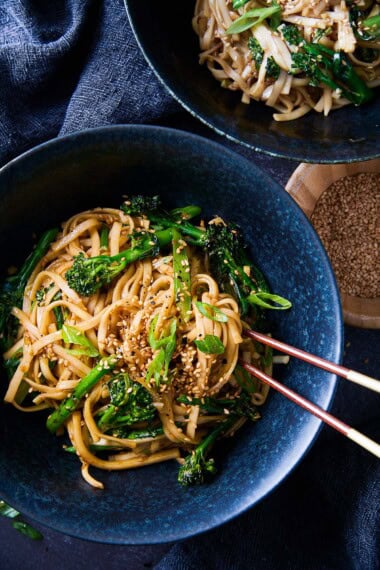
- Serve with noodles: Toss with rice noodles, soba noodles, or udon noodles with our vegan oyster sauce recipe, or serve stir-fried bok choy over our saucy sesame noodles, butternut squash noodles, or longevity noodles.
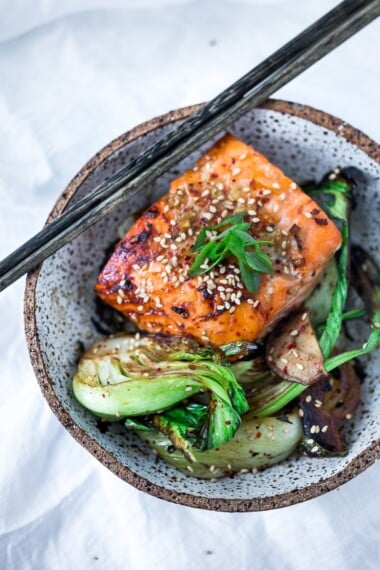
- Serve with a protein: Serve alongside sticky tempeh, broiled miso salmon, shrimp, lemongrass chicken, sticky Asian chicken wings, or Szechuan chicken, Szechuan tofu or black pepper tofu, crispy sesame tempeh, or five-spice salmon.
- Add to another stir fry: It would go great with our Chicken Cabbage Stir Fry!
- Add more flavor, heat, or texture: Top with fried shallots, chili crisp, or peanut chili crunch.
Storage
Store leftover bok choy in an airtight container in the refrigerator for 2-3 days. Let cool completely before sealing to prevent excess water. Reheat in a skillet over medium heat for 2-3 minutes, adding a splash of water to revive the sauce.
FAQs
No, there is no need to boil the bok choy, or even just the stem, before searing. Because we are using small bok choy, the stems will achieve a tender texture in less time. Plus, we add water to the pan to help soften it.
If you like to meal prep, you can rinse and chop the bok choy ahead of time. However, I recommend storing the bok choy in a sealed bag or container wrapped gently in a dry paper towel to absorb excess moisture.
Though mild, bok choy has a slightly sweet and peppery taste with hints of mustardy flavors. It has a nice crunchy stem with tender leaves.
More Favorite Bok Choy Recipes
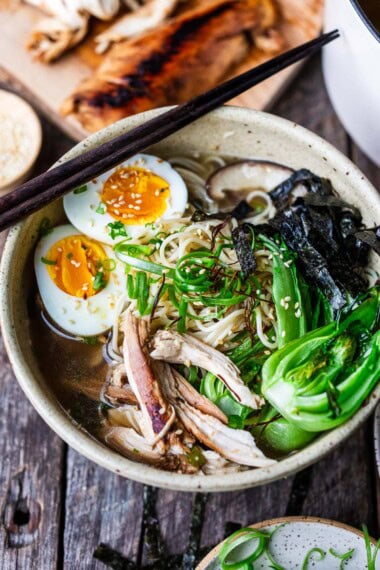
Watch How to Make it
✨ After you try this Bok Choy Stir-Fry recipe, let us know how it turns out in the comments below. Your review will help other readers, too! Sign up here to join our community and receive our latest recipes and weekly newsletter! xoxo Tonia
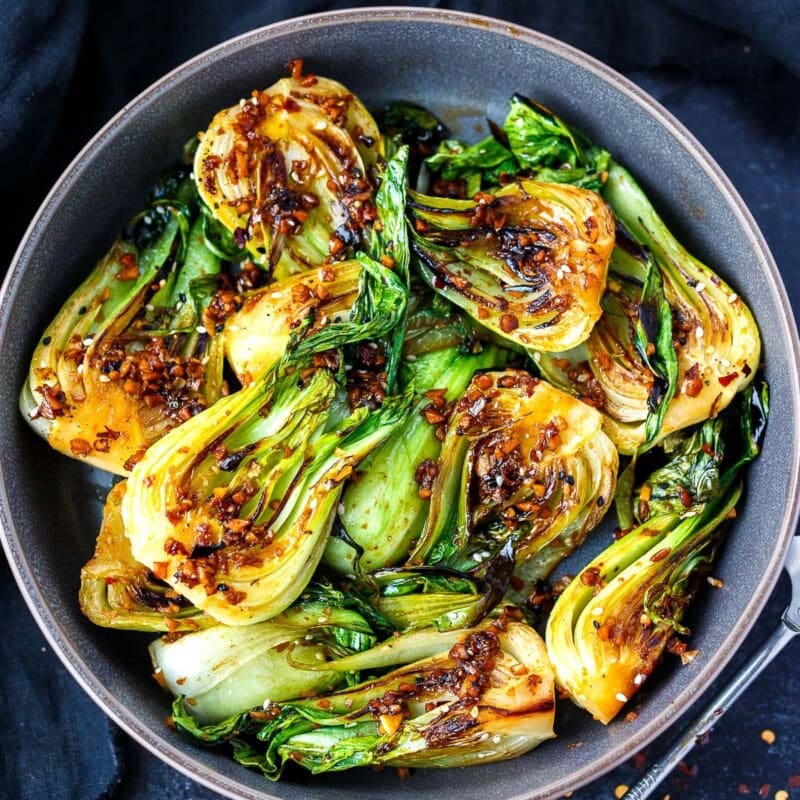
Baby Bok Choy Recipe
- Prep Time: 10 minutes
- Cook Time: 15 minutes
- Total Time: 25 minutes
- Yield: 2-4 1x
- Category: bok choy recipes, easy recipes, healthy side, Side Dish, stir fry, vegan side dish
- Method: Stir fry
- Cuisine: Asian
- Diet: Vegan
Description
One of my favorite bok choy recipes, this stir-fried baby bok choy comes together fast and delivers fresh, clean Asian flavor - an easy, healthy side your body will crave. Vegan, gluten-free, adaptable, and easy!
Ingredients
- 1 pound baby bok choy (pak choi) (5-7 small-medium sized bok choy)
- 1 tablespoon high-heat oil- avocado oil is my preference
- 1-2 tablespoons soy sauce (low sodium preferred or use GF liquid aminos)
- 1 tablespoon water
- 4 garlic cloves, minced
- Salt and pepper to taste
- Optional garnishes: red pepper flakes, sesame seeds (white and black),drizzle of toasted sesame oil or use chili crisp!
Instructions
- Prep Bok Choy. Cut bok choy in half, or quarters if large, keeping the stalks intact. Rinse thoroughly under cold water, gently separating the layers to remove any hidden dirt or grit. Dry the bok choy by laying it on a clean dish towel and gently patting it dry-the drier it is, the better the sear will be.
- Sear. Heat a dry wok or large cast-iron skillet to medium-high heat (no oil). Place Bok Choy cut side down in the dry skillet. Sear for 4 minutes, or until golden and caramelized on the cut side. No need to flip. Do this in 2-3 batches. Set aside on a plate.
- Stir-fry. Add garlic into the pan with oil and saute for 30 seconds. Add water and soy sauce give a stir. Add all of the seared bok choy back to the pan, cut side up. Stir-fry for a few minutes, until the leaves are slightly wilted and the bok choy is still tender-crisp.
- Season. Adjust salt to taste, adding salt and pepper if desired.
- Serve. Transfer to a serving plate and top with sesame seeds, red pepper flakes, and a drizzle of sesame oil, or use chili crisp.
Notes
Use the entire head of bok choy, from the light green stem to the dark green leaves. Regular large bok choy will work too, although it can be more bitter.
Optional: fresh ginger, sesame oil, mirin
Nutrition
- Serving Size: 4 ounces
- Calories: 57
- Sugar: 1.8 g
- Sodium: 119.2 mg
- Fat: 3.8 g
- Saturated Fat: 0.5 g
- Carbohydrates: 5.2 g
- Fiber: 1.4 g
- Protein: 1.9 g
- Cholesterol: 0 mg

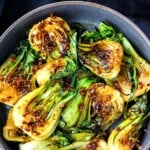
So easy and so delicious! The bok choy stayed crunchy! I added the drizzle of toasted sesame oil and sesame seeds. I served it with bulgogi in bou buns. thank you!
Glad you gave it a try!
Love ir, very tasty.
Great to hear Jetta!
This is such a delicious and necessary recipe for making great bok Choy! I enjoyed it with the sticky tempeh, veggies, and some jasmine rice 🍚💖 thank you!
So glad to hear Angeli!
I made this tonight and really liked it! I roasted some carrots, beets, broccoli and romanesco and served it over purple rice with bok choy sauce. (I cleaned out the fridge. ) Wow! A winner!
Wonderful Marcene! Those clear out meals are often the best.
Delicious. Served with Shrimp Egg Foo Yung—great accompaniment.
Sounds yum, glad you enjoyed!
Quick, easy and tastes delicious. The Bok Choy is quite flavourful. Thanks for the recipe!
Glad you enjoyed Els! Appreciate the review.