Be the first to rate it

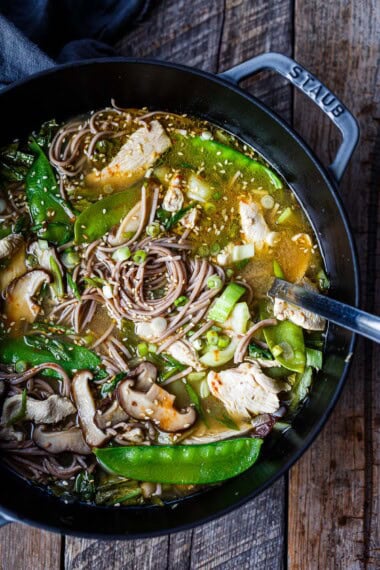
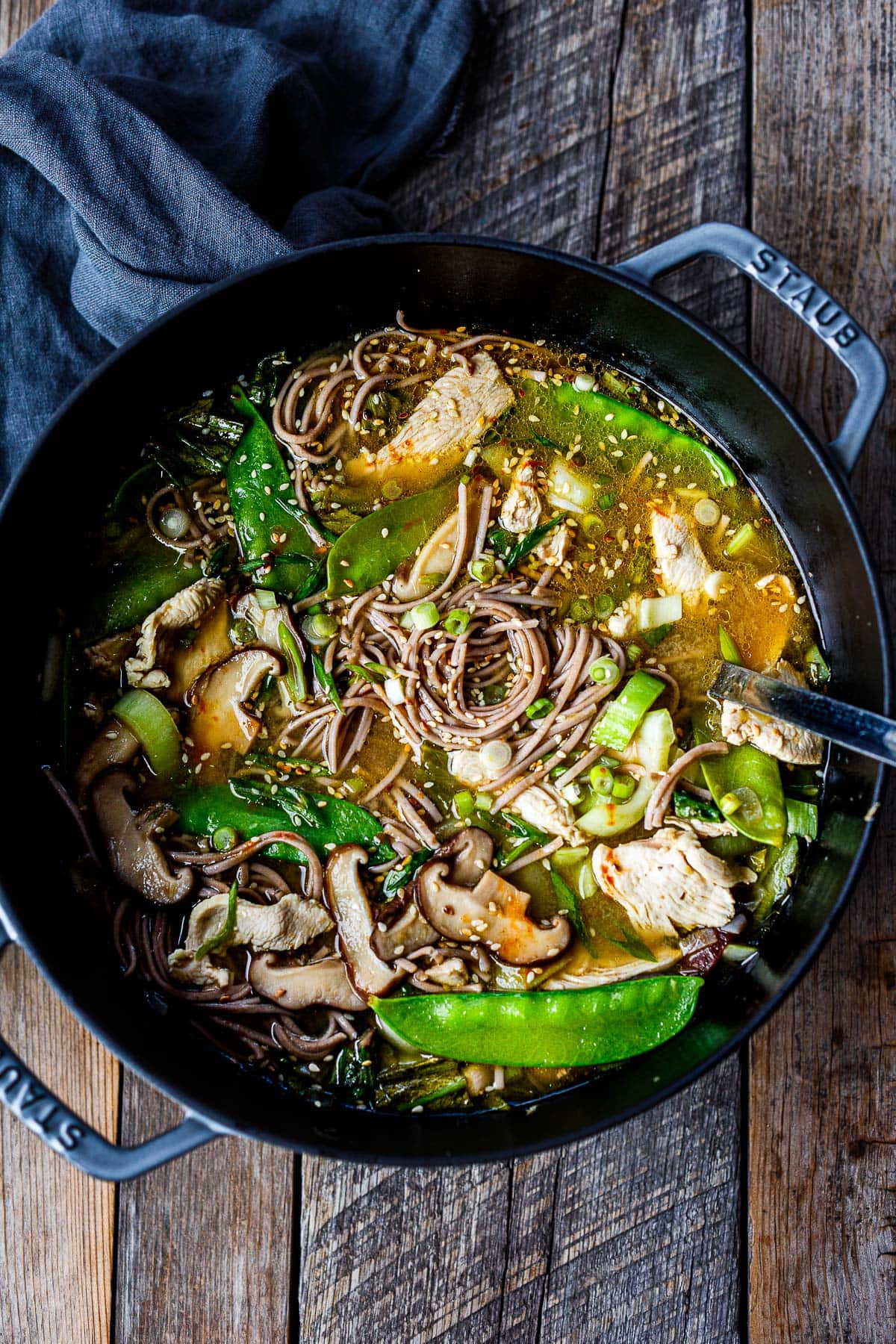
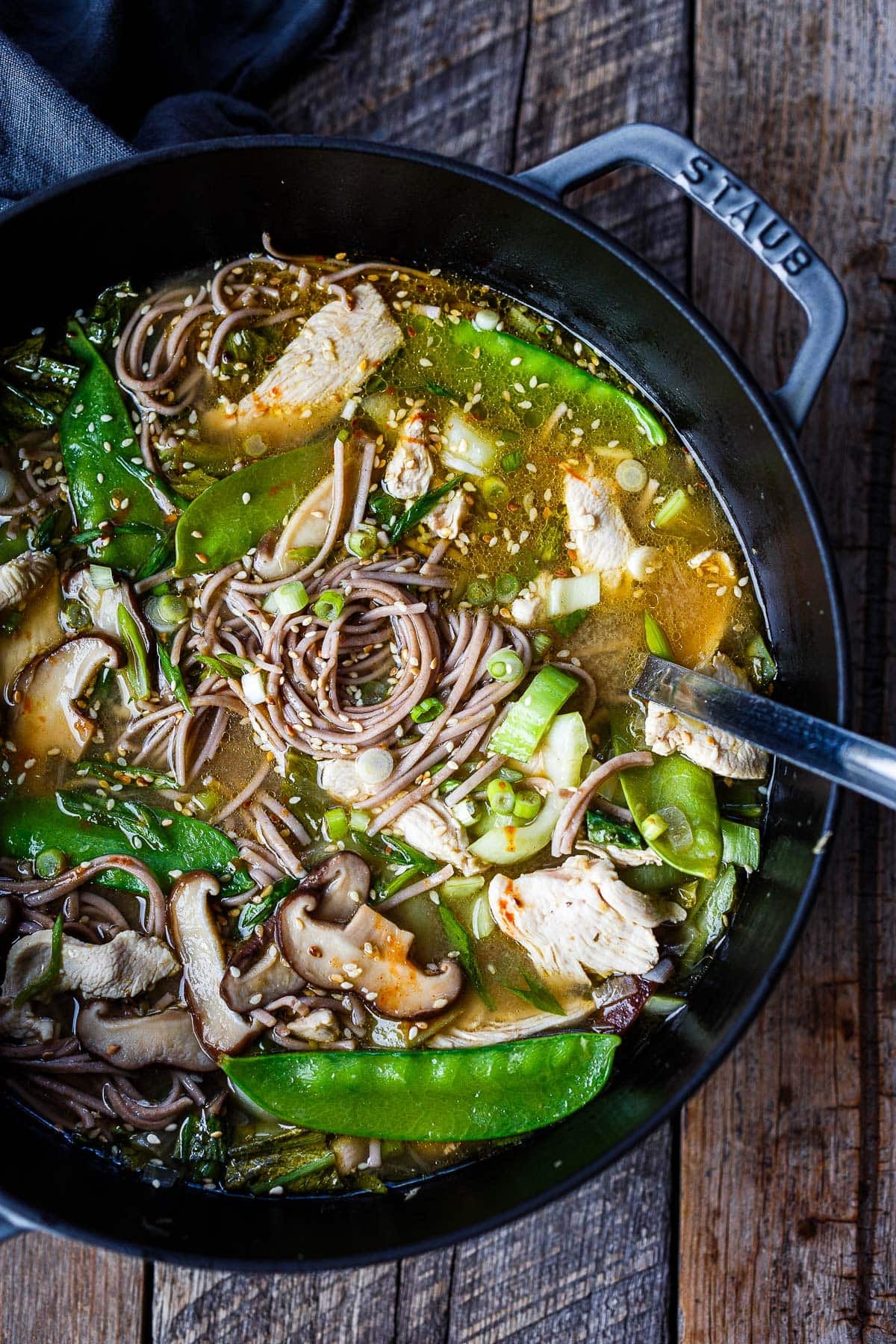
Cozy Asian Noodle Soup with tender chicken breast, soba noodles, crisp vegetables, and a rich ginger miso broth. An easy, nourishing weeknight dinner packed with flavor!
Look at a tree, a flower, a plant. Let your awareness rest upon it. How still they are, how deeply rooted in Being. Allow nature to teach you stillness.~ Eckhart Tolle
Give me a bowl of brothy soup, and I’m happy! There’s nothing quite like a steaming bowl of chicken noodle soup when you’re craving something warm and nourishing. This Asian Chicken Noodle Soup is my favorite way to change things up, with a fragrant ginger-miso broth that’s deeply savory and full of flavor. If you’ve been here a while, you know how much I love brothy soups. They bring me so much comfort!
What I especially love about this recipe is the contrast of textures. Tender, thinly sliced chicken, springy noodles, crisp bok choy, and sweet snow peas, all nestled in that fragrant, umami-rich broth. The secret is adding the chicken and vegetables toward the end, so everything stays tender and fresh.
Why You’ll Love this asian noodle soup
Deeply flavorful broth. Ginger, garlic, shiitake mushrooms, white miso, and toasted sesame oil create rich, savory flavor without hours of simmering.
Fresh, vibrant textures. Tender chicken, springy noodles, crisp bok choy, and sweet snow peas make every spoonful satisfying.
Easy to customize. Use your favorite noodles and vegetables, or swap the chicken for crispy tofu and vegetable broth for a plant-based version.
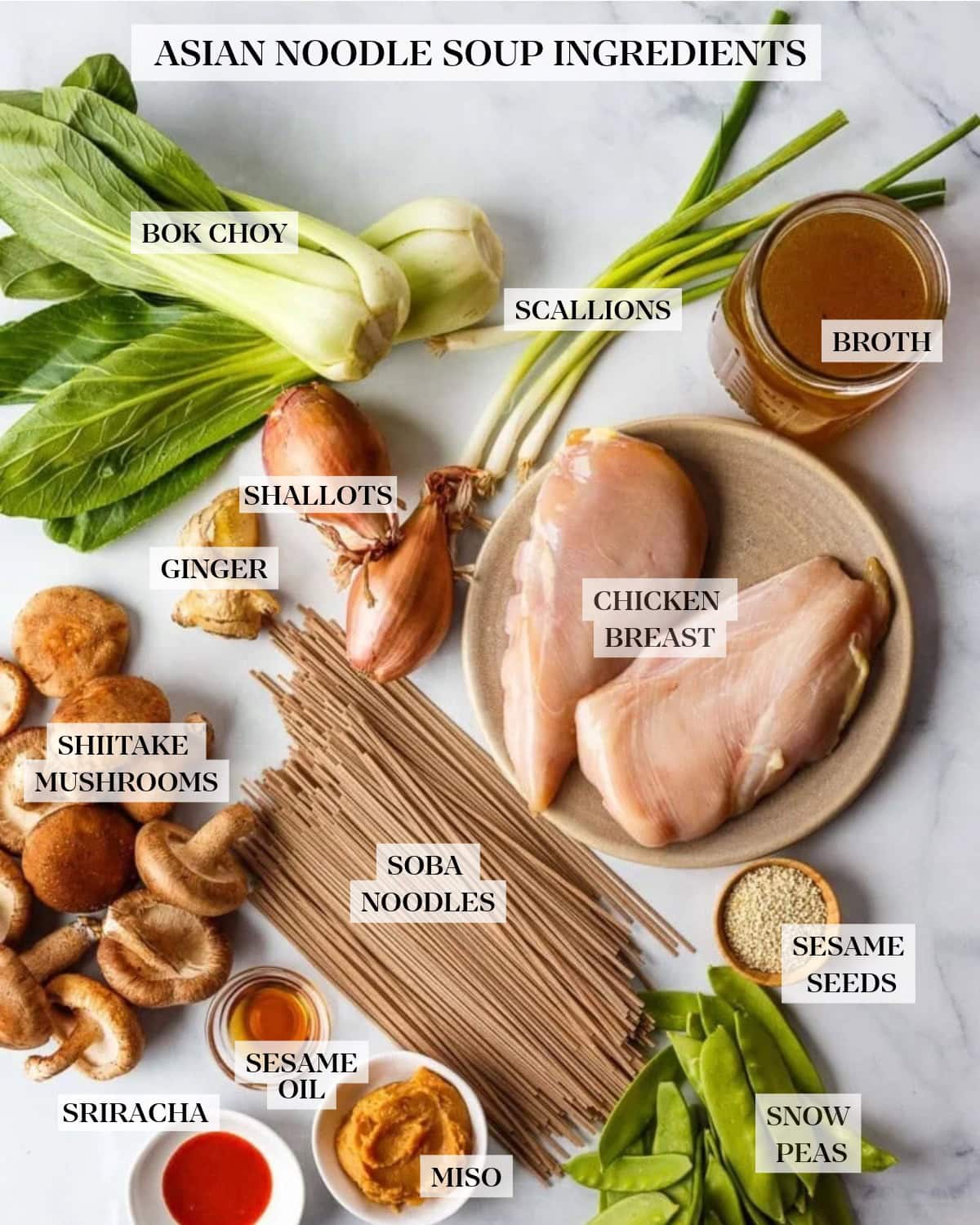
Ingredients
- Chicken: Boneless, skinless chicken breasts cook quickly and stay tender. Chicken thighs work beautifully, or substitute crispy tofu for a plant-based version.
- Asian noodles: I love the nutty flavor and chewy texture of soba noodles, but ramen, udon, or rice noodles work well, too.
- Shallots, ginger, and garlic: Create the fragrant, aromatic foundation of the broth.
- Shiitake mushrooms: Add rich, savory umami. Cremini or oyster mushrooms are good substitutes.
- Broth, white miso, and soy sauce: Create a deeply flavorful, savory broth. Use low-sodium chicken or vegetable broth to control the saltiness, and gluten-free miso and tamari if needed.
- Bok choy and snow peas: Add freshness, color, and tender-crisp texture. Substitute spinach, napa cabbage, green beans, or thinly sliced carrots.
- Sriracha and rice vinegar: Add a little heat, tang, and brightness to balance the savory broth. Adjust the sriracha to taste.
- Toasted sesame oil: Adds a rich, nutty aroma. A little goes a long way!
- Scallions and toasted sesame seeds: Finish each bowl with fresh oniony flavor and a delicate nutty crunch. Use both the white and green parts of the scallions.
Variations
- Make it vegan: Use our crispy tofu with vegetable broth and omit the hondashi granules, or use a vegan dashi alternative.
- Make it gluten-free: Use rice noodles or 100% buckwheat soba noodles and substitute gluten-free tamari for the soy sauce. Check the miso and remaining ingredients to confirm they are gluten-free.
How to Make Asian Chicken Noodle Soup
1. Cook the noodles. Prepare the noodles according to package instructions, drain, and rinse with cold water. Alternatively, you can cook the noodles directly in the broth instead.
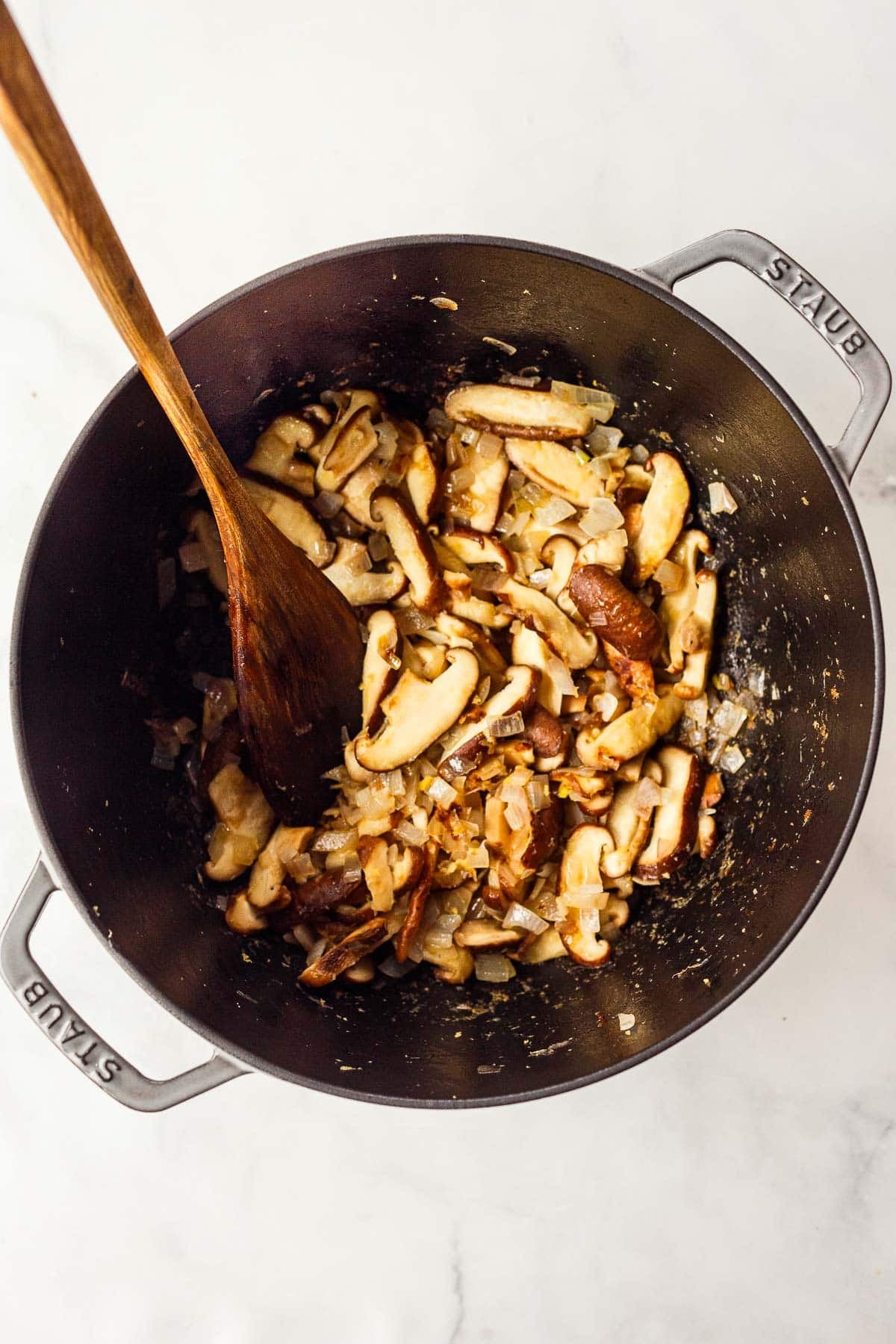
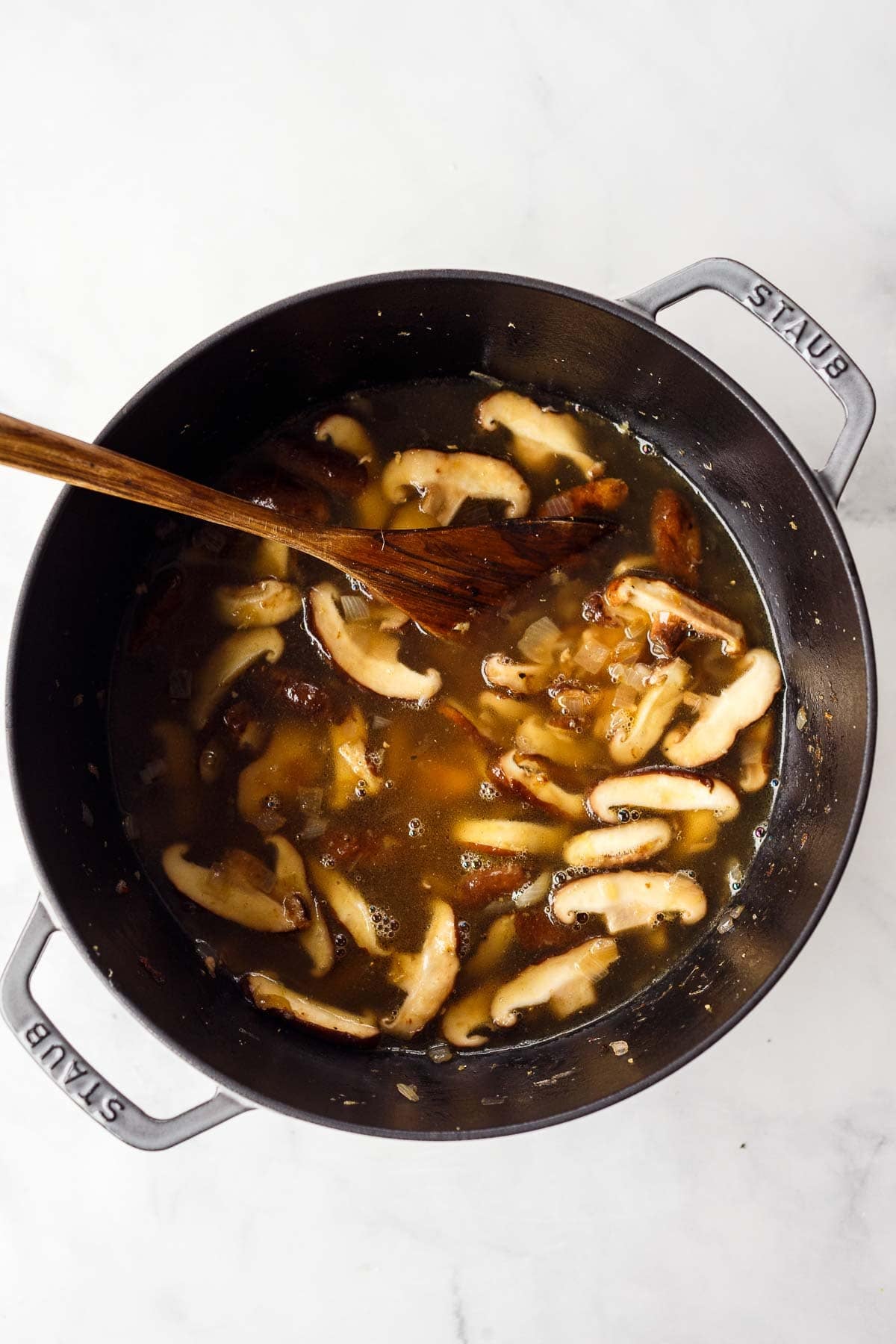
2. Sauté the aromatics and add broth. Add oil to a large Dutch oven and bring to medium heat. Sauté shallots, ginger, garlic, and mushrooms until the shallots are tender and fragrant. Add the stock and bring to a boil. (If cooking the noodles in the broth, add them now. Keep in mind, the veggies and chicken only take 3-4 minutes to cook, so adjust the noodles’ cooking time accordingly.)
3. Add the veggies and chicken. Thinly slice the chicken breast against the grain into 1/8-inch strips and season lightly with salt. Add the chicken, bok choy, and snow peas to the simmering broth. Cook for 3-4 minutes, or until the vegetables are tender-crisp and the chicken reaches 165°F (74°C).
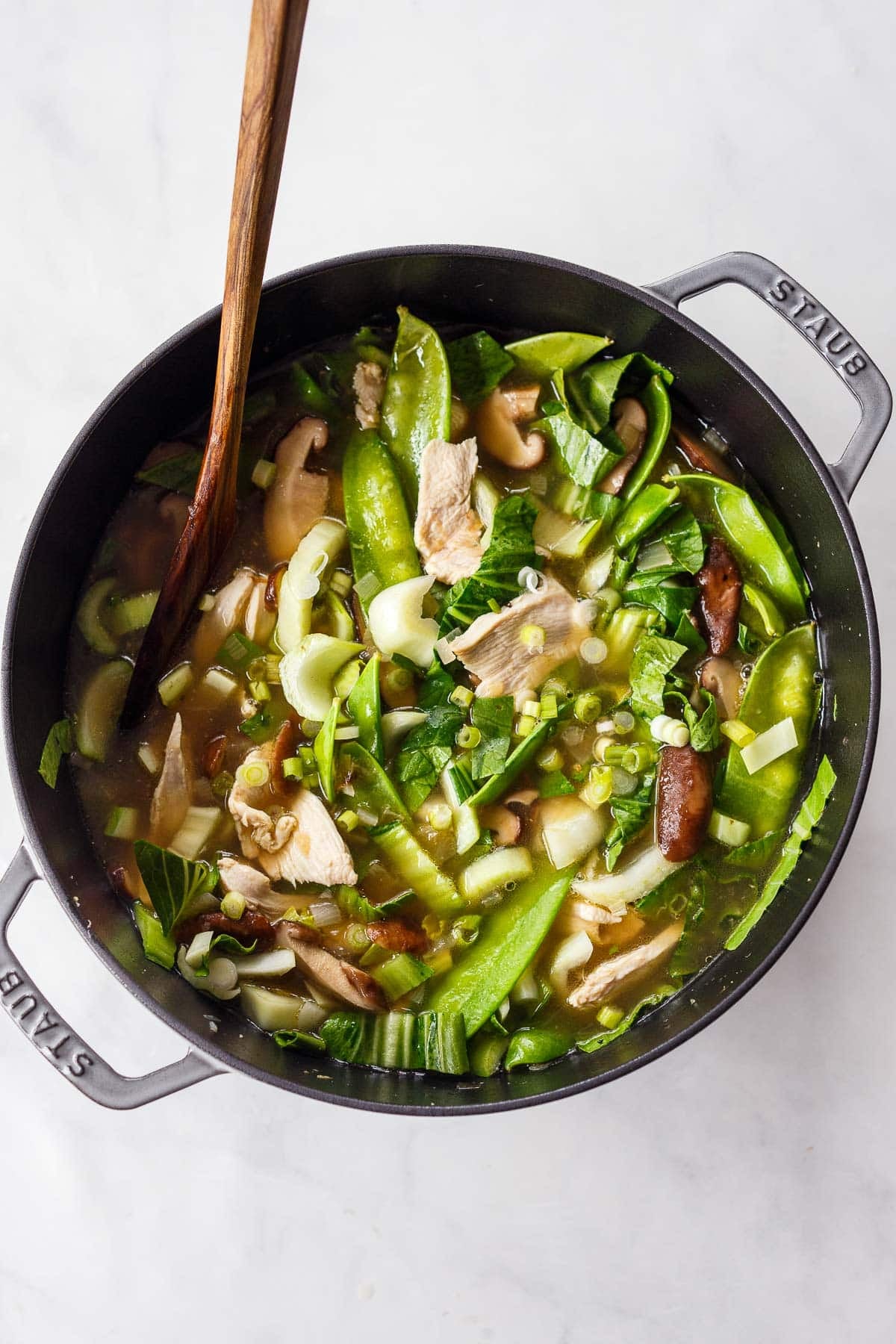
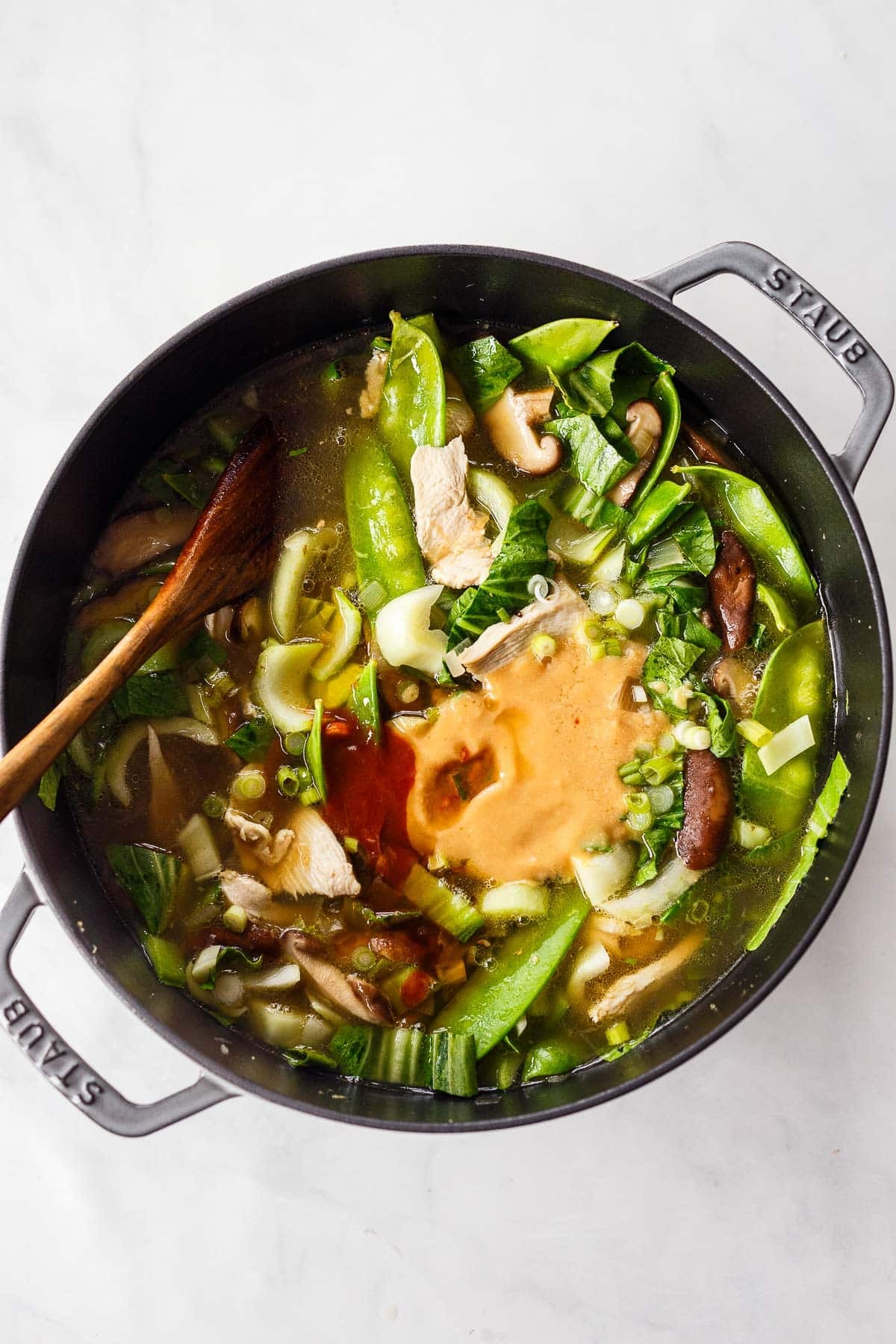
4. Season the broth. Turn off the heat. Stir the miso paste into a small bowl of hot broth until smooth, then add it back to the pot along with the sriracha, toasted sesame oil, and optional hondashi granules. Taste and adjust with soy sauce or additional miso for saltiness, sriracha for heat, and a splash of rice vinegar for brightness.
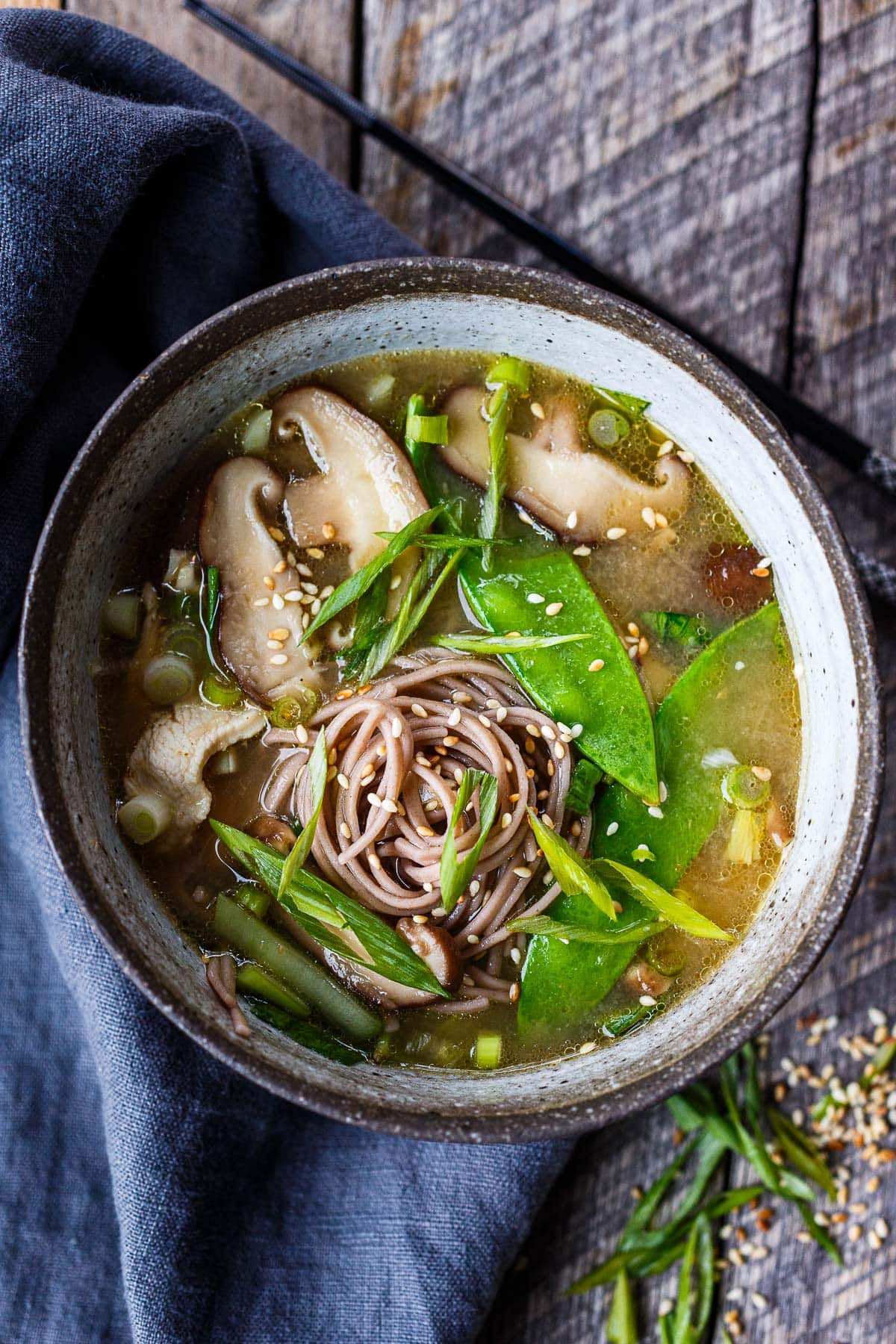
5. Serve and Garnish. If cooking the noodles separately, divide them among bowls and ladle the hot soup over top. Sprinkle each bowl with scallions and toasted sesame seeds. For extra crunch, add our crispy shallots! If you like heat, add Chili Drisp or Chili Garlic Sauce!
Chef’s Tips
- I prefer pre-cooking the noodles separately for a cleaner broth. My personal favorite are soba noodles, but they do release quite a bit or starch, which can result in cloudy, slightly gummy soup. Cooking the noodles separately helps them stay springy versus continuing to soften in the broth.
- Short on time? Use quick-cooking noodles. Ramen noodles, bean thread noodles, pre-cooked udon noodles, vermicelli noodles, and thin egg noodles are the best options for cooking directly in the simmering broth. Adjust the cooking time to the package instructions.
- Sometimes I like to make this with tofu or chicken thighs. If using either of these, sear the protein in a skillet first, with oil, salt, and pepper, before adding to the soup. This gives it the best flavor and helps it develop a crispy golden crust. For tips on cooking tofu, check out our Crispy Tofu recipe.
- This recipe is a great way to use up leftover chicken. Have leftover rotisserie chicken? Add it toward the end of cooking and warm it throughout without simmering too long.
- My secret to the BEST broth-rich flavor is hondashi granules. They’re not vegan and totally optional, but they are incredibly delicious. Add a 1/2 teaspoon if you have it.
- Use whatever veggies you have on hand! I’ve made this soup with edamame, green beans, cabbage, and carrots. Feel free to swap and substitute as you wish.
Serving Suggestions
Enjoy Asian Chicken Noodle Soup on its own, or pair it with a refreshing Asian cucumber salad or Asian carrot salad, or serve with a side of miso eggplant or blistered shishito peppers.
Storage
If planning to store leftovers, cook and store the noodles separately. The broth and noodles will keep for 4 days in separate airtight containers in the refrigerator. The broth can be frozen for up to 3 months.
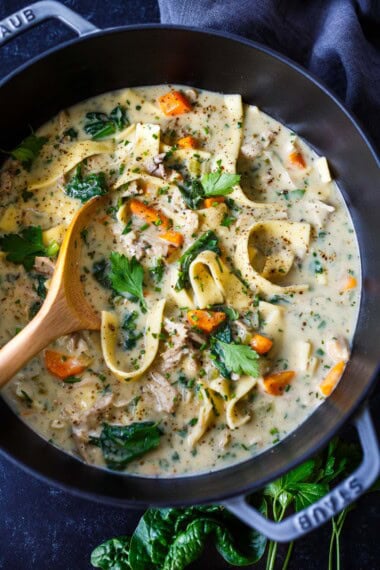
More Chicken Soup Recipes You Might Like


After you try this Asian Chicken Noodle Soup recipe, let us know how it turns out in the comments below. Your review will help other readers, too! Sign up here to join our community and receive our latest recipes and weekly newsletter! xoxo Tonia
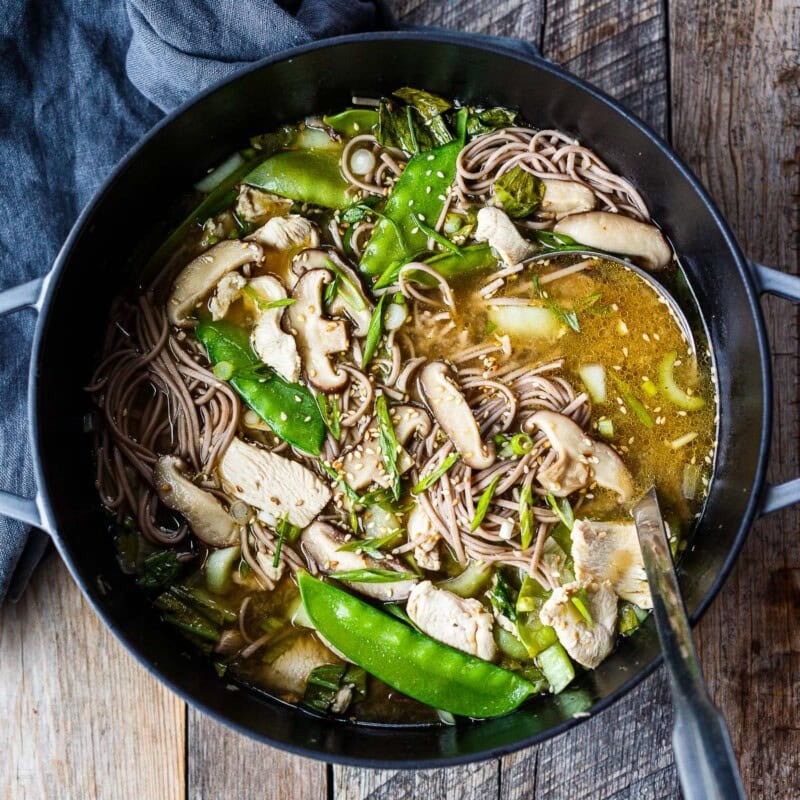
Asian Chicken Noodle Soup
- Prep Time: 20 minutes
- Cook Time: 20 minutes
- Total Time: 40 minutes
- Yield: 4–6 servings 1x
- Category: asian soup recipe, Chicken, chicken breast, one pan meal, Soup
- Method: Stove top
- Cuisine: American, Asian, Japanese
- Diet: Dairy-Free
Description
This Asian Chicken Noodle Soup features tender chicken, noodles, and fresh vegetables in a fragrant ginger-miso broth. Easy, nourishing, and full of flavor! An easy weeknight dinner.
Ingredients
- 4 ounces Asian noodles (see notes): such as soba noodles, ramen noodles, udon noodles, or rice noodles
- 1 tablespoon olive oil
- 2 fat shallots, diced
- 1 tablespoon ginger, peeled and finely minced or grated
- 2 garlic cloves, grated or minced
- 8 oz shiitake mushrooms, sliced, stems removed (or other mushrooms)
- 6 cups chicken stock
- 2 cups bok choy, chopped (or other wilting greens)
- 2 cups snow peas, cut into bite-sized pieces
- 1 pound chicken breasts, sliced into very thin strips about 1/8″ thick, cut against the grain. Season with a sprinkle of salt.
- 1 teaspoon sriracha sauce, more to taste
- 1 1/2 tablespoons toasted sesame oil - adjust to taste
- 1/4 cup white miso paste (mix with a little hot broth first before adding to the soup)
- 1 tablespoon soy sauce or GF liquid aminos
- Optional: 1/2 teaspoon hondashi granules- see notes
- Optional: A few drops of rice vinegar
- Optional garnishes: 4 scallions (sliced at a diagonal), toasted sesame seeds, crispy shallots, chili crisp or sriracha
Instructions
- Noodles. Cook noodles separately according to the package directions, then rinse thoroughly under cold water to remove excess starch. Toss with a little oil to prevent sticking. (See notes about cooking directly in the broth)
- Broth. In a heavy pot or Dutch oven heat to medium and add 1 tablespoon oil. Sauté shallots, ginger, and mushrooms over medium heat until the shallots are tender and fragrant. Add the stock and bring to a boil. If cooking noodles directly in the broth, add them in now. (Note that the veggies and chicken will only take 3-4 minutes; adjust cooking time accordingly.)
- Add chicken and Veggies. Thinly slice the chicken breast against the grain into 1/8-inch strips and season lightly with salt. Add the chicken, bok choy, and snow peas to the simmering broth. Cook for 4 minutes, or until the vegetables are tender-crisp and the chicken reaches 165°F (74°C).
- Season the broth. Turn off the heat. Stir the miso paste into a small bowl of hot broth until smooth, then add it back to the pot along with the sriracha, toasted sesame oil, and optional hondashi granules. Taste and adjust with soy sauce or additional miso for saltiness, sriracha for heat, and a splash of rice vinegar for brightness.
- Serve and Garnish. If cooked separately, add the noodles to each bowl and ladle the hot soup over them. Sprinkle with scallions and toasted sesame seeds and serve with optional chili crisp or crispy shallots.
Notes
Noodles. I prefer cooking the noodles separately for a cleaner “clear” broth. I love soba noodles but they release quite a bit of starch, which can make the soup cloudy and slightly gummy. When cooked separately, soba noodles stay springy rather than continuing to soften in the hot broth. In a pinch, yes, you can cook them directly in the broth.
If using tofu or chicken thighs, sear before adding to the broth for the best flavor. Feel free to use leftover rotisserie chicken, about 2 ½ cups.
Hondashi – for enhanced smoky savory flavor, add 1/2 teaspoon hondashi granules (not vegan, totally optional, but really delicious!). These are also really tasty in fried rice.
Storage– Keep noodles separate if you plan for leftovers. Broth and noodles will keep for 4 days in a sealed container in the fridge.
Short on time? Use quick-cook noodles: ramen noodles, bean thread, pre-cooked packages of udon noodles, vermicelli noodles, and thin egg noodles can all be directly added to the simmering broth. Adjust the cooking time according to the package directions, keeping in mind that some noodles cook in just a few minutes. Wheat-based noodles tend to release more starch.
Swap the vegetables for what you have- edamame, green beans, cabbage, carrots.
Nutrition
- Serving Size: 1 ⅓ cups
- Calories: 357
- Sugar: 6.9 g
- Sodium: 622.6 mg
- Fat: 12.5 g
- Saturated Fat: 2.2 g
- Carbohydrates: 32.3 g
- Fiber: 2.5 g
- Protein: 30 g
- Cholesterol: 62.4 mg