

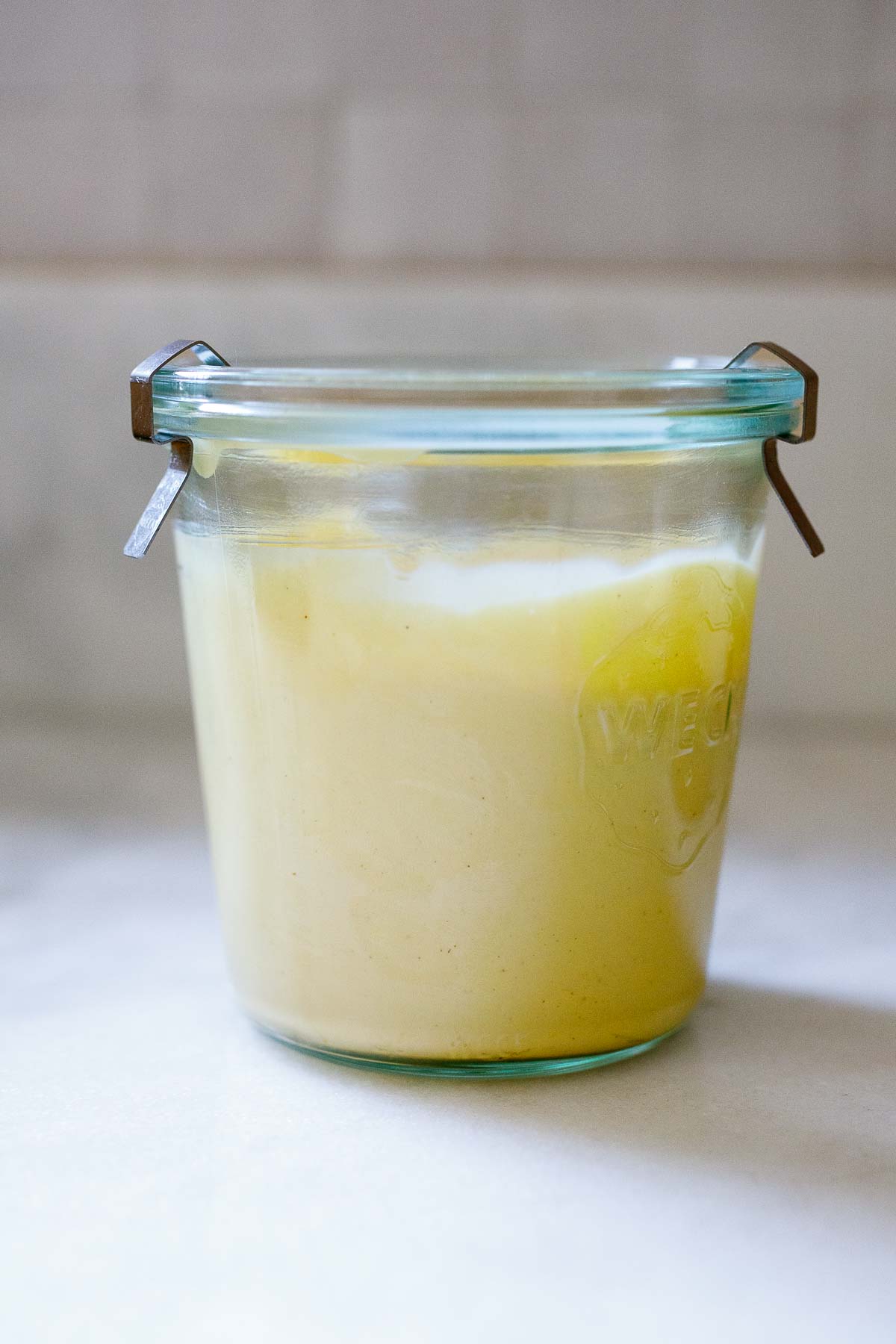
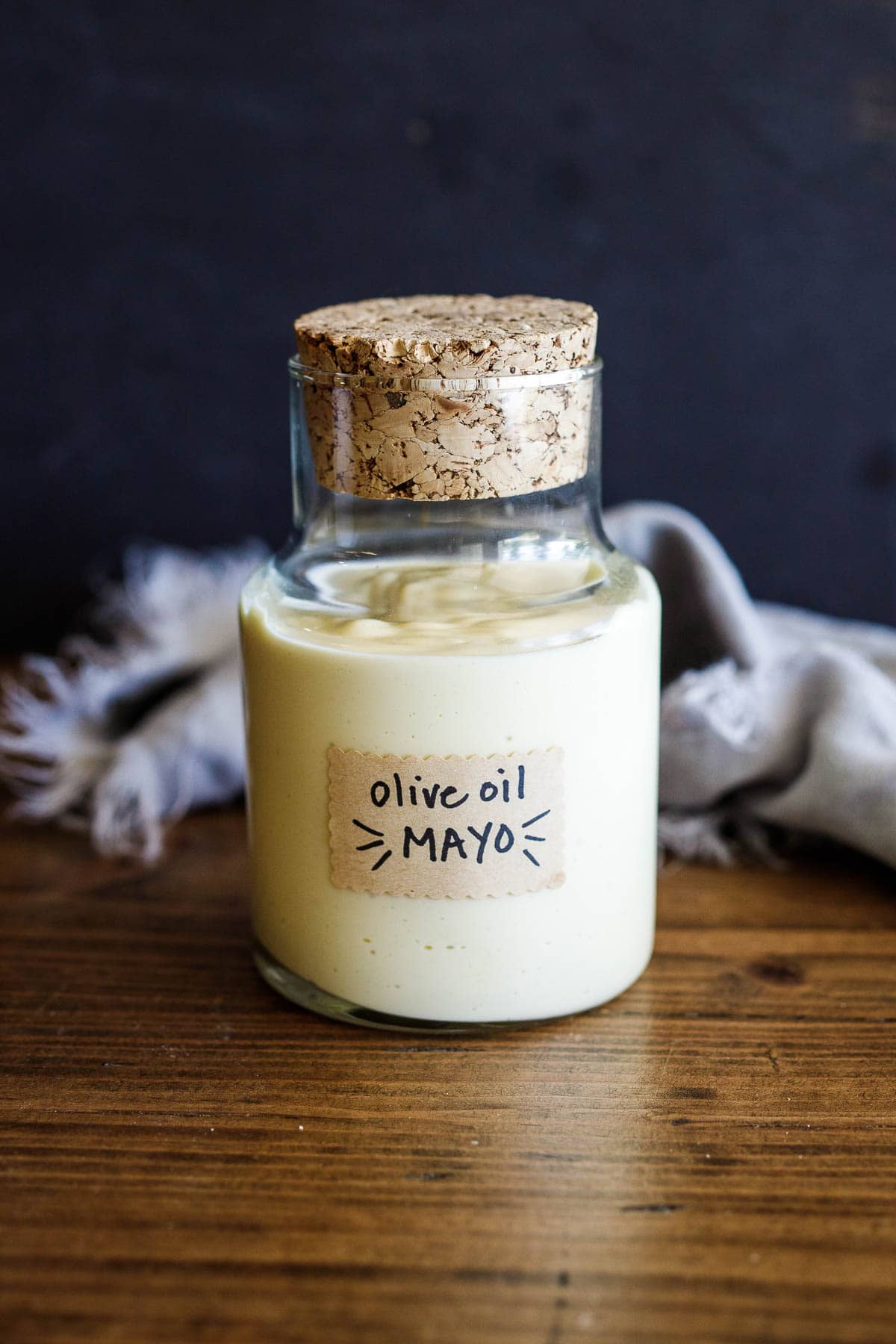
In just a few minutes, this olive oil-based Mayonnaise recipe can easily be made at home! Use an immersion blender, right in the jar you store it in. It keeps in the fridge for up to two weeks. Video.
When the sweet ache of being alive, lodged between who you are and who you will be, is awakened, befriend this moment. It will guide you. Its sweetness is what holds you. Its ache is what moves you on.
Mark Nepo
There is something truly magical that happens when you make homemade mayonnaise for the first time. You discover that you can create something creamy and spreadable out of liquids; learning the process of emulsification can be mind-blowing!
As a chef, this technique has become invaluable. I’ve probably made mayonnaise from scratch a thousand times, and just wanted to share my easy, original recipe; once you try it, you’ll never want to buy it again.
Why you’ll love this Mayonnaise Recipe
This easy mayonnaise recipe uses olive oil and an immersion blender right in the jar you’ll store it in. There’s literally zero clean-up.
We use vinegar instead of lemon juice to increase its shelf life, which is a little catering hack. Make sure to read all my chef’s tips.
Why I Prefer Olive Oil
We have been trying to avoid processed seed oils, also known as PUFAs, in our cooking because they may cause inflammation. Many processed foods contain these oils, including store-bought “olive oil mayo,” which often has canola oil. Instead, I prefer making my own mayo with high-quality olive oil. While olive oil can make mayo taste bitter, that bitterness comes from beneficial polyphenols, and I don’t mind it since I know it’s healthy.
Here is more information on seed oils if you are interested. It is not my intent to demonize them-when consumed in a balanced ratio to Omega 3 oils, they are not believed to be overly harmful.
How to make Mayonnaise | 60-Sec Video
Olive Oil Mayo Ingredients
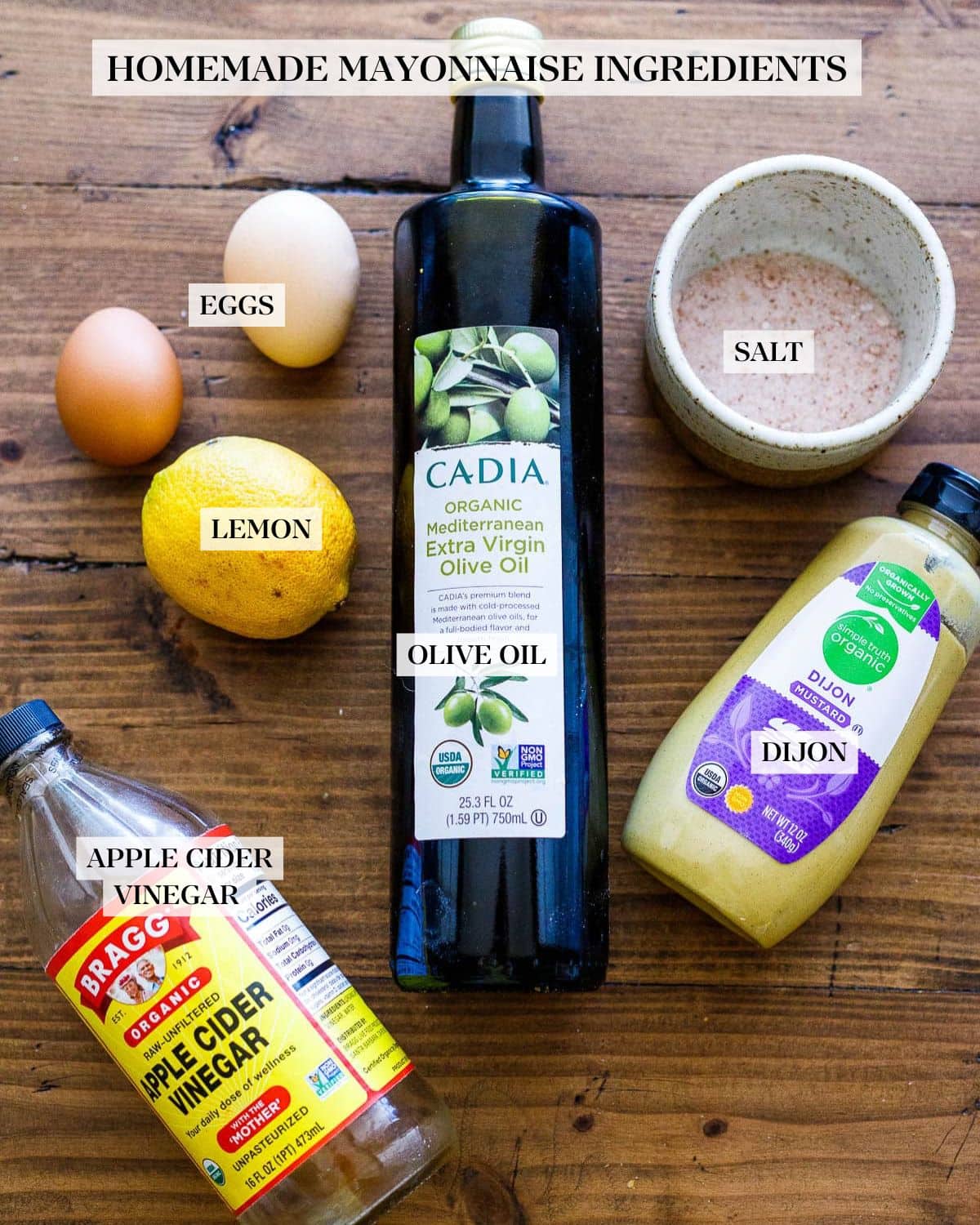
- Egg: Use a large egg for best results.
- Dijon mustard: Adds the best tangy, sharp flavor.
- Vinegar: I prefer to use apple cider vinegar or red wine vinegar, as it helps prolong shelf life. However, you can substitute with lemon juice.
- Salt: Helps balance and enhance the flavors to create a cohesive sauce.
- Extra virgin olive oil: Or use the oil of your choice. Expeller-pressed grapeseed oil or avocado oil works well, too. Make sure to taste your olive oil first to ensure it is not bitter!
See recipe card for full ingredient amounts!
How to Make Mayonnaise (without seed oil)
1. Add ingredients to a jar and blend. First, make sure the ingredients are room temperature. Place the whole egg (large egg yolk and egg whites), Dijon mustard, vinegar, and salt in a 2-cup jar and use an immersion blender on the lowest speed to blend for 20 seconds. Keep the device just above the bottom of the jar.
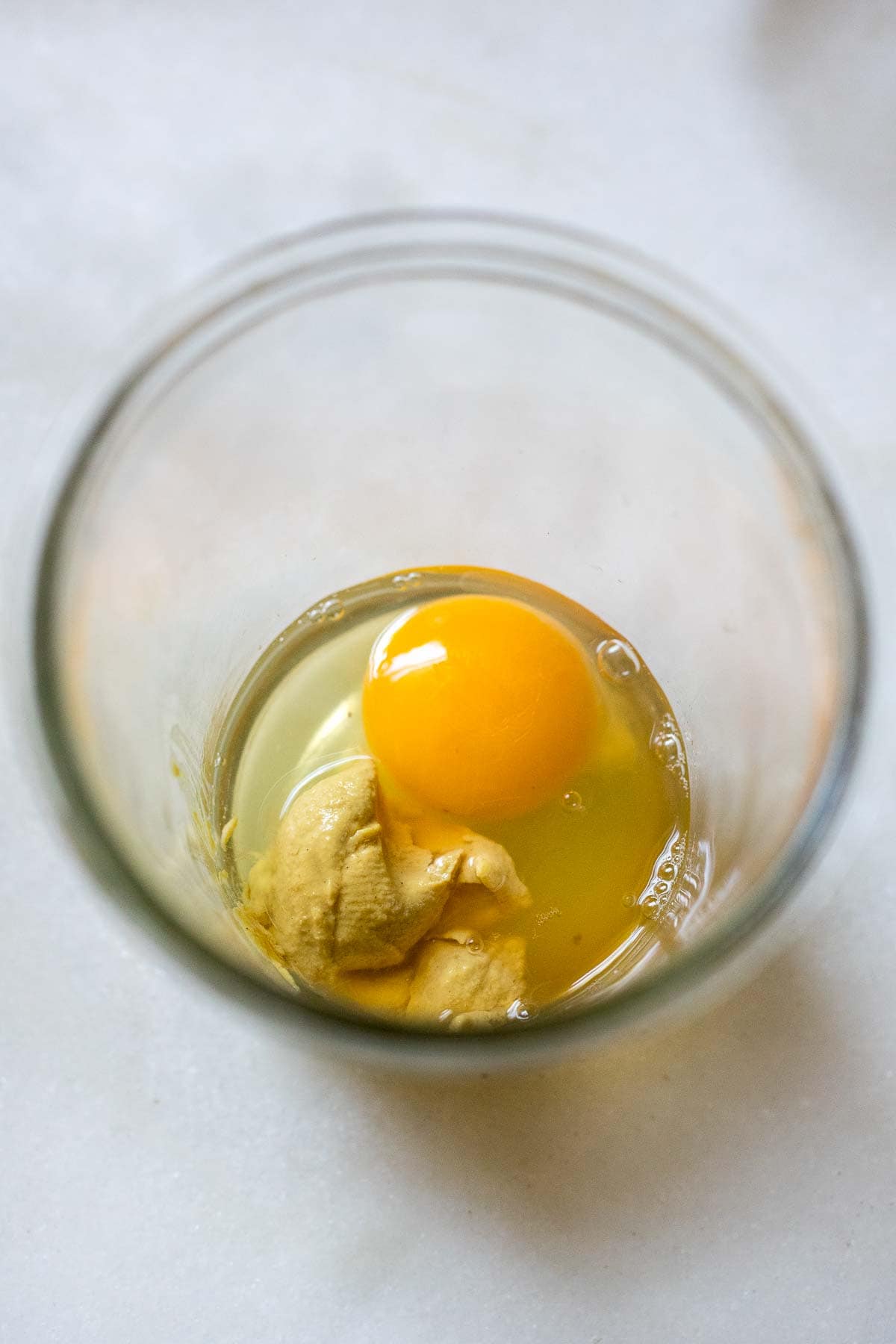
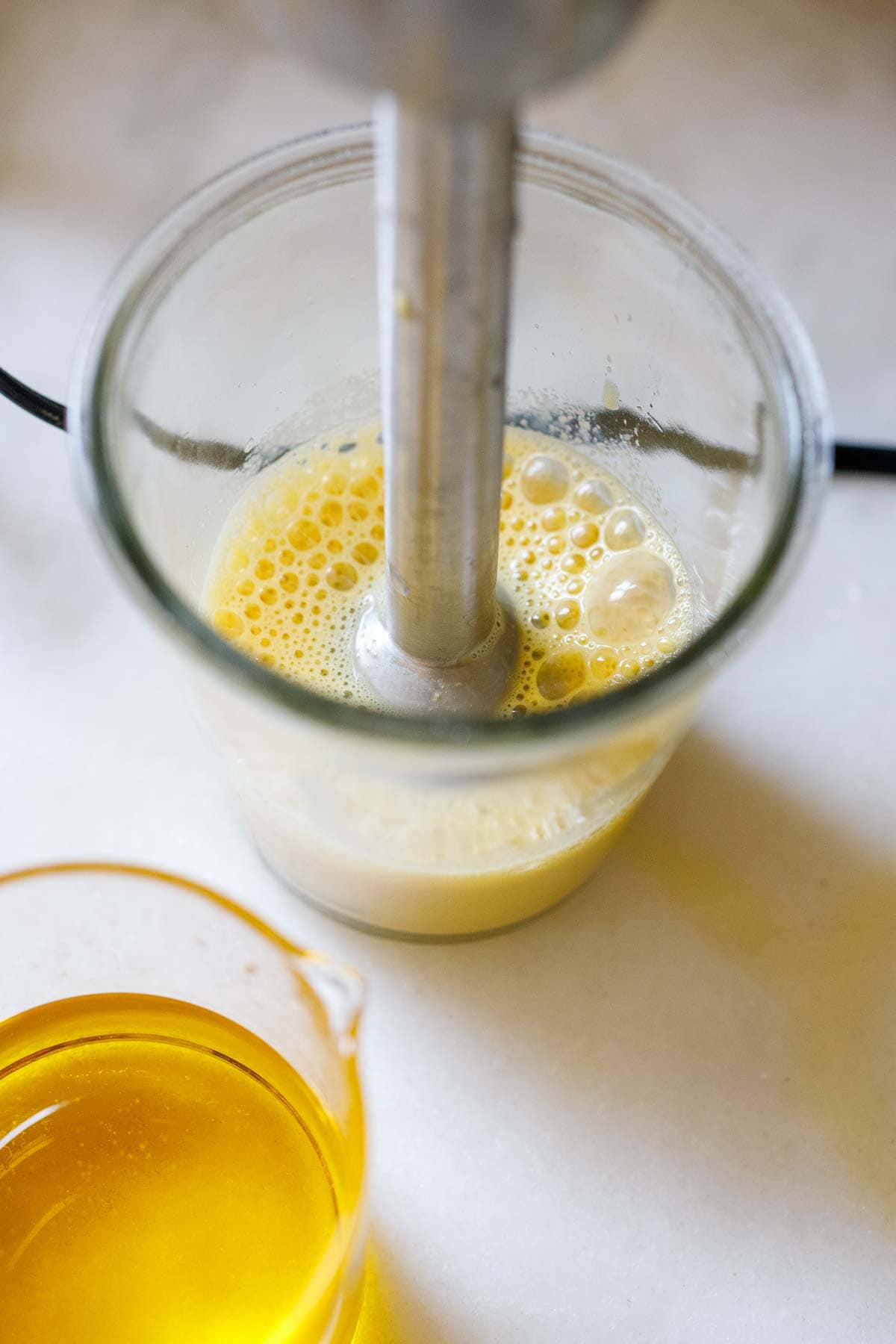
Alternatively, you can whisk the ingredients together in a bowl or use a food processor, blending until fully incorporated and frothy.
2. Slowly add oil. VERY SLOWLY, and this first step is the MOST important, dribble in just 1 teaspoon of oil while blending or whisking vigorously for 20 seconds. When using an immersion blender, use the low speed.
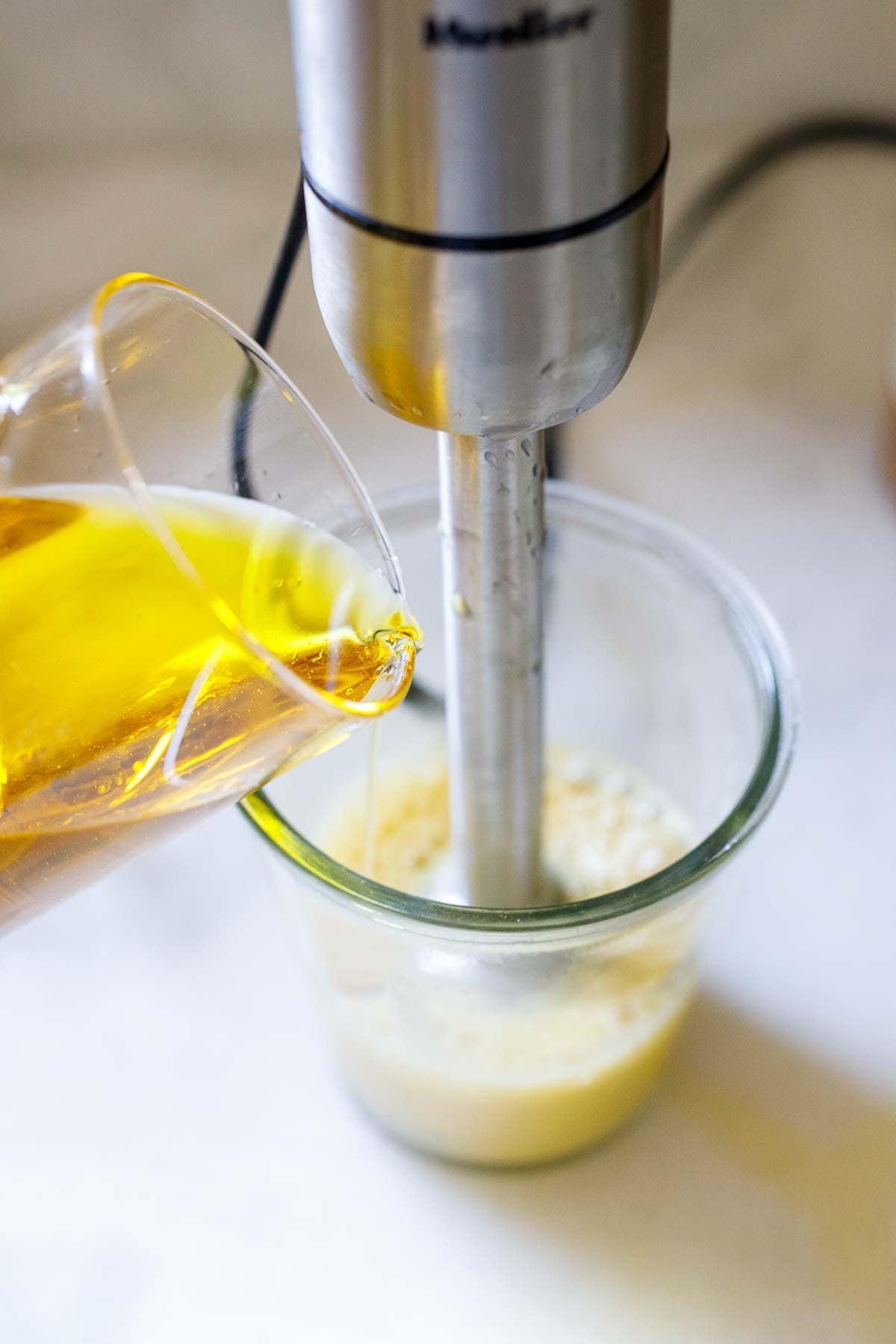
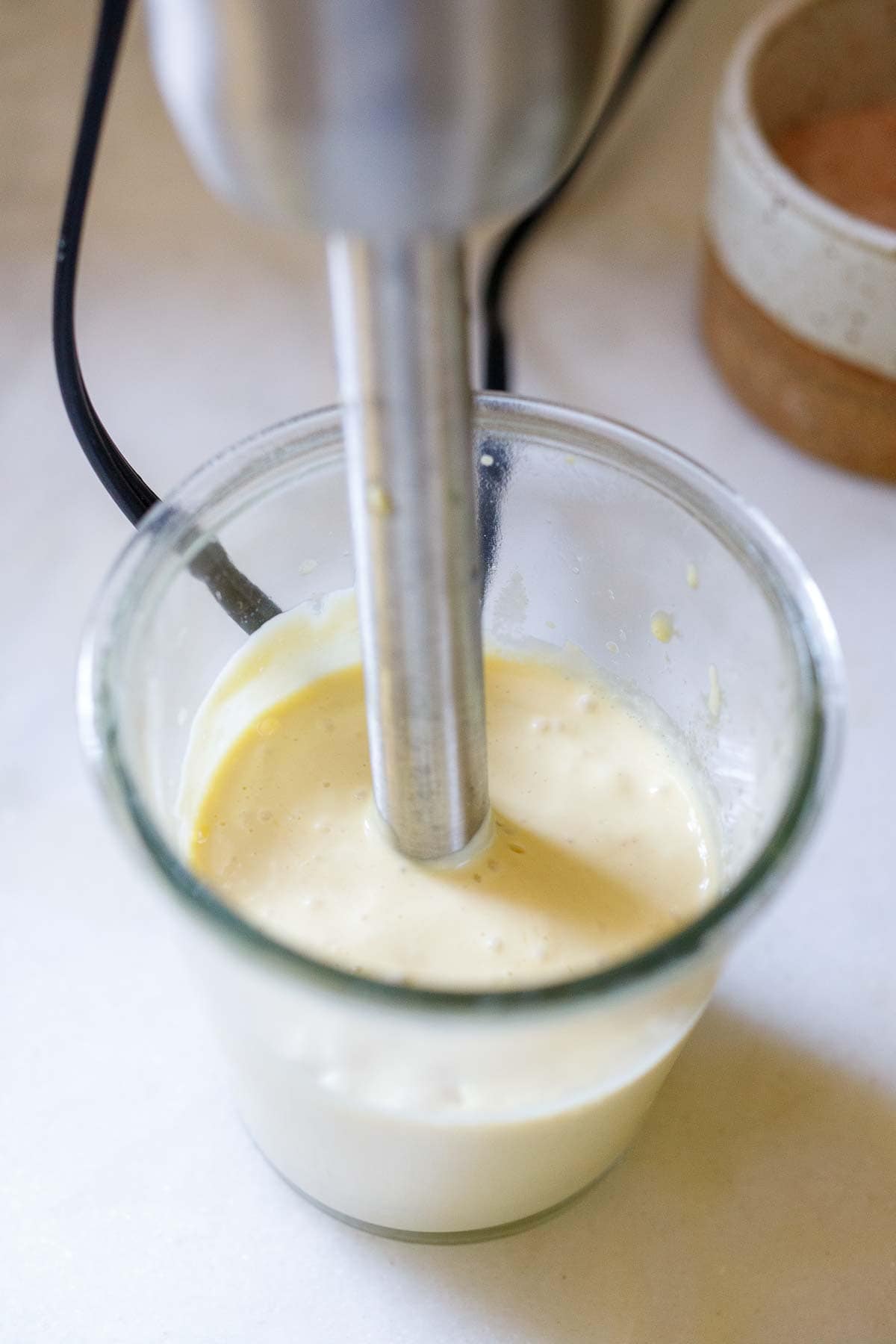
3. Continue adding oil until thickened. After it has emulsified and is creamy, then you can add a little more oil at a time, blending for 10-20 seconds. Continue until all the oil is incorporated. It should get thicker as you add the oil and blend! If it gets too warm, stick it in the freezer for a few minutes. Blend on low speed so it doesn’t overheat.
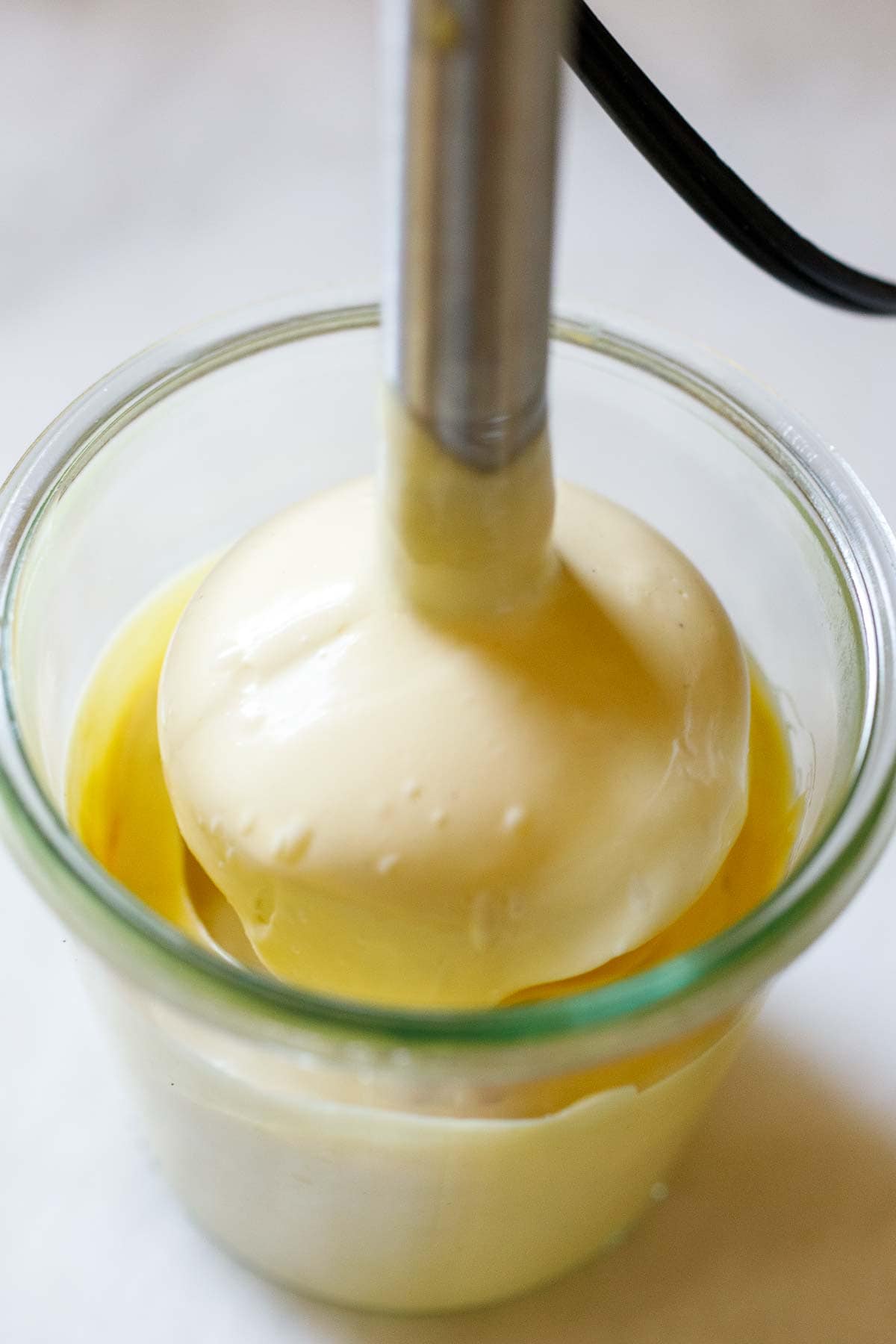
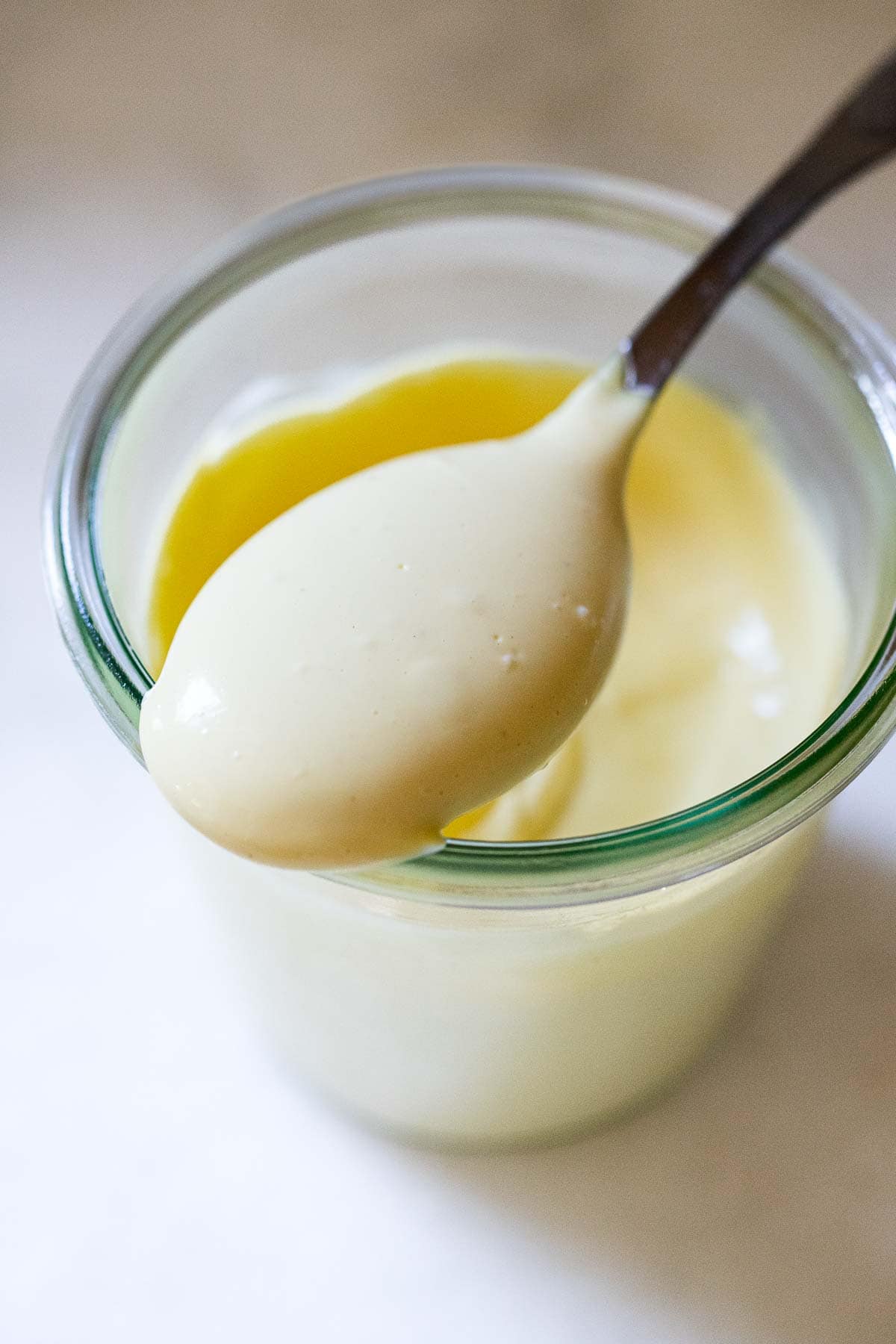
4. Taste and adjust. Remove the head of the blender and scrape down the sides if needed, then taste and adjust for salt and acid. Remember, olive oil can taste bitter from all the healthy polyphenols. I love this bitterness, but more mustard or vinegar can help mitigate it.
Variations
Mix and match the following to create your own tasty variations of mayonnaise! My favorite combo is garlic-tarragon-lemon.
- Garlic: 1/2 garlic clove
- Fresh herbs: 1-2 tablespoons basil, tarragon, or other herbs
- Lemon: Lemon zest or a splash of lemon juice
- Adaptable: You can also whisk it by hand (a great workout!) or use a regular blender or food processor, but I prefer the ease of using an immersion blender right in the same jar it will be stored in, as it saves the extra cleaning step.
Chef’s Tips
Use an immersion blender right in the jar you will store it in. Running at low speed is best to prevent overheating.
Add the oil slowly in the beginning-crucial to creamy mayo! Take care to go slow, especially in the beginning when adding the first few teaspoons of olive oil.
Use the lowest speed on your immersion blender; otherwise, it will heat up and never thicken.
If you can’t get it to thicken, stick it in the freezer for 10-15 minutes and blend on low speed again.
How to Store Homemade Mayo (with olive oil)
Seal in an airtight container and refrigerate for up to 3 weeks. The vinegar in the recipe extends its shelf life.
- If you substitute lemon juice for vinegar, the refrigerated shelf life will go down to one week.
- If you add any fresh garlic or fresh herbs, the refrigerated shelf life will go down to one week.
- You can add dried herbs or granulated garlic, and this will keep for three weeks.
Ways to Use Homemade Mayo
- Sauces: Chipotle Mayo (Mexican Secret Sauce), Grilled Asparagus with Preserved Lemon Aioli, Yum Yum Sauce
- Dressings: Creamy Cilantro Lime Dressing, Dilly Ranch Dressing, Creamy Gorgonzola Dressing, Chipotle Ranch Dressing
- Sandwiches: Caprese Sandwich, Banh Mi, Crispy BBQ Tofu Sandwich with Slaw
- Burgers: Chimichurri Poblano Turkey Burger, Bison Burger, Thai Turkey Burger, Grilled Lamb Burger with Harissa Aioli
- More ideas: Hearts of Palm “Tuna” Salad, Salmon Patties, Dilly Egg Salad
FAQs
Egg, oil, and an acidic component like vinegar or fresh lemon juice. We use vinegar to extend the refrigerated shelf life to three weeks.
Our recipe for homemade mayonnaise takes 15 minutes. It’s a simple method that blends the ingredients in the jar it will be stored in!
Blending on high speed will overheat the mayo, which prevents it from thickening.
Vinegar prolongs the refrigerated shelf life of homemade mayo-3 weeks instead of just 1 week with lemon juice.
Yes, if you use mayonnaise fairly often. This mayonnaise recipe is made with ingredients you likely already have on hand-egg, mustard, vinegar, salt, and oil. It keeps for up to three weeks, so it is economical if you use it within that time!
It is not recommended. Because mayonnaise is an emulsion of oil, egg, and acid, freezing it breaks down that emulsion, resulting in a grainy or watery texture once thawed.
More Cooking Basics to Try!
If you like DIY, you might also like our All-Purpose Cleaning Spray!
After you try this mayonnaise recipe, let us know how it turns out in the comments below. Your review will help other readers, too! Sign up here to join our community and receive our latest recipes and weekly newsletter! xoxo Sylvia
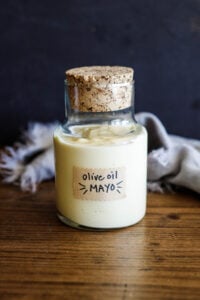
Easy Homemade Mayo
- Prep Time: 15
- Total Time: 15 minutes
- Yield: 1 ¼ cup 1x
- Category: sauces
- Method: blended
- Cuisine: French
- Diet: Vegetarian
Description
This simple, easy mayonnaise recipe is made with an immersion blender. Keep it in the fridge for up to 3 weeks!
Ingredients
- 1 large egg
- 1 tablespoon Dijon mustard
- 1 tablespoon apple cider vinegar
- 1/4 teaspoon salt
- 3/4–1 cup mild-flavored oil- olive oil, or use half avocado oil (make sure your olive oil is not bitter, taste it first!)
- Optional additions- 1/2 garlic clove, 1-2 tablespoons fresh herbs (basil, tarragon, etc) , lemon zest, or splash of lemon juice- see notes. My favorite is garlic-tarragon- lemon.
Instructions
- Place egg, mustard, vinegar, and salt in a 2-cup jar and use an immersion blender (right in the jar). Blend on low speed or whisk for 20 seconds until frothy. Alternatively, use a food processor, or use a bowl and whisk by hand.
- Add 1 teaspoon of olive oil at a time, blend 15 seconds on the lowest speed (so it doesn’t get warm). Keep adding a teaspoon at a time, blending on the lowest speed for 10-15 seconds between each addition, until it is creamy. Be patient here in the beginning with the first 1/4 cup of olive oil – this initial stage is the key to getting the mayo to emulsify and get creamy and thick.
- Once it’s creamy, then gradually add a tablespoon at a time, blending or vigorously whisking in between each addition. If done right, the mixture will thicken as you keep adding and blending.
- If your mayo is not thickening, the mayo may be too warm from the blender itself. Cool it off for a few minutes in the freezer, they try again.
- Scrape down sides if need be, and blend until thick and creamy.
- Taste and adjust salt and acid. A little splash of lemon juice is nice here.
- Store it in the 2-cup jar with a lid and refrigerate for up to 2 weeks.
Notes
Store the basic recipe in the fridge for up to 2 weeks. (The vinegar keeps this fresh longer.)
TIP: When using an immersion blender, use low speed to prevent mayo from getting overly warm- which may inhibit it from thickening. If it does get warm, place it in the freezer for 10 minutes and blend again.
Yes, you can use a blender on low speed, but I would double the recipe.
If adding fresh garlic or fresh herbs (add in step one)- and understand that the mayo will only keep 1 week. (Dried herbs or granulated garlic will not affect shelflife.)
If you substitute lemon juice for the vinegar, again, the mayo will only keep for one week.
Personally, I do not like the “eggy” taste of some mayos out there, so I have “upped” the vinegar and dijon here to mask this. Feel free to reduce if you prefer.
Nutrition
- Serving Size: 1 tablespoon
- Calories: 97
- Sugar: 0 g
- Sodium: 54.5 mg
- Fat: 11.1 g
- Saturated Fat: 1.6 g
- Carbohydrates: 0 g
- Fiber: 0 g
- Protein: 0.1 g
- Cholesterol: 10.2 mg
thanks for the recipe it turned out like perfect mayonnaise!
Ive tried making my own mayonnaise 3 times and they were all failures (used the wrong olive oil etc) the details for how to do it and what ingredients to use in your recipe made this foolproof for me 🙂
So glad you persevered Kar! Thanks much for the review. 🙂
Brilliant mayonnaise at very first try! thank you 💖
Glad to hear this Susan! Thanks for the review!
my first attempt at homemade mayo, it never got creamy . no emulsifying. used an emerson blender. had a good flavor – i used powdered mustard instead. but stays too liquidy to call it mayo
Hi Melva, I’m so sorry this happened. The very first few additions of oil to the eggs is the most crucial. If it doesn’t emulsify at this point in the beginning it never will. I hope you give it another go- I promise it works! 🙂
I make the Lemon Tarragon Garlic mayo…Delicious! I use walnut oil.
That sounds amazing!
Hi Sue, sorry about that. Most likely due to not blending enough right at the beginning when you first add the first few teaspoons of olive oil. This is key. Were you using an immersion blender or making by hand?
I was using an immersion blender but it was getting really hot – do you think this is the problem?
That may have affected it yes. Shoot.
I used rapeseed oil and that worked really well! Can’t believe how easy it is to make. So much nicer than store bought.
Glad you enjoyed.
I didn’t need to halve the recipe, since the amount it makes is perfect! I’ve made it with olive oil once, and with avocado oil once. Both came out delish! My immersion blender is old, so it takes longer to make. It starts to really thicken after the first quarter cup oil. Thanks!
Awesome Susan, glad it worked out for you!
Shoot- can you give more specifics?
Thank you for the recipe. I added cayenne pepper, black pepper and minced garlic 😋. Plus a slash of lemon juice like you said. My husband loves the DIY mayo. Next time I will try half olive oil half avacado oil. Probably hardly a different with all the seasonings and mustard covering up flavor. Thanks again
Ooo that sounds delicious Bre!
If I half the recipe, do I use a whole egg still?
No-you’d need half an egg. Will you let me know how it goes? 🙂
I didn’t need to halve the recipe, since the amount it makes is perfect! I’ve made it with olive oil once, and with avocado oil once. Both came out delish! My immersion blender is old, so it takes longer to make. It starts to really thicken after the first quarter cup oil. Thanks!
Great to hear Susan!
I like the way how all y’all post telling how to make mayo but none of you say how much to use of anything other than one egg.
Hi Justine- scroll down to the recipe card for specific measurements! 😉
Can you substitute Dijon mustard?
I am sure you could. Another mustard like stoneground or even yellow if you prefer that. A bit of worcestershire, horseradish or wasabi may also work. The mayo really needs that balance of tang.
So easy. Used avocado oil and olive oil with my immersion blender in a mason jar.
Awesome to hear Bret!
Fantastic recipe! So simple yet so delicious. I used 3/4 cup of olive oil and the flavor and consistency were perfect. Thank you.
Great to hear this Kim!
By far, this is the easiest way to make mayonnaise. Made it in the jar like your video in about 3 minutes. I feel better using olive oil and don’t mind the robust flavor.
Oh good Fiona! Great to hear! The immersion blender makes it so simple.
For the mayo, in one place it says egg yolk, another it says (and shows) a whole egg. Which is preferable?
Hi Martha- Sorry about that, I use the whole egg. 🙂
Is there a way to make this vegan?
Hey Jan, we have a vegan mayo on the blog, just search for it in the search bar. 🙂
So happy to hear there is another person who does not like the eggy taste of mayo. I have to try this recipe.
Let me know what you think!
I had two failed approaches when making it in blender. I realised that the mixture was being heated up by blender engine in the last moments, causing everything to de-emulsify.
When I’d tried to whisk it by hand it came out beautifully. Thank you for the recipe!
Oh intersting Maybe stopping the blender, taking a couple of breaks between additions may help it stay cool? I’ve been using an immersion blender right in the jar lately – and it is my favorite way now.
can I replace olive oil with avacado oil?
Yes Absolutely!
My first time making mayo… it went well! I only used 3/4 cup of oil though.. so a lot less than it says. I felt that it was the perfect consistency and the perfect flavour for me and I didn’t want to add any more. I added garlic powder, some lemon and a touch of honey to add something extra.
I really liked this recipe!
Hey Carrin, glad you liked this. Yes getting that extra 1/4 cup of oil in there can be a bit of a chore, it will make it extra thick- but if you are fine with the consistency at 3/4 up, then great. I used a really large egg, maybe that was the difference.
When I was almost done with my mayo (barely any olive oil left) it went from mayo consistency to completely liquid. Any idea why this would happen? I was using a blender.
Oh shoot Kaycie- do you know how old it was, approximately?
Almost brand new! I’d say around a week old.
I am stumped, not sure why it would separate at this point if it were fully emulsified at the beginning? Sometimes if you add the oil too quickly it can separate, but this would have happened the day you made it. You could try whisking in little water, a teaspoon at a time and see if it gets creamy again.
Hi, The recipe looks great. Is there a pasteurizing or heating method you recommend for the yolks? I have not been able to recently source pasteurized eggs in the carton.
Thank you
Hi Lynne, I do not use pasteurized eggs and do not heat the yolks- not really sure how to recommend how to do this?
Hey Silvia, do you know if I could sub the egg yolk for flax or chia seeds? This recipe looks fantastic.
Hi Tess, I’m not sure, I have never tried. We do have a vegan mayo on the blog, if you rather have that.
I have been wanting to try making my own mayo but have been hesitant. This recipe makes it sound so easy! Can’t wait to try it. I couldn’t see myself using the mayo in one week and the idea of having to make it that frequently was overwhelming. The 3 week shelf life in the fridge makes it sound more doable.
You can always half the recipe Carrie!
Nice–and thanks for the keeping times (I am a lemon juice + garlic kind of girl). Ever use a whole egg instead of just yolks (no added water). Works surprisingly well and you don’t end up with unloved whites in the freezer.
Thanks, Bri. Yes, I have used the whole eggs- and it does work great too.