Description
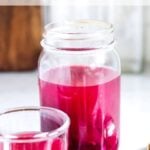
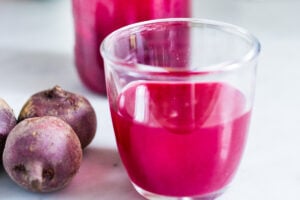
How to Make Beet Kvass! An Eastern European probiotic drink made with beets, sea salt and water. Full of healthy probiotics from the Lacto-fermentation, Beet Kvass is believed to help boost immunity. It tastes slightly sweet, tangy, earthy and salty- but in a good way! With just 10 minutes of hands-on time,it is so simple- just let Mother Nature take its course. (Allow 1-2 weeks for fermentation- see notes for speeding up this process.)
Ingredients
- 2 medium-large beets, organic (2 cups diced, with skin on)
- filtered water (tap water may have too much chlorine & inhibit fermentation)
- 1 scant tablespoon fine sea salt
- 1/4 cup whey (the liquid from strained yogurt) or use a previous batch of kvass; *see notes.
- 2-quart mason jar (or divide everything among two 1-quart jars)
Instructions
- Prep: Wash hands and jar well.
- Rinse and slice the beets into ½-inch-thick rounds, then dice them, leaving the skin on.
- Place beets in a clean, 2-quart mason jar. *See notes if adding other spices-you’ll need to place these in the jar first.
- Brine. Mix 3 cups of water with 1 tablespoon of fine sea salt.
- Combine. Pour this into the jar along with the whey. Then fill the jar with more water, leaving 1 inch of headroom. Remove any floating seeds or herbs with a slotted spoon- anything that rises above the brine can mold.
- Cover with a loose-fitting lid. Place in a shallow bowl or baking dish (to collect any overflow).
- Ferment: Place the jar in a cool, dark place; 60°F-70°F (basement or lower cupboard is ideal). Check every couple of days for cloudiness, bubbles, or overflow- all signs of fermentation- roughly 3-5 days. The longer it ferments, the more tangy it will taste, so you can ferment “to taste.” For an even tangier flavor, continue fermenting for 1-2 more weeks. Once happy with the flavor, refrigerate.
- Refrigerate and store. Either strain or leave beets in; I leave mine in- yes, you can eat them. It will continue to ferment in the fridge, but at a much slower rate, developing more depth of flavor. The sugar from the beets will continue to feed the healthy bacteria. Beet Kvass will keep indefinitely in the fridge. If you notice any white foam on top of your kvass, it is most likely kahm yeast and harmless. Skim it off with a spoon and toss. If you see mold, I would discard the batch.
Notes
Beets. Grating the beets or cutting them smaller will release too much of the sugars, too quickly. A ½ inch dice is perfect. Do not peel!
Salt and Whey. When using whey, you’ll need less salt. If making kvass without whey, I would use more salt. Add 1 scant teaspoon per 1 cup of water. (2% ratio).
Optional Additions: Add these to the jar first – fresh dill (or fennel fronds), bay leaves, or other herbs, Pickling spices (fennel seed, coriander seed, dill seed, peppercorns, celery seeds, caraway, etc.), sliced onions, shallots, garlic, or turmeric root. Be sure to remove any that float to the top.
Storage: Store this in the fridge, strain into a cup, and drink a few ounces daily. Yes, you can eat the beets!
Tip: to prevent any seeds from floating to the top (which can mold), either add them to the jar first, place beets over the top of them, or place them a small mesh bag. Remove any that float to the surface.
This will last indefinitely in the fridge. I highly recommend making a double batch of this because of the longer fermentation time.
Flavor this up!!! I love adding onion, garlic and pickling whole spices. You can get small mesh cotton bags to put your spices in if you like, then no worries about “floaters.”
Fermentation slows down in cooler places and speeds up in warmer places.
Nutrition
- Serving Size: ½ cup
- Calories: 20
- Sugar: 3.1 g
- Sodium: 1202.8 mg
- Fat: 0.1 g
- Saturated Fat: 0 g
- Carbohydrates: 4.3 g
- Fiber: 1.3 g
- Protein: 0.7 g
- Cholesterol: 0 mg